Hydras
Hydra: Reshaped Water Dragons
Hydras
The regenerative abilities of Water Dragons was well known. Like all Dragons, they were intrinsically tied to one of the elemental domains, and Water Dragons displayed a strong affinity for the regeneration associated with Water. Their blood, scales, organs, and other tissues consequently became valuable ingredients in medicines and healing potions.
Inevitably, the Wardens attempted to push this property further.
The Morvaren wardens sought to isolate and exaggerate the Water Dragon's regenerative physiology while breaking it from the Water domain itself. Their immediate interest was practical. As Warden numbers dwindled, losses became increasingly consequential, and a creature capable of producing extraordinary regenerative material promised a means of surviving wounds beyond even normal Warden recovery.
They researchers Reshaped the Dragons, forcing their existing anatomy and regenerative systems toward an extreme form. The result was the Hydra, yet another example of how far an existing species could be stretched.
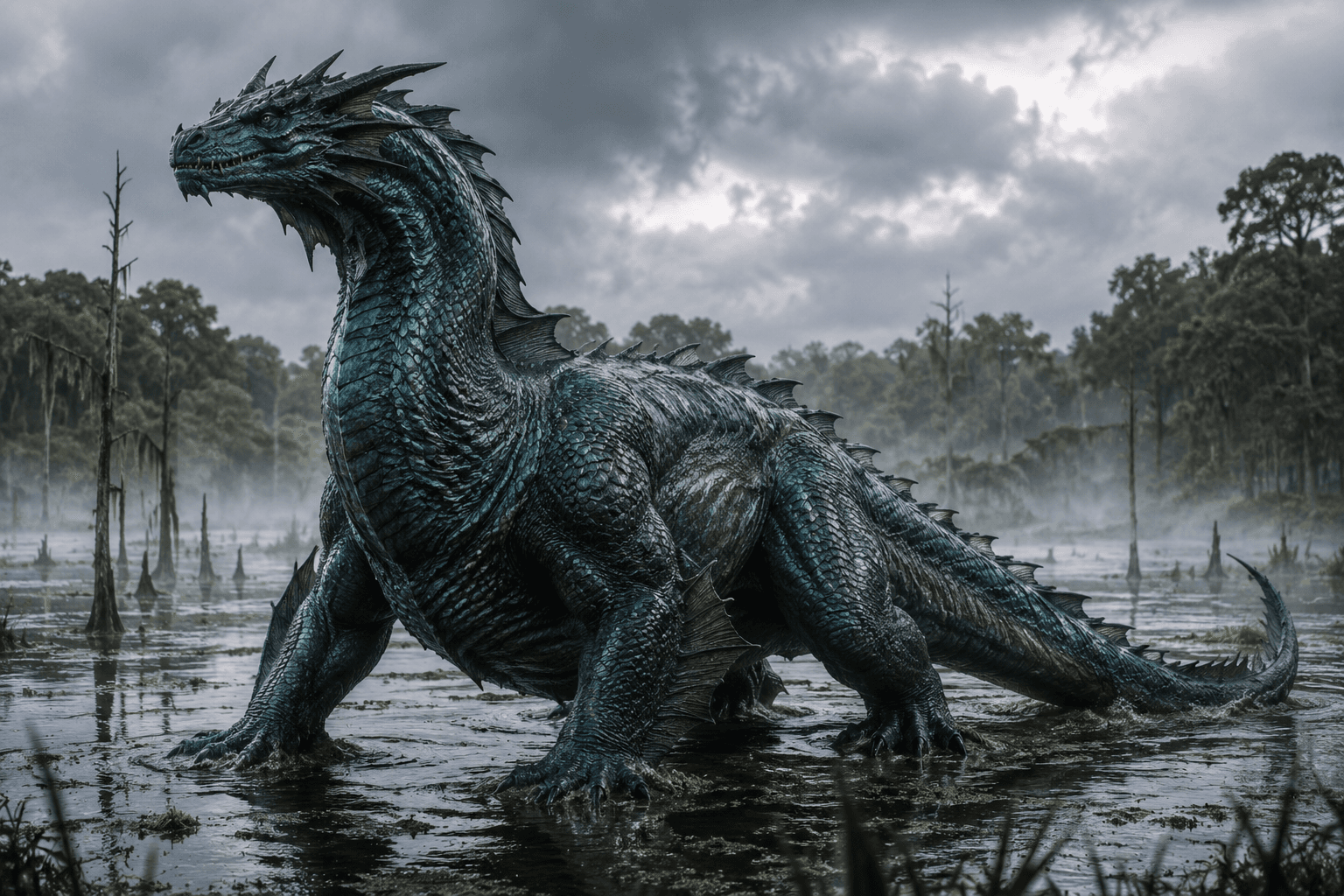
The Hydra regained the four powerful limbs of its draconic cousins but, like the water dragon, its wings were still missing, while losing the Water Dragon's specializing for the open ocean. Its body became enormous and heavy, with a deep torso capable of storing tremendous reserves of tissue, nutrients, blood, specifically for regeneration. Hydras remained capable swimmers but became creatures of lakes, wetlands, and swamps, where they could remain close to water.
Hydras retained the semi-sapience and magical nature of their Dragon ancestors, though Reshaping severely narrowed their magical expression. Almost all of their magical capacity became focused into regeneration, leaving them comparatively poor users of other magic. They were nevertheless extraordinarily difficult to kill.
Despite their reputation, Hydras were born with a single head and neck.
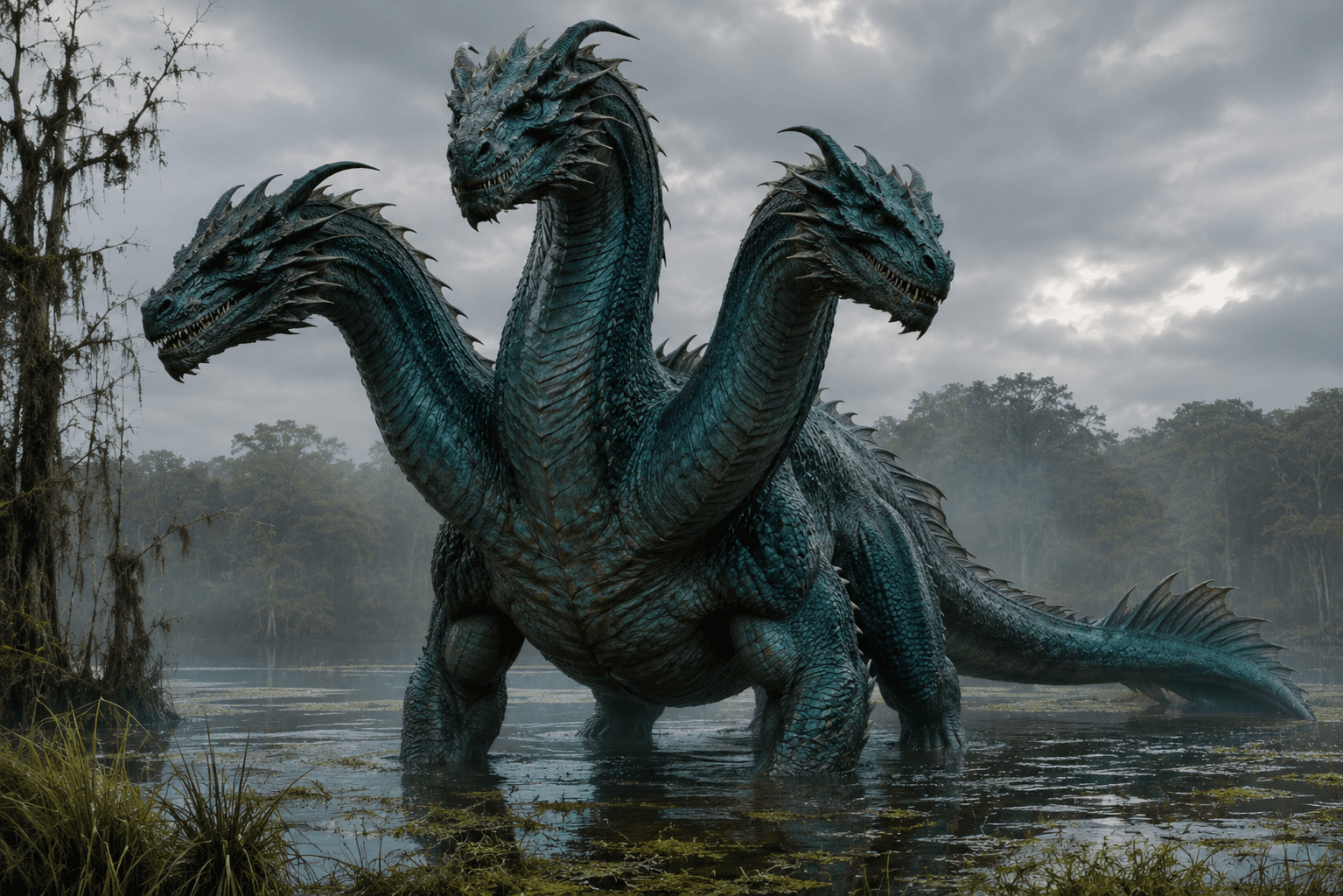
Their famous additional heads resulted from their exaggerated regenerative system. Severe damage to the neck and spinal cord would trigger an extreme emergency response as the Hydra's nervous system reacted to the possible loss of its brain. Rather than carefully reconstructing a single damaged pathway, multiple regenerative sites could activate simultaneously, rapidly producing an additional complete neck and head.
This response was limited by the Hydra's available reserves. A healthy adult might survive catastrophic damage and produce one or two additional heads during a battle, but doing so consumed enormous quantities of stored tissue and energy. Continued injury eventually depleted those reserves, dramatically slowing and eventually stopping regeneration until the Hydra had fed and rested sufficiently to rebuild them.
For this reason, Hydras instinctively sought deep water when badly wounded. A losing Hydra would often retreat beneath the surface, where pursuit became difficult and it could recover in relative safety. Killing one therefore required preventing that retreat. Hunters learned to trap, tether, corner, or strand the creature and continue inflicting damage until its regenerative reserves were exhausted. Decapitation was particularly dangerous: unless the Hydra was already depleted, removing a head often transformed one problem into several.
Most Hydras remained single-headed. The legendary many-headed individuals were generally old animals with violent histories. Every additional head represented a catastrophic injury the creature had survived. Repeated multiplication also encouraged greater body mass over time, as heavily headed Hydras required larger torsos and still greater reserves to sustain their increasingly complicated anatomy. The oldest specimens could consequently become enormous even by the standards of their species.
The Morvaren experiments ultimately succeeded. Certain Hydra tissues proved extraordinarily effective in regenerative alchemy, including preparations capable of temporarily pushing Warden healing beyond its already remarkable natural limits. Hydra-derived medicines became valuable preparations before dangerous battles, allowing Wardens to survive injuries that might otherwise have been fatal. The creatures were consequently bred, managed, and harvested in captivity, and their usefulness eventually spread their husbandry far beyond Morvaren.
That usefulness also ensured they could never remain contained. Eggs became enormously valuable targets for theft, and attempts to steal breeding stock occasionally ended in catastrophic escapes. As Hydra spread among the factions, so did such incidents. Wardens eventually carried Hydras beyond Riftmoor as sources of regenerative material, and escaped or abandoned populations established themselves on other suitable worlds, particularly wherever large wetlands and inland waters could support them.
The Hydra remained, technically, a Dragon—but one stretched nearly to the limits of that definition. Its majestic ancestor had been reduced to a massive, wingless swamp-dweller whose magical ability was overwhelmingly consumed by an unstable regenerative system and whose nervous system would respond to mortal injury by growing entirely new brains and heads.
Yet measured against the purpose for which it had been created, the Hydra was not a failure.
