Griffin
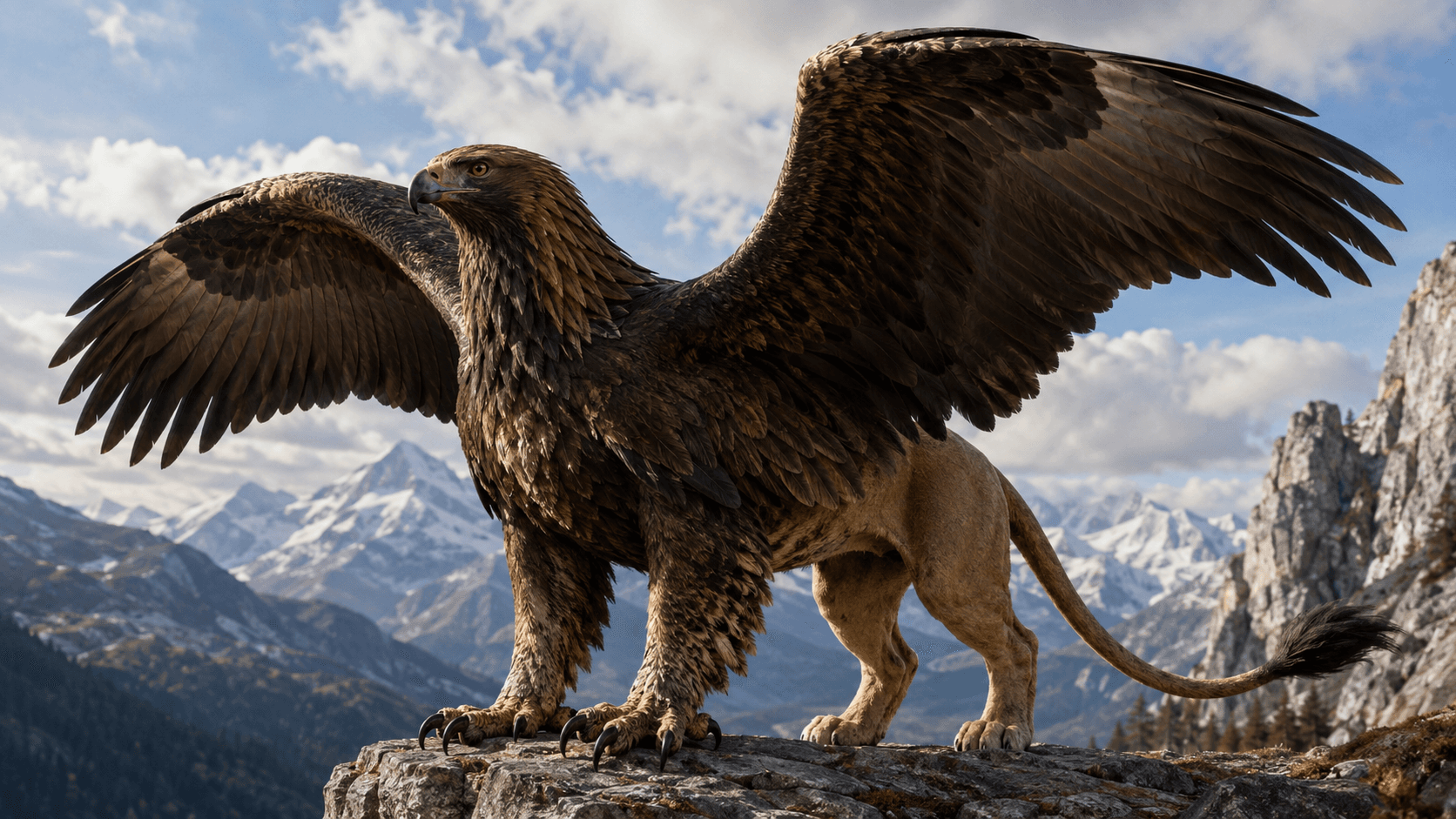
Subject: Great Eagle Donor: Lion
The Wardens first sought an aerial beast capable of carrying the Heirs into battle. Believing strength and courage to be the missing ingredients, they wove lions into the Great Eagles, producing the first Griffins. The Griffins became formidable aerial predators and exceptional beasts of war, but retained the fierce independence and territorial nature of their eagle ancestry. Though trainable, they proved poor mounts, with very few willingly accepting riders.
Stage II — Hippogriffs
Subject: Great Eagle Donor: Horse
Concluding that the lion had contributed too much aggression, the Wardens next wove horses into the Great Eagles. The resulting Hippogriffs displayed noticeably calmer temperaments and proved capable of carrying riders for short periods. However, they still retained the instincts of the eagle as the dominant species. They bonded poorly with riders, remained easily startled, and were unreliable in large formations. While an improvement over Griffins, they still fell short of becoming the dependable aerial mount the Wardens desired.
Stage III — Pegasi
Subject: Horse Donor: Great Eagle
The failure of the Hippogriff revealed an important principle of Bioweaving: the temperament of the subject species overwhelmingly dictated the behavior of the final creation. Rather than attempting to tame the eagle, the Wardens instead granted flight to the horse. By weaving Great Eagles into horses, they created the first Pegasi. Pegasi retained the calm, cooperative, and highly trainable disposition of their equine ancestors while gaining the power of true flight. They quickly became the definitive aerial mount, finally achieving the Wardens' original goal of placing the Heirs in the skies for reconnaissance and warfare.
Additional Notes
Griffins & Pegasi
Seeking to place the Heirs in the skies for reconnaissance and warfare, the Wardens pursued alternatives to the Wyvern. While Wyverns had demonstrated formidable aerial combat ability, they proved too aggressive and difficult to train for widespread military service. Their unpredictable temperament often endangered friendly forces as readily as their enemies, making them unsuitable as dependable companions for the Heirs.
The first successful alternative was the Griffin, created by weaving the Great Eagles into lions. Griffins proved effective on the battlefield while avoiding the hard to control nature of the Wyverns. They became exceptional aerial war beasts, but they made for poor mounts. Though trainable, almost no Griffins accepted riders.
The Wardens then wove Great Eagles into horses, producing the first Pegasi. Pegasi inherited the calm temperament, endurance, and cooperative nature of their equine ancestors while gaining the gift of flight. They proved everything the Wardens had hoped for: intelligent enough to bond closely with riders, dependable in battle, swift in flight, and gentle enough to be trusted among large formations of soldiers. Pegasi quickly became the definitive aerial mount, while Griffins continued to serve as independent beasts of war.
Neither Griffins nor Pegasi possessed intelligence beyond that expected of ordinary animals. Unlike Dragons, they lacked magical affinity, any intelligent communication, and the semi-sapient reasoning born of Warden heritage. They remained remarkable beasts, created to fulfill practical roles.
