2nd Age
1st Age | 2nd Age | 3rd Age | 4th Age | 5th Age
The Age of Wardens
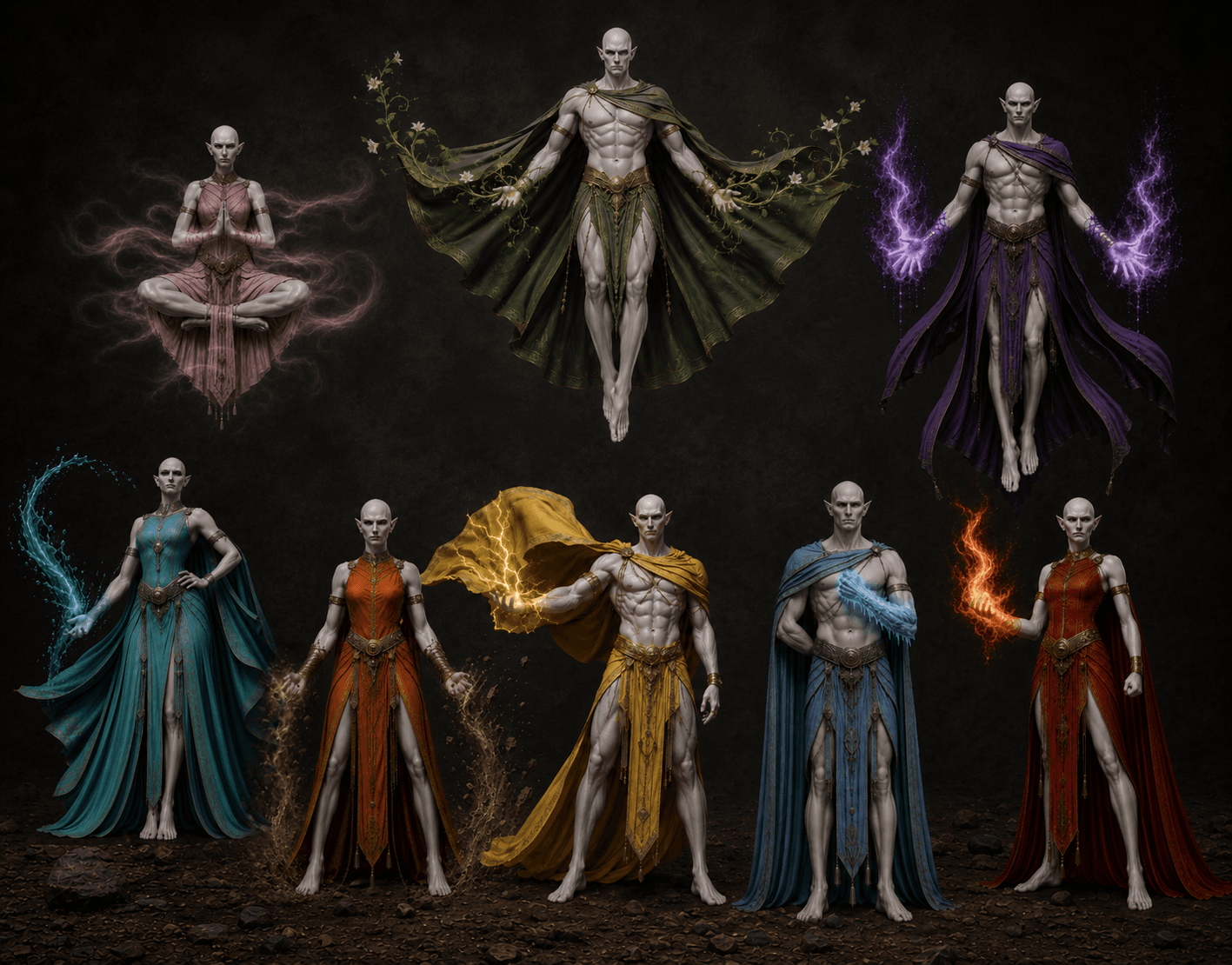
With both power and dominion united, the remaining Wardens ruled.
Over centuries the Warden domains drifted further apart. What had once been a single Kingdom became distinct cultures, each molded by the philosophy of the Wardens who governed them.
It was during this era that the great banners appeared. Wardens marked their domains with simple sigils, each representing the ideal they believed should define civilization and earn themselves the throne. These emblems, originally little more than administrative standards, would outlive the Wardens themselves.
Lektro Wardens established the Lion, and later the Eagle and Ram as well, as the standard of imperial excellence,
Kryo Wardens chose the Bear, and later the Boar and Rhino as well, to represent vigilance and endurance.
Geo Wardens took the Fox, and later the Tiger and Otter as well, to symbolize learning, craft, and delight in simple living.
Bios Wardens bound themselves to the Cobra, and later the Crocodile and Owl as well, to embody ambition and self-determination.
Ignis Wardens raised the Bull, and later the Hyena and Shark as well, as the banner of wrath, conquest, and martial strength.
Hydro Wardens adopted the Dolphin, and later the Pelican and Stingray as well, to stand for mercy and restoration.
Aero Wardens embraced the Crane, and later the Monkey and Camel as well, to stand for contemplation and peaceful discipline.
4 Warden-less societies would develop and endure through the ages. The Keepers, adopting the Horse, insisted the King and his reign endured. The Mantle, adopting the Dragon, were elusive assassins of those deemed corrupt. The Hartwatch, adopting the Stag, were an order of protector knights. The Pack, adopting the Wolf, were the leaderless peoples of the wilds.
Though these peoples would later become nations in their own right, their origins lay not in natural division, but in the competing visions of the Wardens convinced they knew better than the King.
The heirs had believed they would be free.
In reality, they had merely exchanged one King for many masters.
Unlike the King, the Wardens did not see the heirs as family.
They saw them as resources and successfully ruling and dominating them was proof of their worthiness.
Some were cherished like prized animals.
Others were valued only for usefulness.
Others still were treated with open contempt.
The Wardens believed they could improve upon the King's vision.
Rather than steward creation, they began redesigning it.
To them, humanity was clay.
The First Shaping
As generations passed, the Wardens grew increasingly convinced that the King had lacked imagination. They no longer viewed themselves as caretakers of His Kingdom, but as its rightful architects. Every court sought to improve upon creation according to its own ideals, reshaping both the world and its people to reflect its particular vision.
The heirs, once destined to inherit the Kingdom, became subjects to be managed. Their worth was measured by usefulness rather than birthright. Some Wardens prized beautiful servants, others brilliant craftsmen, loyal soldiers, or obedient laborers. The dignity once granted freely by the King became something earned only through pleasing one's master, and was as easily withdrawn as it had been bestowed.
The Wardens began engineering the heirs into specialized peoples.
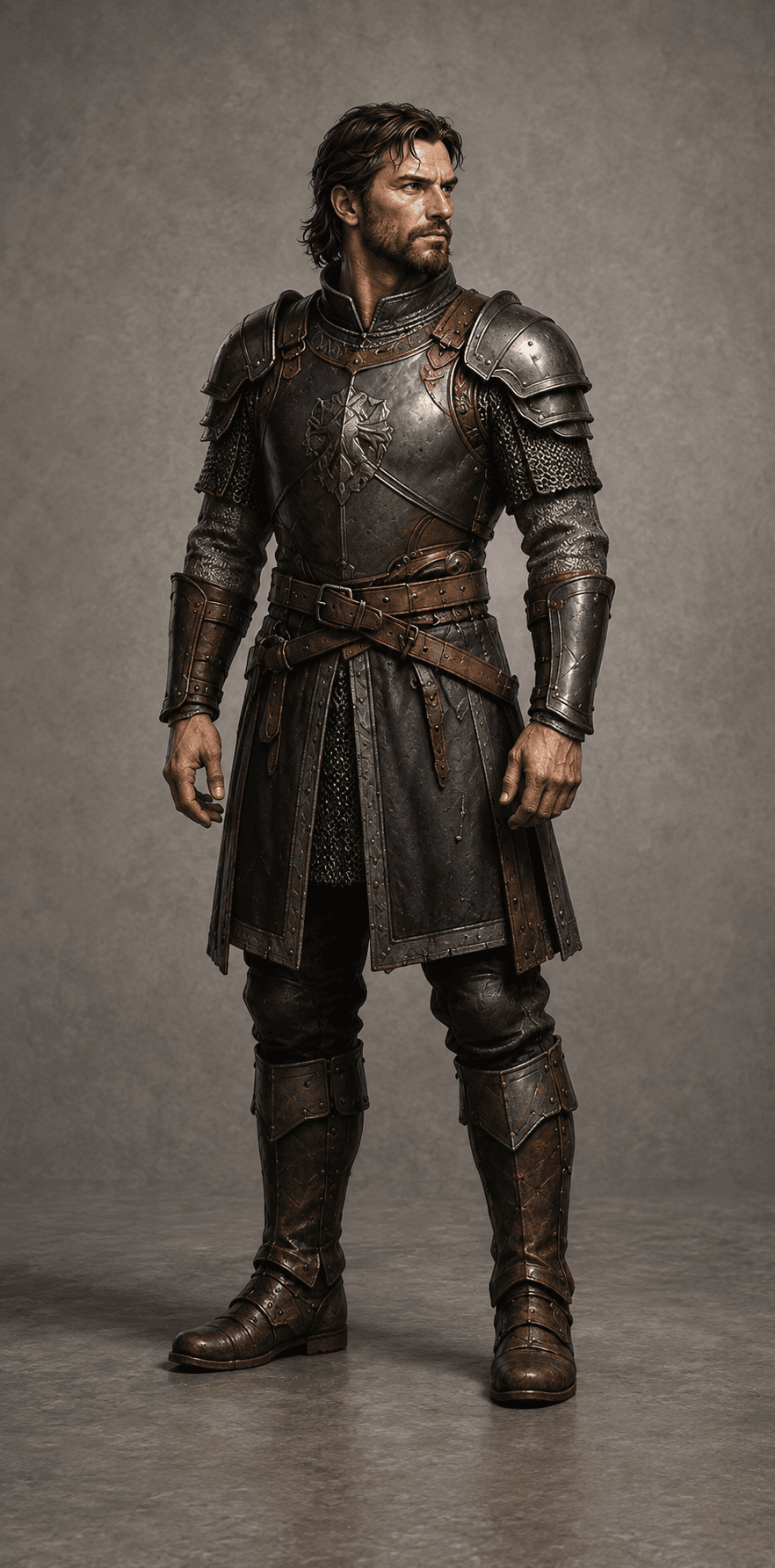
Most new races were created through Bioweaving, the art of altering living creatures into new, stable forms. Humans served as the foundation for nearly every successful Heir race, proving to be remarkably resilient to alteration. They possessed an unusual biological stability that allowed Wardens to reshape them far beyond what was possible with any other creature or resultant new race.
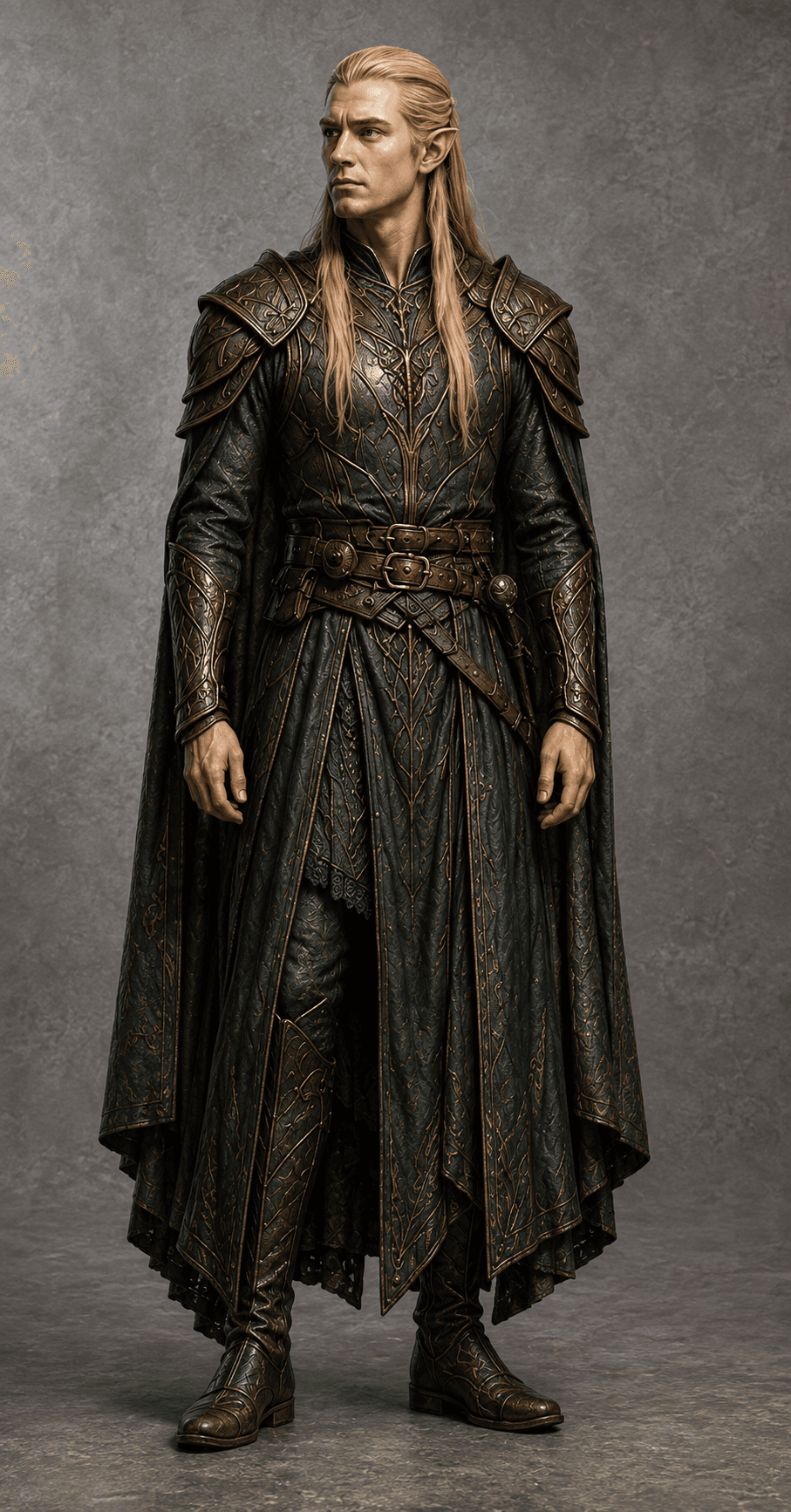
Elves were the first successful creation of the rebel Wardens and the first of the new Heir races. The wardens sought to elevate the heirs by weaving aspects of their own immortal nature into human subjects. Their intent was twofold: to create successors in their own image that would mock the King's imperfect work, and to bridge the immense gulf between fickle, short-lived humanity and the immortal Wardens themselves.
Physically, Elves became graceful, long-lived, and exceptionally attuned to arkana, inheriting much of the Wardens' natural affinity for magic without their immortality. Mentally, they possessed extraordinary intellect, patience, and foresight, making them natural administrators and scholars. Yet the same qualities that made them so capable also made them deeply comfortable with order and hierarchy. Rather than inheriting humanity's rebellious spirit, Elves developed a profound respect for structure and stewardship. They rarely sought revolution, preferring instead to govern, organize, and preserve. In time they became the indispensable managers, overseers, and administrators of Warden civilization—the closest thing the immortal Wardens would ever have to their own heirs.
The Human Reshapings
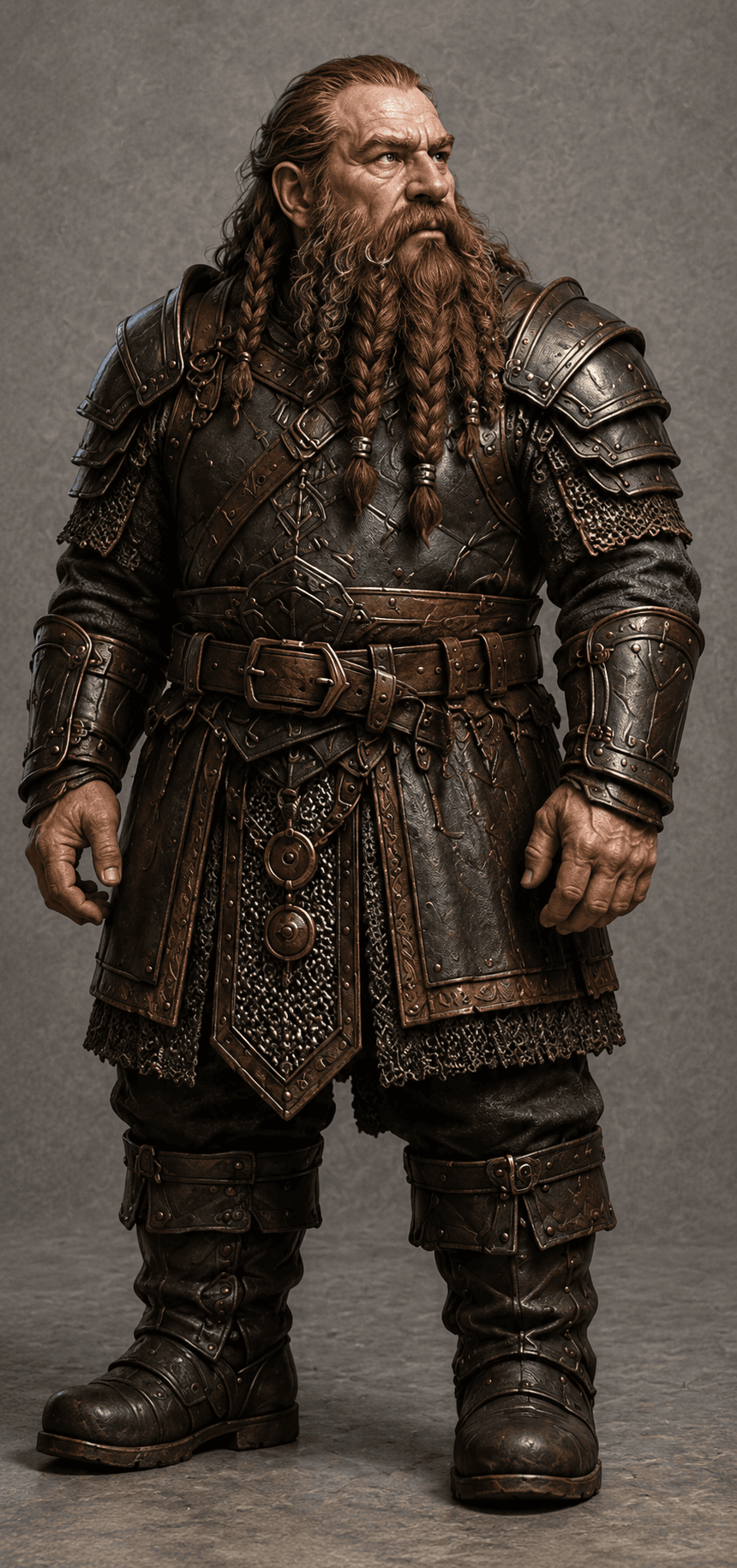
Before Bioweaving was fully understood, the Wardens sought to improve humanity itself through a technique that became known as Reshaping. Unlike later creations, no other species or lineage was introduced. Instead, the very nature of a human was rewritten by emphasizing certain qualities while sacrificing others. The process obeyed an unyielding law: nothing could be gained without something being lost. Though the Wardens could choose what they wished to strengthen, the cost was never fully predictable. Most subjects perished during the transformation, and many surviving forms were judged unstable or unworthy and quietly destroyed. After centuries of experimentation, only three successful Reshapings endured and were accepted as new Heir races.
Dwarves were shaped to maximize industry, endurance, and craftsmanship. Physically, they became shorter, broader, and immensely robust, possessing dense bones, powerful musculature, and remarkable resistance to fatigue. Mentally, they developed extraordinary patience, discipline, and focus, allowing them to master crafts beyond any other race. They also possessed an innate stubbornness that narrowed their perspective, making them slow to change and limiting the breadth of their arkane potential.
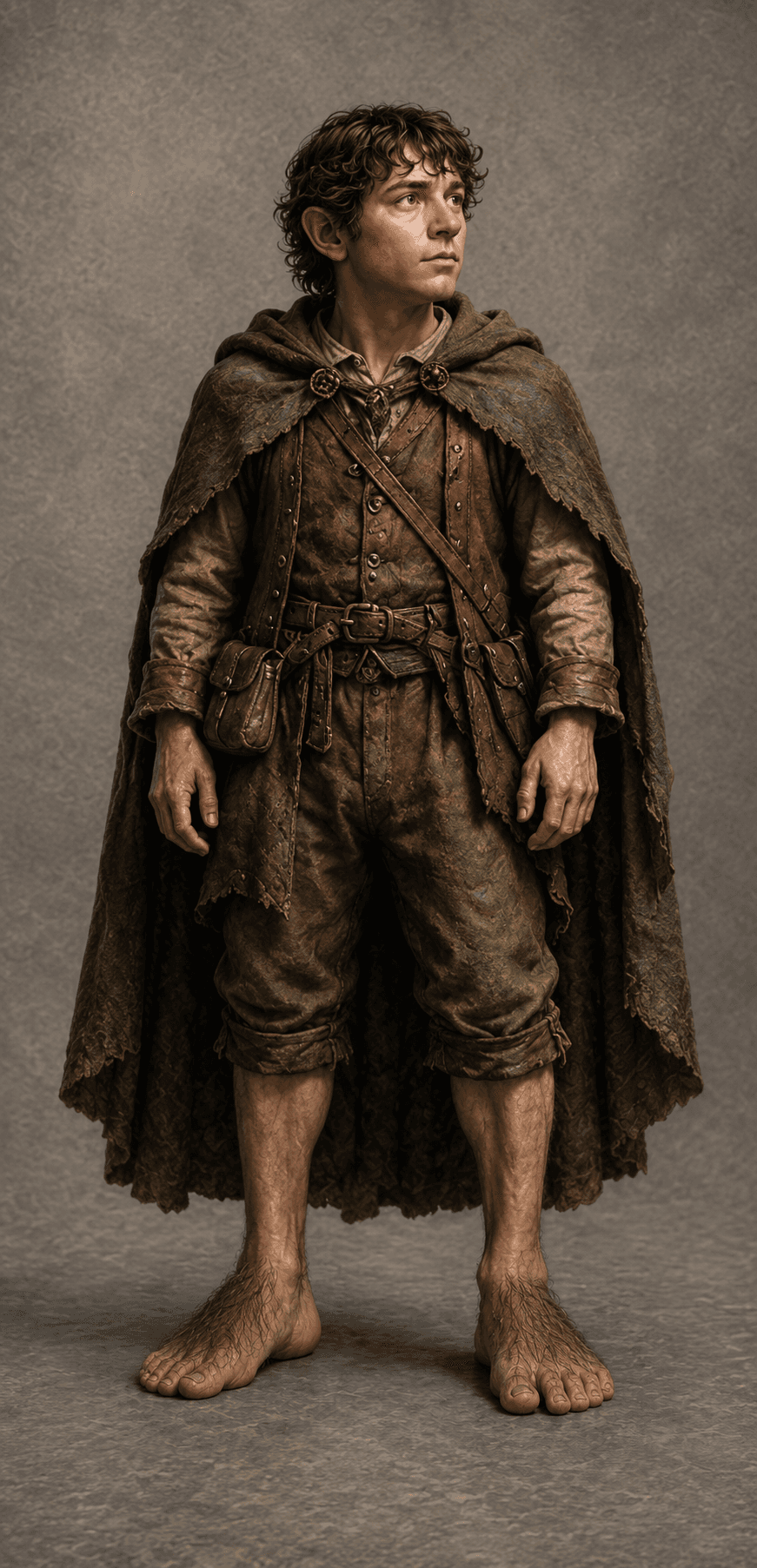
Halflings were shaped to provide a people who could flourish unthreateningly alongside the Wardens. Physically, they became smaller, remarkably healthy, and exceptionally efficient, requiring little food while enjoying long, active lives. Though lacking great strength, endurance, or martial ability, they were perfectly suited to the countless labors that sustained civilization. Mentally, they were extraordinary agreeable, empathetic, and content, preferring cooperation over conflict. While Humans pressed into the frontiers, Dwarves mastered industry, and Elves governed and administered, Halflings became the farmers, cooks, tailors, craftsmen, cleaners, and caretakers. Their greatest strength was not exceptional ability, but the complete absence of any desire to rule, making them the only people the Wardens were comfortable allowing to prosper in great numbers within their own domains.
 |  |  |  |
|---|
All intelligent peoples descend from different Heir lineages, each carrying its own stable pattern of life. Each successful Heir race forms its own distinct biological lineage, compatibility amongst subraces remained, but most races are simply too genetically distinct from each other to produce viable offspring.
The sole known exception is the relationship between Humans and Elves. Their lineages remain uniquely compatible, always producing the same stable intermediary: called the Half-Elf. Regardless of whether the parents are Human and Elf, Half-Elf and Human, Half-Elf and Elf, or two Half-Elves, the offspring are always Half-Elves. Rather than representing endless fractions of ancestry, the lineage naturally stabilizes into this single, self-sustaining people.
From these first races came countless later creations as different Wardens pursued their own visions for civilization.
They did not stop at shaping humanity—beasts were drawn into their designs as well.
In those days, great creatures were commonplace: oversized spiders, massive bats, huge primates, dire wolves, great bears, and giant eagles all made the wilds much more dangerous.
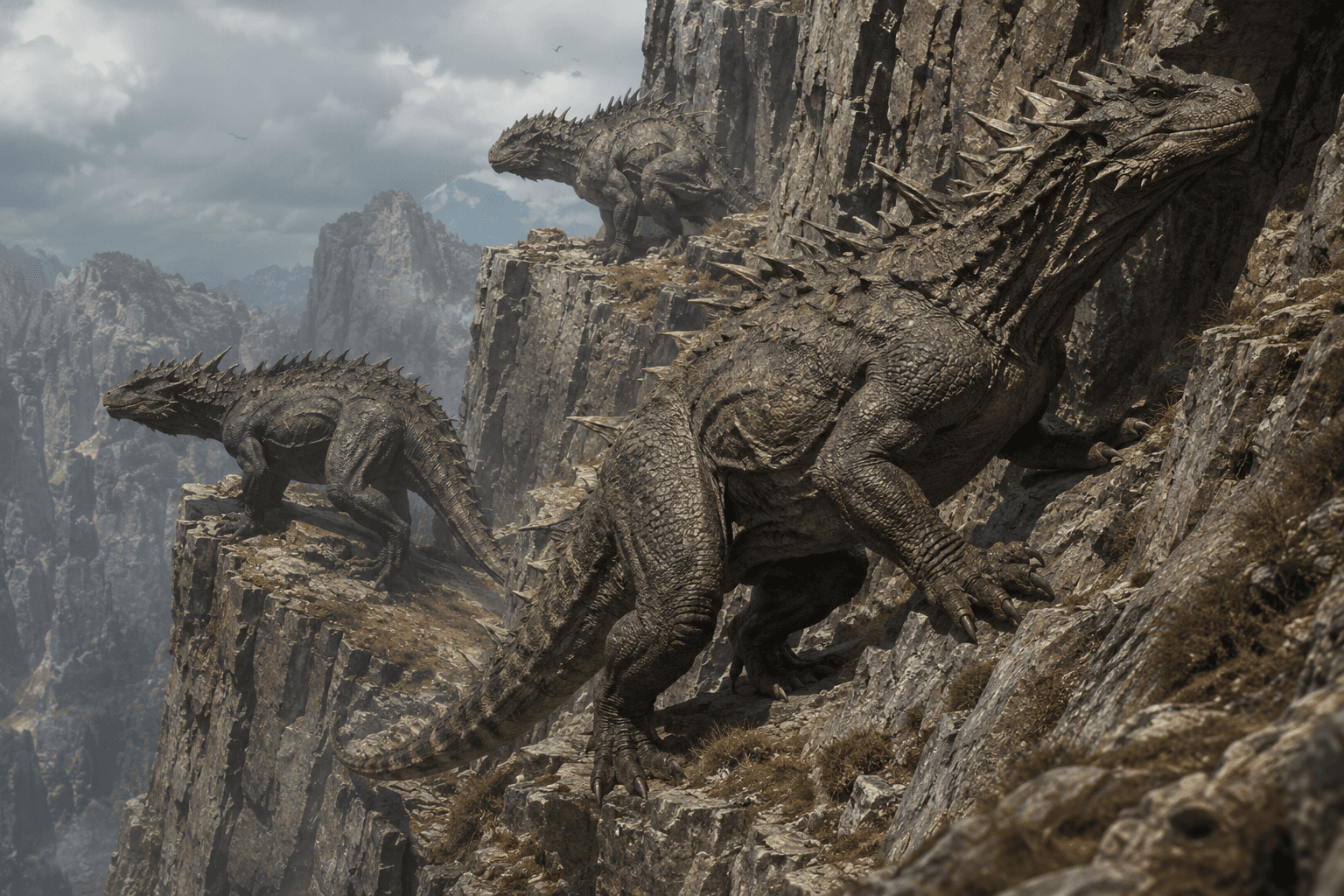
Among them, the cliff drakes caught the Wardens’ attention. These immense carnivorous dinosaurs were uniquely adapted to their harsh cliffside homes, with powerful limbs developed for both climbing and hunting. From these creatures, the Wardens forged the first draconic line in their own image.
They furthered the art of Bioweaving. Bioweaving was the magical art of grafting traits from one species into another. Samples—almost always blood—were taken from donors, whose traits were to be introduced into the subjects. Donors provided the desired traits; subjects received them. The donors lost only blood. The subjects often lost their lives. It was never an exact art; the process demanded absolute concentration and often the participation of numerous Wardens acting in perfect unison. The results were shaky as well, the weaving often failed to take hold and many of the subjects died, even in what would be considered a successful weaving. Because of this, large groups of subjects underwent each Bioweaving in the hope that at least three or more would survive and establish a stable population. This demanded more wardens to participate in turn. Those that survived emerged as entirely new species. Countless Bioweavings were attempted over the centuries and many species were simply found to be incompatible on any level ending without a single surviving subject.
Through weaving cliff drake into giant bats, they forged the first wyverns. Once the wyvern population had stabilized, the Wardens attempted an even more ambitious test, weaving themselves into the wyverns. The Wardens had forged the first Dragons—terrible and majestic beings bound to their makers. As a dragon grew it became an extension of its Warden’s domain. From this process, the dragons slowly split into the elemental versions they are today.
Dragons would not submit to any heirs, so Imperial Wardens instead wove the great eagles into horses to create the Pegasus—swift, loyal, and sky-bound and only for the Warden’s most loyal mortals to ride.
From lions and the great eagles came the griffins, fierce hunters and imperial scouts for the frontier lands where Naja influence persisted.
The Cobra answered by awakening the forests themselves, turning the trees into living defenders against Imperial expansion.
Hep with the Vah-Yu settled in secluded mountains to the East to pursue inner mastery. Medu and the Morvaren found a home for their pursuit of knowledge in the Southeast. There they created and unleashed the Virborne. The Virborne were regarded as abominations and were hunted and enslaved by the Empire. Zurn adopted the orcs, trolls, and goblins as her own, and formed the Bloodhorn clans. The Alliance had been holding off the Empire for centuries, slowly building their strength on the frontiers of civilization. The pressure had been building for generations. At last, there was nowhere left for it to go.
The Great Siege
When The Alliance finally unleashed their full strength, The Empire was caught almost entirely unprepared.
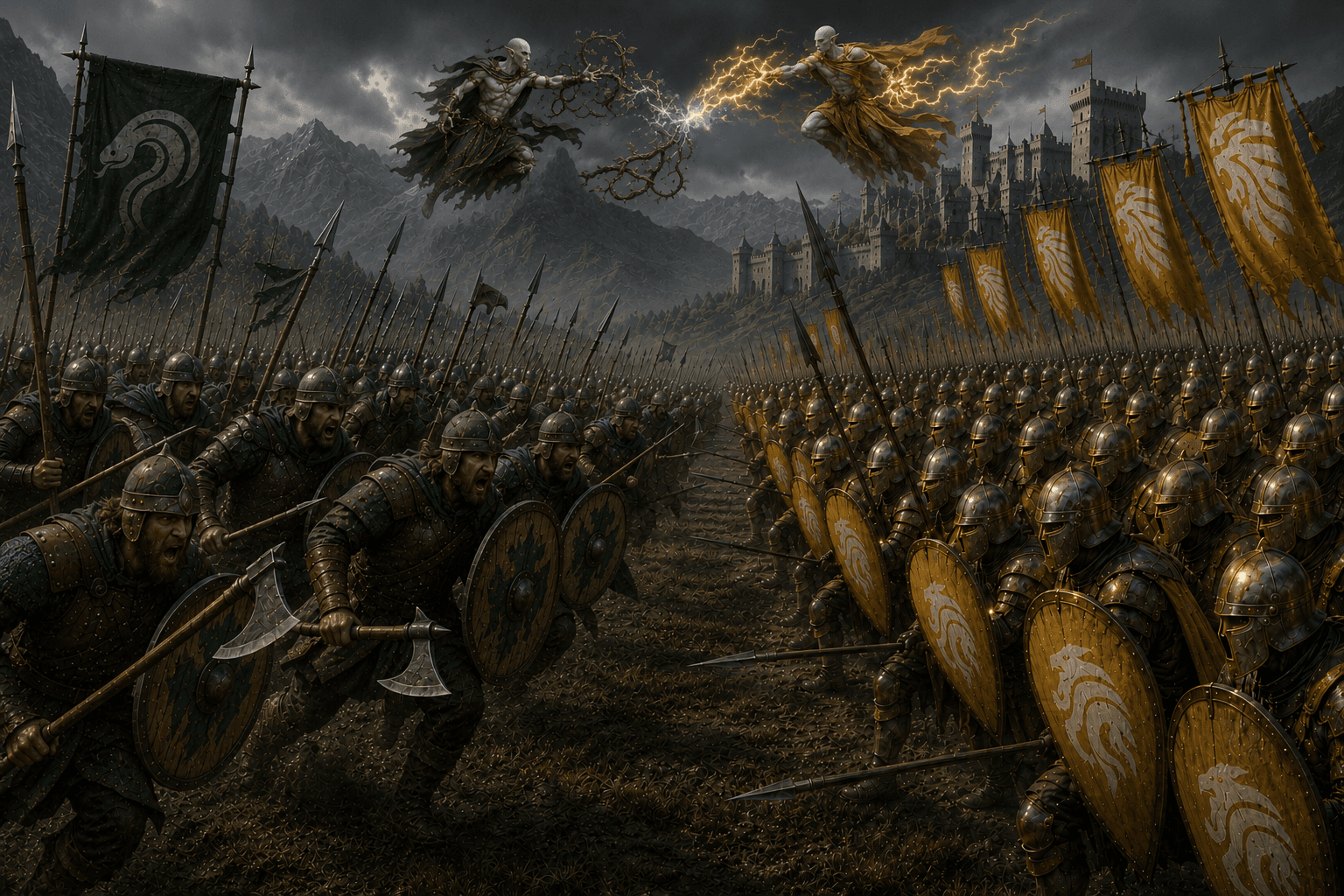
Only the Azure Guard had spent generations preparing for such a war. While the Lekaris rallied its hosts and Fairbarrow struggled to support the Empire's crumbling frontier, the Bear's fortresses stood ready. The war reshaped society, Healers from Fairbarrow established themselves in a new permanent location on the southern imperial shores and far removed, peace-seeking imperial cities refused to answer the call of war. The Paeleva, half-orcs, proved indispensable in the fight against their relentless brethren. It was in the mountain fortress of Frosthold that, after decades of war, the invasion finally broke.
The war claimed countless lives, including many Wardens, but the empire endured. The Alliance was driven again deep into the frontier, while the Bear emerged effectively independent, having secured victory through its own strength rather than imperial command.
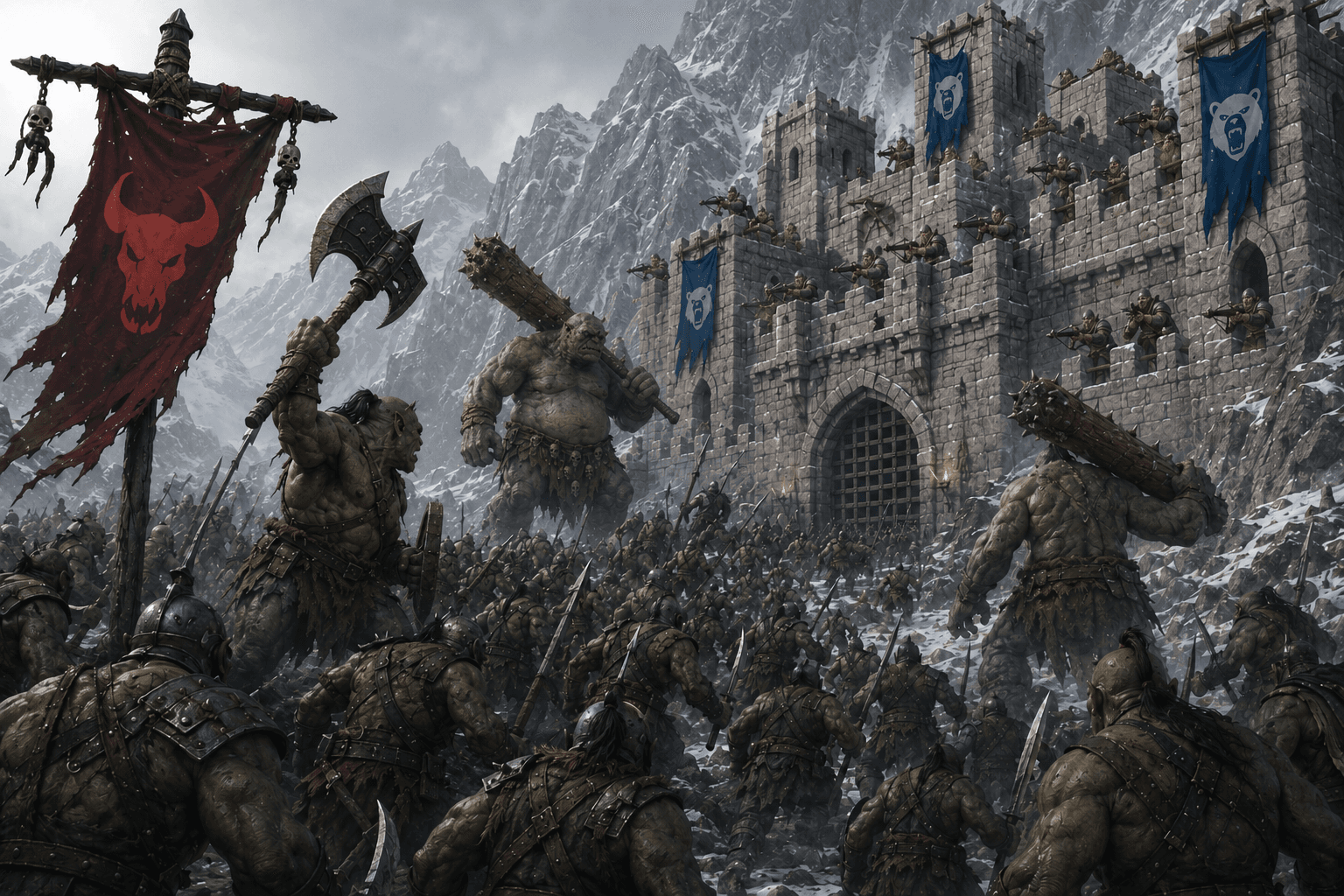
From that time on The Azure Guard has stood fully independent from the Empire, but remained a close ally and Kryo Wardens still competed for the Imperial throne.
Though defeated, the Bloodhorn had achieved what none had before, heavy Warden casualties.
The Wardens went from numbers in the thousands to estimates of under 100 throughout Riftmoor.
No one would ever again call the Virborne failures.
The Ravens, true to their nature, set aside disappointment in favor of curiosity. Whatever their original intentions, the experiment had succeeded beyond expectation, the virborne were a force to be reckoned with. Quietly relations between the Raven, the Bull and now the Cobra began anew.
The Great Siege further split Warden society into its inevitable final divisions. A full 8 civilizations formed around the domains the Wardens were bound to. The Haventide and the Vah-Yu emerged as fully independent nations.
Following the Great Siege, the Wardens numbers had diminished. They created the Gauntlet to identify mortals of exceptional talent to aid them. This test proved valuable to civilization through the rest of time, and became an important right of passage.
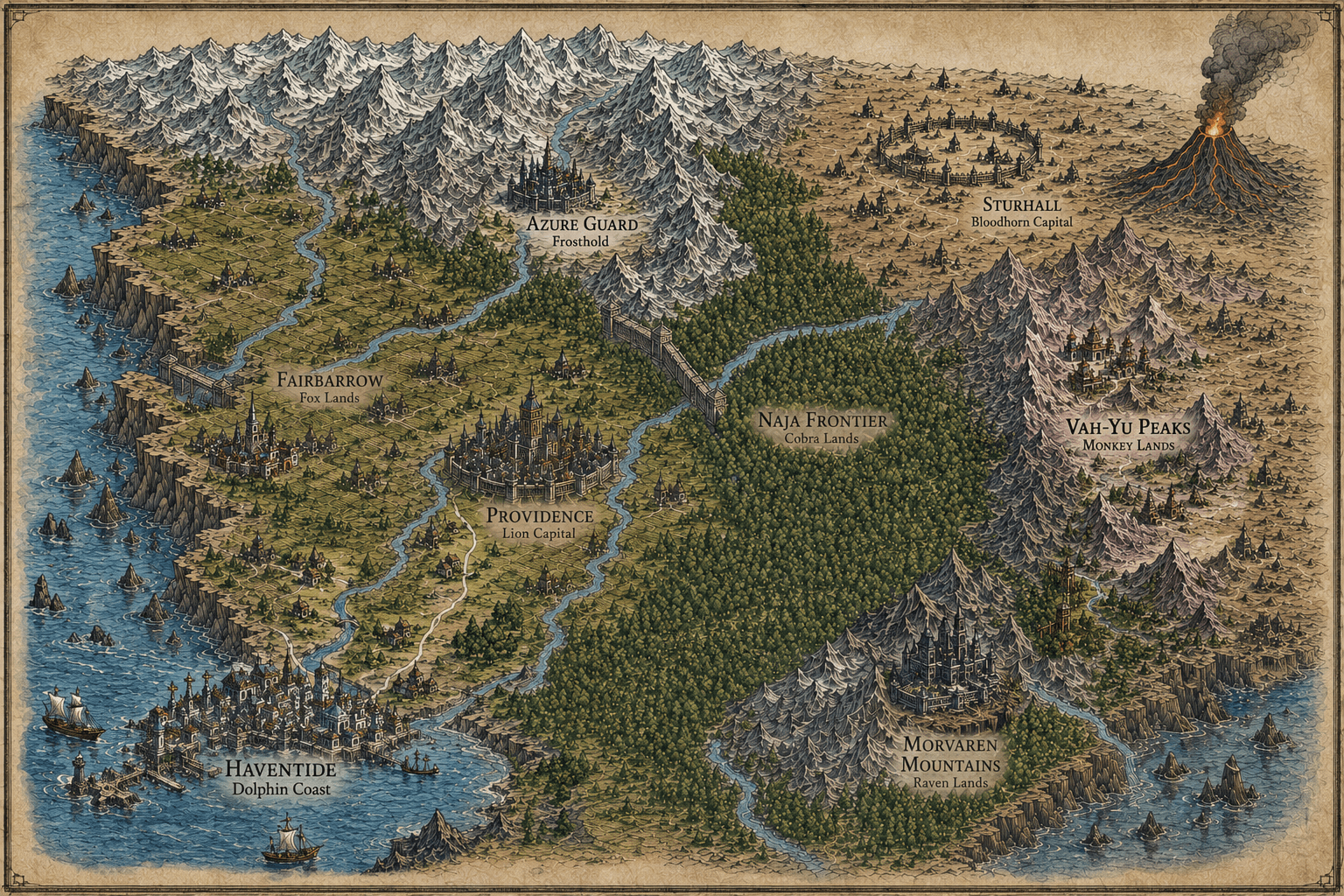
The First Expansion
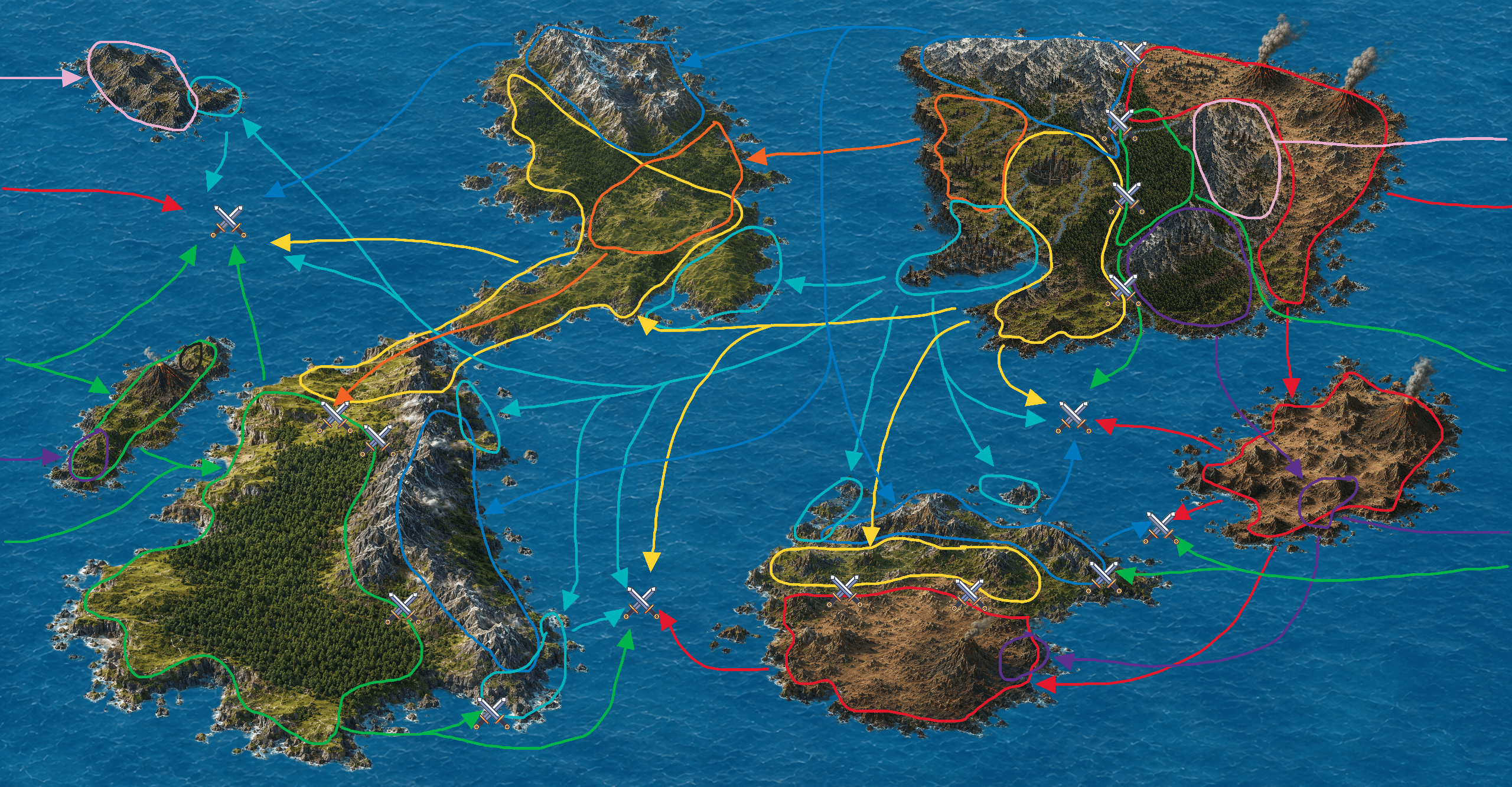
Following the Great Siege, every nation finally turned its attention beyond the Vale. Though the Throne remained the center of every Warden's ambition, the surviving powers understood that future wars would be won by those who controlled the rest of Riftmoor. 7 Lands of Riftmoor
The Lion (Yellow) The Empire expands everywhere. Its first priority is securing the sea approaches around the Vale. • Secures the southern horn below Haventide. • Reaches the northern coast of Korath with bear to secure the southern waterways. • Pushes into southern Stonereach, where fertile land supports large imperial settlements. • Expands southwest into Eldmere with Fairbarrow forces clashing with the Naja to the South. • Supports battles in critical waterways north of Eldmere, West of Korath and South of the Vale • Forms the backbone of imperial colonization alongside the Azure Guard and Fairbarrow.________________________________________ The Azure Guard (Blue) The Azure Guard seeks mountains. They establish enormous fortress realms wherever high ground exists. • Fully occupies the mountains of Stonereach • Seizes control of the eastern mountains of Eldmere from the Naja. • Secures the northern mountain spine of Korath with shared imperial ports. • Supports the security of critical imperial seaways • Supports every major imperial frontier with engineering and defensive works. ________________________________________ The Naja Frontier (Green) The Cobra spreads through forests. Where trees exist, so do the Rangers. • Quickly occupies most of Eldmere making it their civilizations backbone. Able to fully halt Lekaris expansion from Stonereach in the north. The frontier of the vale will always remain a key possession as it is so close to the throne. • Aides Bloodhorn in critical sea battles north of Eldmere and west of the Cinderlands. • Expands into the island of Pyrehold west of Eldmere, allowing the mantle to establish a secure haven to operate out of there________________________________________ Bloodhorn (Red) The Bloodhorn expand into lands no one else wants. Others cannot tame the volcanic wastes, they embrace them. • Consolidate all of the Wastes in the east of the Vale. • Expand aggressively onto the Cinderlands (#3), making it their second homeland. • Easily establish a foothold in the southern half of Korath where the terrain is inhospitable to weaker races • Raid across every sea where defenses weaken. • Maintain nonaggression with the Vah-Yu Their expansion follows harsh terrain that favors endurance over civilization.
Vah-Yu (Pink) The Monkey Wardens seek isolation. • Settle the northern island of Whitecape, establishing even more isolated monasteries far from worldly conflict. ________________________________________ Morvaren / Raven (Purple) The Ravens remain few. Rather than colonizing broadly, they establish isolated enclaves within allowing territory. • Maintain their homeland in the southern vale. • Establish a colony within southern Cinderland mountains, under Bloodhorn protection. • Establish a colony in southern Korath. • Establish a colony in the south of Pyrehold island. Many barely realize these colonies exist.
Haventide (Teal) The Dolphin Wardens become the masters of the sea. Rather than claiming large inland territories, they build ports. • Colonize nearly every strategic island. • Expand across the waters south of the vale and establish ports in northern Korath • Establish harbor cities on the eastern and western coasts of Stonereach. • Control shipping through the Western passage between Stonereach and Eldmere • Established a port with azure guard protection in the southeast of Eldmere • Are the primary naval force for the empire, enabling them to hold their vast coastlines Their empire is measured in harbors rather than borders.
The Fox (Orange) The Fox follows the Lion.. • Expand into the western plains of Stonereach cultivating land and a strong supply chain. • Aid militarily almost exclusively in the fight to secure the contested land of norther Eldmere Where the Lion plants a banner… the Fox build a town.
The New Frontiers By the end of the Great Expansion, Riftmoor has settled into several enduring frontiers: • Stonereach: Imperial heartland beyond the Vale, dominated by Lion, Azure Guard, and Fox. • Eldmere: Constant struggle between the Empire and the Naja, with Mantle and Morvaren influence hidden offshore. • The Cinderlands: Bloodhorn continent similar to the wastes with some Morvaren presence, entirely beyond imperial control. • Korath: The greatest battlefield outside the Vale. The Empire controls the northern coast and mountains and Haventide ports, Bloodhorn and Morvaren the southern wastes. • Pyrehold: The tropical volcano island is home to both of the elusive allies of Bloodhorn with a hidden Mantle haven. • Whitecape: Quiet Vah-Yu monasteries among frozen peaks. With a small forward Haventide port
With the planets resources claimed and well fought over, the wardens turned to the solar system itself to provide the resources and manpower to sustain their enduring war. Always willing to throw endless mortals into their infinite churn to keep their rivals far from their own throats.
The Second Shaping
The Great Siege ended, but the peace that followed proved no less dangerous. For the first time since the fall of the First Kingdom, the Wardens witnessed armies of newly fashioned peoples nearly overturn the balance of the world. The Virborne had accomplished what centuries of conventional warfare could not. Though no individual Orc could rival a Warden, together they tipped the scales just enough that Wardens themselves began falling in numbers once thought impossible. Every court drew the same conclusion. The Age of Shaping had not ended. It had merely begun anew. An uneasy arms race spread across the world as each court sought to answer the creations of its rivals. None wished to be left behind, for to refuse was to entrust one's survival to the restraint of an enemy. The Morvaren, ever consumed by discovery, eagerly resumed their experiments. Seeing how the Bloodhorn had nearly broken the Empire, they found willing patrons among the Bull and Cobra. The towering minotaurs and great wargs were weaved for the Bull, bred to storm the mountain fortresses where Orcs had struggled. For the forests of the Cobra they created the swift Centaurs, whose unmatched speed and endurance made the frontier deadlier than ever before. The Empire answered reluctantly. Among the Bear, many viewed such creations with suspicion, believing victory should be earned by discipline rather than engineered advantage. Yet they welcomed a race whose strength lay not in conquest but steadfast endurance. Thus, when the Lekaris made the Giants, they found their homes among the northern fortresses. Giants were the final and most ambitious of the human reshapings, achieved centuries after their other brethren. Every aspect of the human form was magnified—size, strength, vitality, and physical presence—but the cost proved immense. Giants matured slowly, required enormous quantities of food, possessed a more deliberate and contemplative intellect, and lived surprisingly brief lives, rarely exceeding fifty years. They became known as a great, but fleeting people. Elsewhere, necessity overcame hesitation. Fairbarrow's scholars accepted the Gnomes, whose keen minds and unusual affinity for magic enriched the Empire's greatest academies as much as its armies. Along the southern coasts, the Haventide embraced the Merfolk, whose command of the seas transformed rescue, trade, and naval warfare alike.
Gnomes were the only successful Reshaping performed upon a non-human Heir race. Seeking a people that retained the elves' remarkable affinity for arkana without their ambition and potential threat, the Wardens reshaped Elves into a smaller, more modest people. Gnomes inherited keen magical talent, exceptional curiosity, and nimble hands, making them unrivaled tinkers, artificers, and enchanters. they became the perfect complement to Dwarven craftsmanship, fueling a highly competitive enchanting industry. Most settled in Fairbarrow, where they developed a close, if occasionally rough-edged, friendship with the Halflings, whose steady practicality balanced the Gnomes' boundless curiosity. Elf
The Lekaris shaped for themselves the Lizardfolk from the heirs to endure the harsh Bloodhorn wastes, allowing their armies to campaign deep into hostile territory. Reluctantly accepted in Imperial cities, their resilience made them invaluable in the wars against the Bulls. During the 2nd Age of Shaping, the Wardens eventually discovered that Bioweaving could only produce stable life at broad biological lineages rather than individual species. While they could intentionally select the traits they wished to weave, they could not predict the biological level at which those traits would stabilize. Some experiments produced stable races representing an entire family of animals, others an order, and a few settled somewhere in between. Attempts to create narrower, more specific forms invariably failed or later broadened into more stable lineages. The earliest bovine beastfolk resembled horned cattle and became known simply as Minotaurs. However, as generations passed, isolated populations began changing. Communities living upon northern plains gradually developed the shaggy coats and broad builds of bison or yaks, while others adapted traits better suited to forests, mountains, or deserts. Scholars eventually realized the Wardens had never created cattle-folk at all—they had woven in the entire bovine lineage. This adaptive quality was later understood to be an intrinsic property of successful Bioweaving. During gestation, an unborn child subtly responds to the environment experienced by its mother, expressing traits already present within its broad lineage that are better suited to local conditions. The process is gradual enough that children still closely resemble their parents, yet rapid enough that isolated populations can noticeably diverge in only a handful of generations. As civilizations spread across the world, this remarkable trait gave rise to countless regional peoples while preserving complete compatibility within each broad lineage. Thus, the lion, tiger, and leopard , and other great cat peoples are all members of the same feline race, just as bisonfolk, yakfolk, and the traditional Minotaurs are all expressions of a single bovine lineage. These subspecies flowed into each other so fluidly that they were hardly ever actually distinguished officially. The beastfolk race name accounted for all the various subspecies that could emerge. Many new races were made from this type of Bioweaving.
Not all welcomed the new peoples equally. The Lion regarded many of them with quiet disdain, believing the original races superior to these increasingly artificial creations. The Haventide mourned the suffering that so often accompanied their making. Even among the Fox, curiosity frequently warred with conscience. The Keepers grieved the suffering and damage the creation of the new races brought so many, but held fast to their belief that all the races were still heirs, even the virborne. Yet none could ignore what the Great Siege had revealed. The balance of power no longer belonged to the Wardens alone.
The Terraforming Race
As the civilizations of Riftmoor grew, so too did their ambitions. Every Warden sought greater Dominion, and the world's finite lands could no longer satisfy eight competing nations. Beyond Riftmoor lay untouched worlds, rich in resources and capable of supporting countless future generations. To claim them served to strengthen one's claim to the Throne itself. Over the following centuries a race, full of espionage and discovery, unfolded throughout the system.
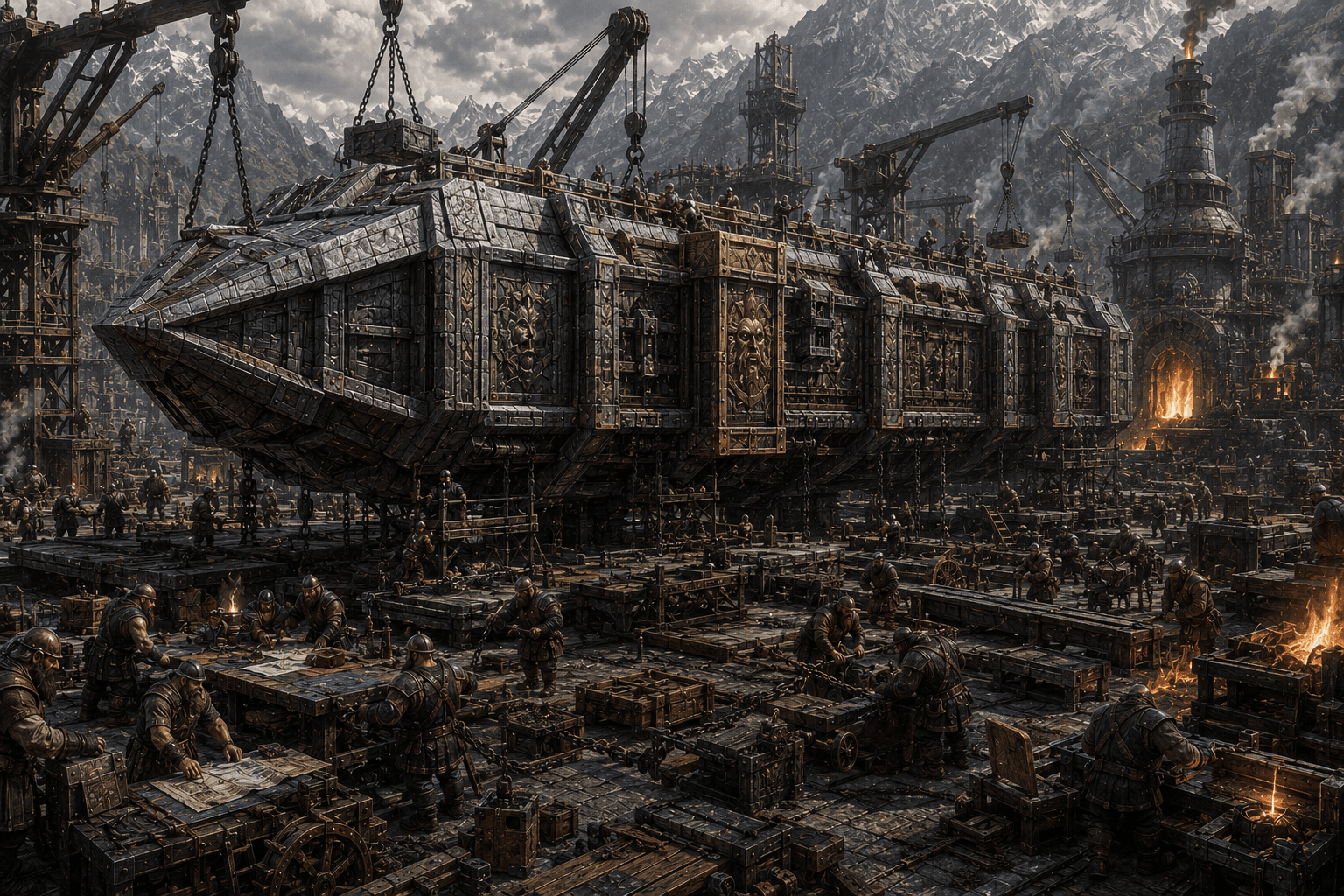
The first Star Arks, built by Vord, carried Kelek and his twin sister, Eleos, to the two moons of Riftmoor, later known simply as the Twins. Though close enough to reach, neither moon possessed the atmosphere, water, or resources required to support permanent settlement. The first expeditions survived only within sealed habitats, proving that civilization could exist beyond Riftmoor while revealing just how inhospitable the void truly was. The Wardens learned to withstand the vacuum for long durations without returning to shelter.
It was Vord who recognized that no amount of magic could create a world from nothing. The moons first needed materials. Pushing farther into the system than any before him, he established the first great mining operations within the asteroid belt, identifying bodies rich in ice, carbon, metals, and atmospheric resources. Using immense feats of magic, Vord launched entire asteroids along carefully calculated ballistic trajectories toward the Twins. What began as a an effort to supply two barren moons later became the foundation of interplanetary shipping throughout the Reach.
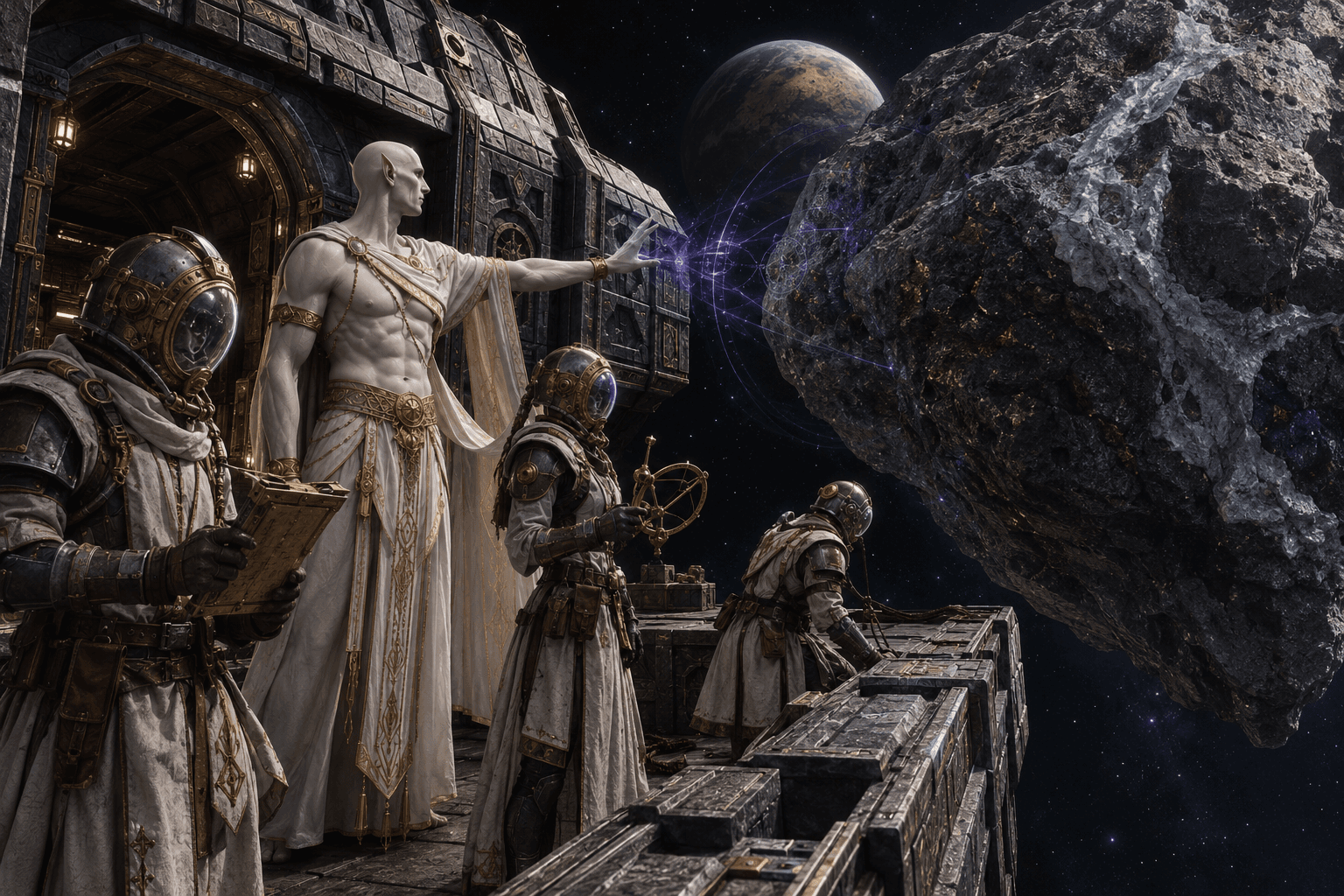
With resources finally arriving, Kelek and Eleos achieved the Empire's first terraforming successes. Kelek learned to maintain artificial atmospheres, while Eleos developed water cycles. These early environments remained fragile, requiring constant magical maintenance, but they proved that barren worlds could be transformed.
Expounding upon their methods, Paith led the terraforming of the Reach's first planet in the Temperate Zone of the system. There she applied the Imperial discoveries on a far grander canvas and included the land in her art, shaping continents, mountain ranges, rivers, and coastlines into a world designed for civilization. Though beautiful, both Paith's world and the Twins shared the same fatal flaw. Their atmospheres and hydrological cycles endured only through continued intervention, while every attempt to establish self-sustaining ecology ended in collapse.
Arzu, Zurn, and Medu secretly acquired the designs of the star arks and launched their own colonization efforts with a hostile and hot world in the Inner Zone in their sights. There, Zurn confronted a challenge the Imperials hadn’t yet faced, pioneering methods of planetary thermal regulation to tame relentless heat and violent geology. Once the climate could be stabilized, the exiles adopted the Imperial techniques of atmosphere, water, and landscape before turning to the problem that had defeated every civilization before them.
Arzu and Medu transplanted the living ecology of Riftmoor itself. Working together, they discovered how to establish complete, self-sustaining ecosystems by introducing carefully balanced microbes, fungi, plants, animals, and decomposers in the proper succession. For the first time, a world no longer required constant magical intervention to remain habitable. Though forever warmer and harsher than Riftmoor, the exiles' planet became the first truly stable terraformed world.
The Empire quickly learned of the breakthrough and the methods of ecological seeding soon spread throughout the Reach. Paith immediately incorporated these discoveries into her own work, transforming her colony into the finest world beyond Riftmoor. From that point forward, she became the Empire's foremost authority on terraforming.
As Paith’s world flourished into the Empire's greatest colony, Vord shifted much of his growing industrial network there. Its favorable location and expanding population made it the ideal hub from which to support the ever-expanding mining operations of the asteroid belt. Vord later adapted Zurn's thermal techniques to preserve warmth upon the frozen worlds of the Outer Zone, extending settlement ever farther from Riftmoor. Each civilization continued refining its own specialties while eagerly incorporating the stolen innovations of its competitors. By the end of the Terraforming Race, no civilization possessed a complete science of its own making. Every habitable world within the Reach stood as a monument to centuries of rivalry.
The Reach was heavily terraformed, traversed, and populated. The Reach became just a larger scale of what Riftmoor had been, a clash between two alliances battling for imperial dominion. Centuries later civilization was back where it had started before leaving Riftmoor, in need of more resources, more dominion, and more space. Interplanetary trade was well established, system-wide conflict zones were known well, space piracy was birthed with the security forces to suppress it. Most suitable planets and moons were terraformed and at every asteroid belt was a permanent mining outpost. The Reach was split at Riftmoor. The inner worlds belonged to Arzu’s league, who called themselves The Alliance, with the outer worlds held firmly by The Empire. Riftmoor itself was never fully held by either.
The Warden Space Race
Space was one of the defining achievements of the Warden Age that belonged to no single civilization. Fairbarrow's Otters advanced practical engineering and mechanisms, while the Azure Guard's Boars constructed the great arks that carried communities between worlds. Lekaris drove Rift-crystal powered enchantments of the electromagnetic boots and EVA equipment.
Morvaren's Octopus adapted knowledge gained from submarines and deep-sea bases into pressure management, sealed environments, and vacuum survival. Haventide's Pelicans contributed their mastery of long-distance expeditions, supply, and logistics. Vah-Yu's understanding of Air suddenly became indispensable: an element once taken for granted became something that had to be contained, compressed, moved, heated, and cooled.
The Fire and Ice domains likewise brought centuries of experience manipulating heat. Thermal management was almost second nature to their Wardens, and their practices spread rapidly throughout the Reach. Before long, Wardens commonly carried small pieces of stone or metal as reusable heat sinks, often disguised as beads, pendants, or other ornaments strung into their clothing.
No civilization created spaceflight alone. They competed, traded, copied, stole, and improved upon one another's discoveries until their combined work opened the Reach.
Warden Survival in Space
The hard sci-fi of Warden spacewalking
Breathing — No oxygen Space contains essentially no breathable air. A person quickly loses consciousness and dies without a supply of oxygen. A Warden instead carries a thin layer of real air telekinetically around their body, concentrated more heavily around the face. Every exhalation remains within this layer and every inhalation draws from it. For longer journeys, the Warden periodically separates the accumulated carbon from exhaled CO₂ and returns its oxygen to the air supply.
Boiling — No external pressure In a vacuum, the pressure is so low that exposed bodily fluids can begin vaporizing at body temperature. Moist tissues swell and exposed water boils away. The Warden's retained atmosphere provides real external pressure against the body, preventing this.
Pressure — Internal gases expand The gases and fluids inside a body normally exist under atmospheric pressure. In vacuum there is almost nothing pushing back against them, while gases within the lungs attempt to expand outward. The Warden telekinetically compresses their thin layer of real air to approximately normal atmospheric pressure, effectively surrounding themselves with an invisible, skin-tight atmosphere.
Overheating — Poor heat removal Space has no surrounding air to carry body heat away through convection. Although the body still radiates heat, prolonged activity—especially in sunlight—can cause excess heat to accumulate. Before leaving, a Warden removes essentially all heat from several rocks, reducing them to approximately zero Kelvin. These rocks orbit alongside them telekinetically in the vacuum. Whenever the Warden becomes too warm, one is brought into the air layer and excess heat is transferred into it. The rock is then returned to vacuum and reused until it becomes too warm to serve as an effective heat sink.
In practice: a Warden's invisible layer of pressurized air functions simultaneously as their spacesuit, oxygen tank, breathing loop, and thermal environment, while several supercooled rocks function as their cooling system. To an observer, the Warden appears to simply walk into space without protection, accompanied perhaps only by a few floating stones.
The First Jump
While every civilization sought to expand its Dominion, the Vah-Yu refused to anchor their ambitions to any single world. The Air Domain, like all other domains, never abandoned their foothold on Riftmoor, nor did they withdraw from the Contest of Wills, believing instead that their victory would belong only to one who could not be bent by another's influence. Their monasteries spread across the Reach, often overlooking the cities of other civilizations from distant mountains or quiet valleys. Being welcome throughout all lands, no world was considered beyond them, mastery of the self could be pursued anywhere.
Generation after generation devoted themselves to becoming unbendable. When one of their Wardens was judged ready, they journeyed to Riftmoor to challenge for the Throne like any other claimant. On occasion they prevailed, and their reigns became renowned for patience, and unwavering judgment. Yet burdens of governing an empire gradually became attachments of their own and another Warden would eventually prove stronger in the Contest. Defeat was never viewed as failure, but as confirmation that the pursuit of self-mastery was never complete.
As the Reach expanded, Hep's followers found themselves drawn ever farther from home. Rather than building the largest or most heavily armed star arks, they crafted endurance vessels capable of the longest journeys. At that time air was the greatest limitation to life in space, and so the Vah-Yu Wardens pioneered methods of compressing, storing, and recycling breathable atmosphere aboard their craft. Their star arks could remain beyond the worlds for sometimes years. In time, nearly every civilization adopted these life-support systems for their own.
The discovery that transformed the Reach came unexpectedly. During an attack upon one of Hep's long-range arks, its wardens attempted a desperate means of escape, Hep and her Wardens compressed the space before the fleeing vessel while forcing that same distance behind it. Rather than simply accelerating, the ark was suddenly an impossible distance further forward, traversing an immense span in moments. The attackers were left adrift, unable even to understand where their prey had gone. What had begun as a desperate act of survival became the first successful jump.

The Vah-Yu spent years refining the technique that became known as warp travel, developing specialized arks whose unmatched endurance allowed them to exploit the discovery better than any rival. As with every great advancement before it, however, the secret did not remain theirs alone. Warden warp travel spread throughout the Reach until every civilization employed it.
The age that followed transformed history. The Reach ceased to mark the frontier of civilization and instead became its heart. Neighboring stars were settled first, then the wider galaxy beyond. Worlds farther from Riftmoor proved increasingly receptive to Warden magic, allowing entire planets to be shaped in decades where the worlds of the Reach had demanded centuries. Yet however distant the colonies grew, none abandoned their foothold upon Riftmoor. The Throne remained beneath the Scar, and every fortress, colony, and capital among the stars existed for the same purpose: to strengthen its Warden's claim to the one seat that truly mattered.
