1st Age
1st Age | 2nd Age | 3rd Age | 4th Age | 5th Age
The First Kingdom
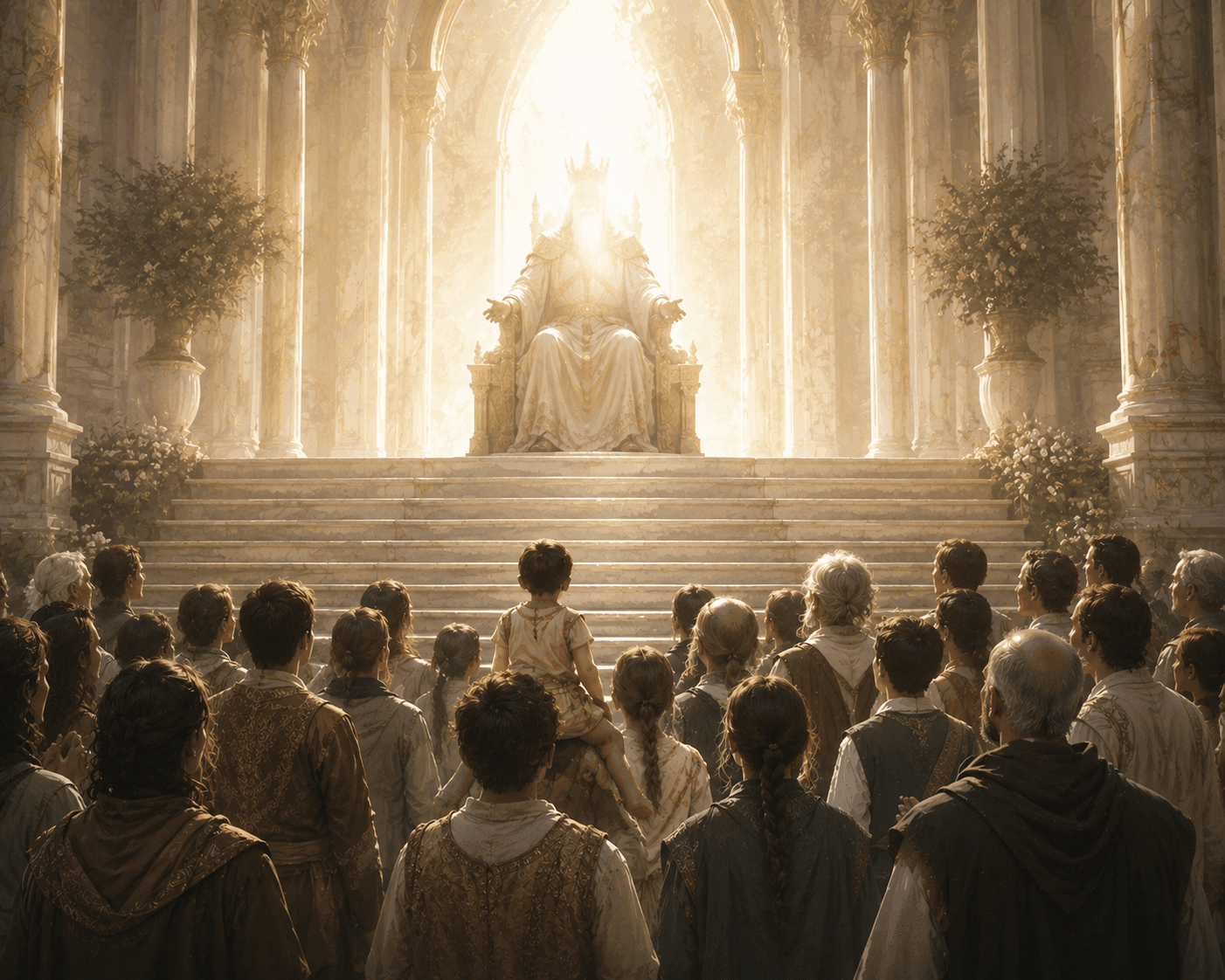
Before kingdoms, nations, or races, there was only the First Kingdom.
The First Kingdom was ruled by a good King an immortal sovereign whose authority united religion, government, and justice. His Kingdom was not merely a nation, but the proper order of the world.
There were no commoners.
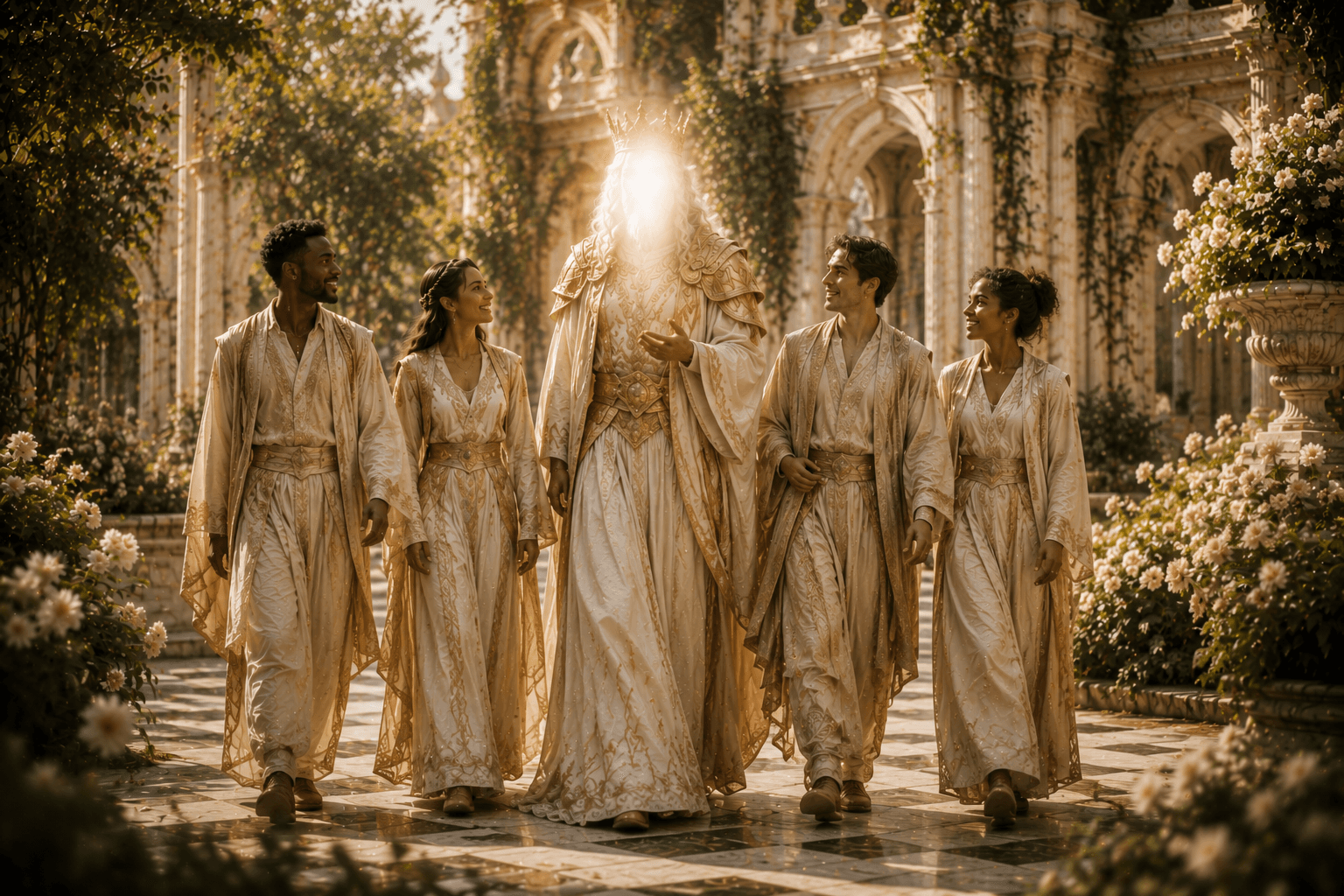
The Kingdom existed as a great household, where every heir would one day inherit responsibility according to wisdom and maturity. The King intended to gradually entrust portions of His Kingdom to His heirs as they grew into their calling.
To aid Himself and his heirs, He appointed powerful beings known as **the Wardens.
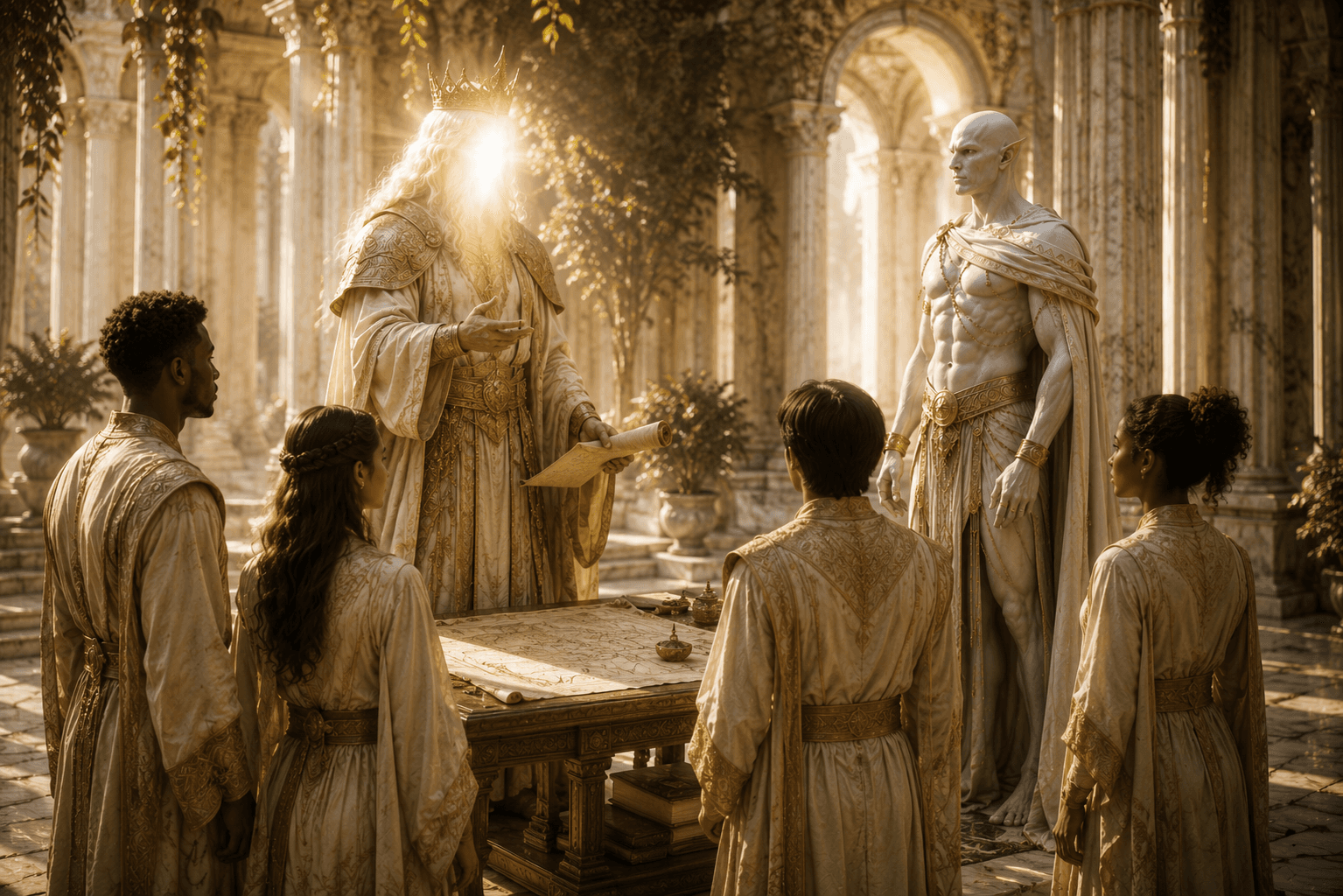
The King intended the heirs to mature into both.
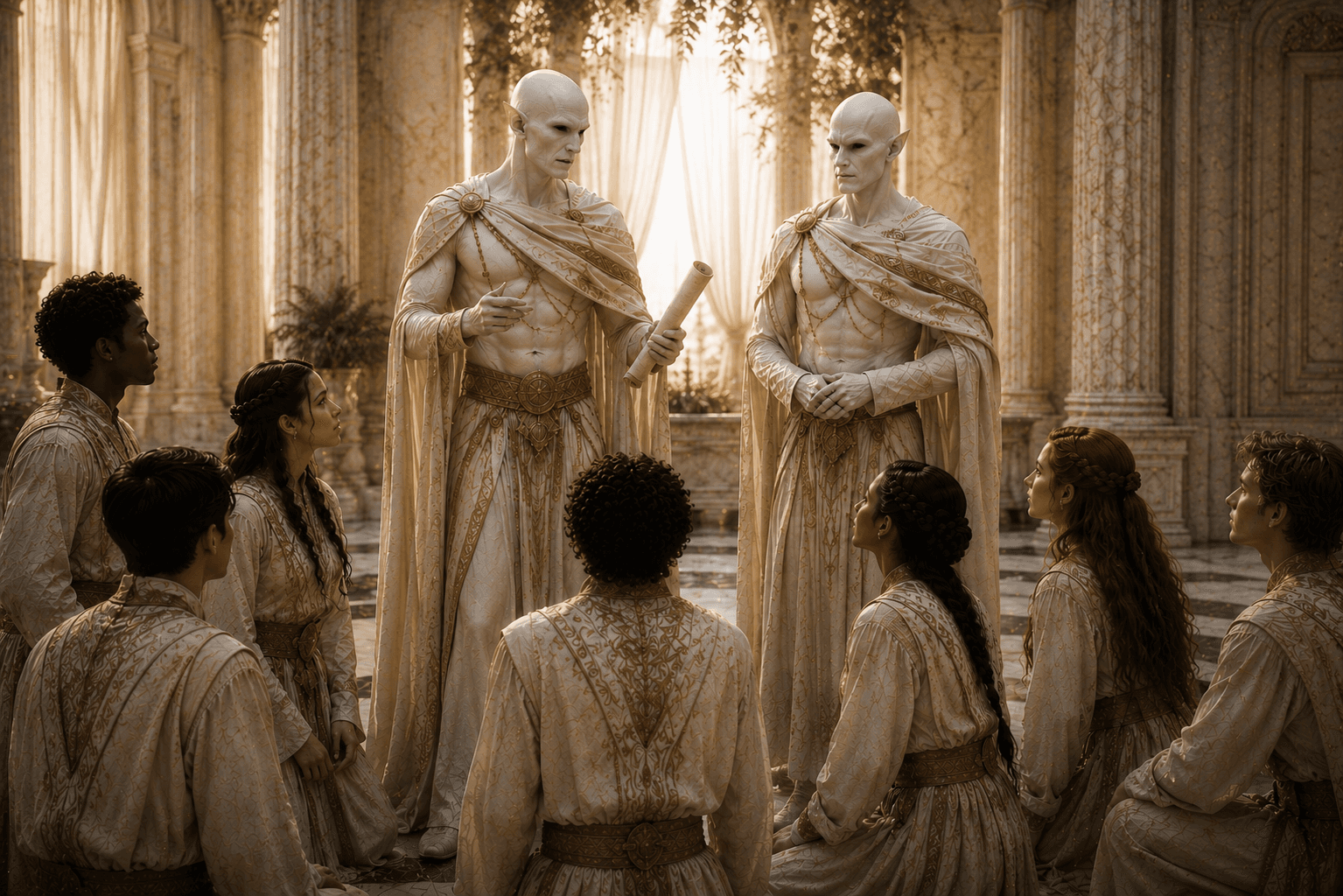
The many wardens were set over the 8 Domains
-
Bios: Life, Nature, and Growth
-
Ignis: Fire, Burning, and Destruction
-
Lektro: Lightning, Electric, and Energy
-
Hydro: Water, the Sea, and Flow
-
Kryo: Ice, Freezing, and Stasis
-
Aero: Air, Wind, and Harmony
-
Entro: Death, Wither, and Decay
-
Geo: Ground, Terrain, and Form
The Rebellion
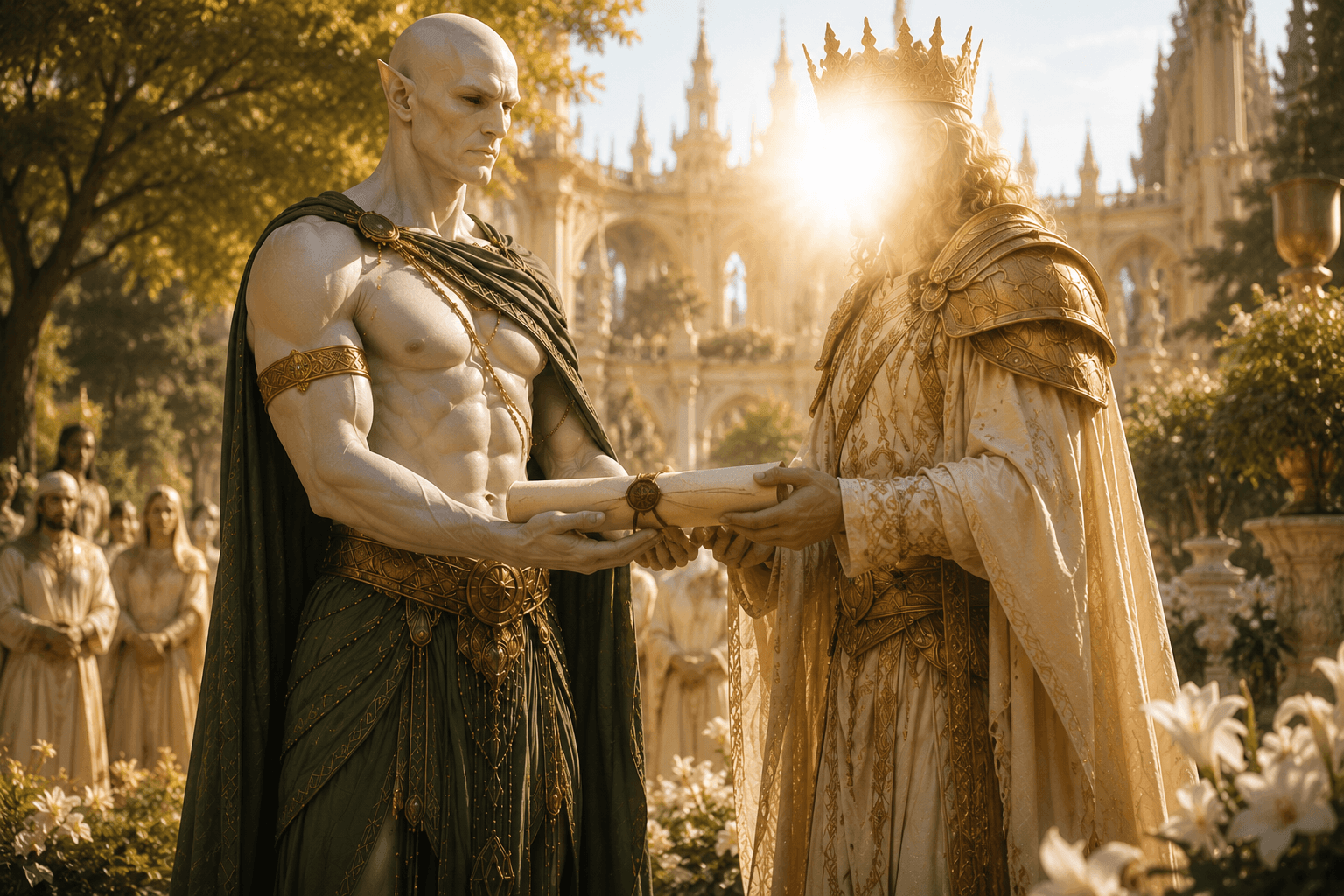
He did not initially desire the throne for himself.
Rather, he believed the King's judgment had failed.
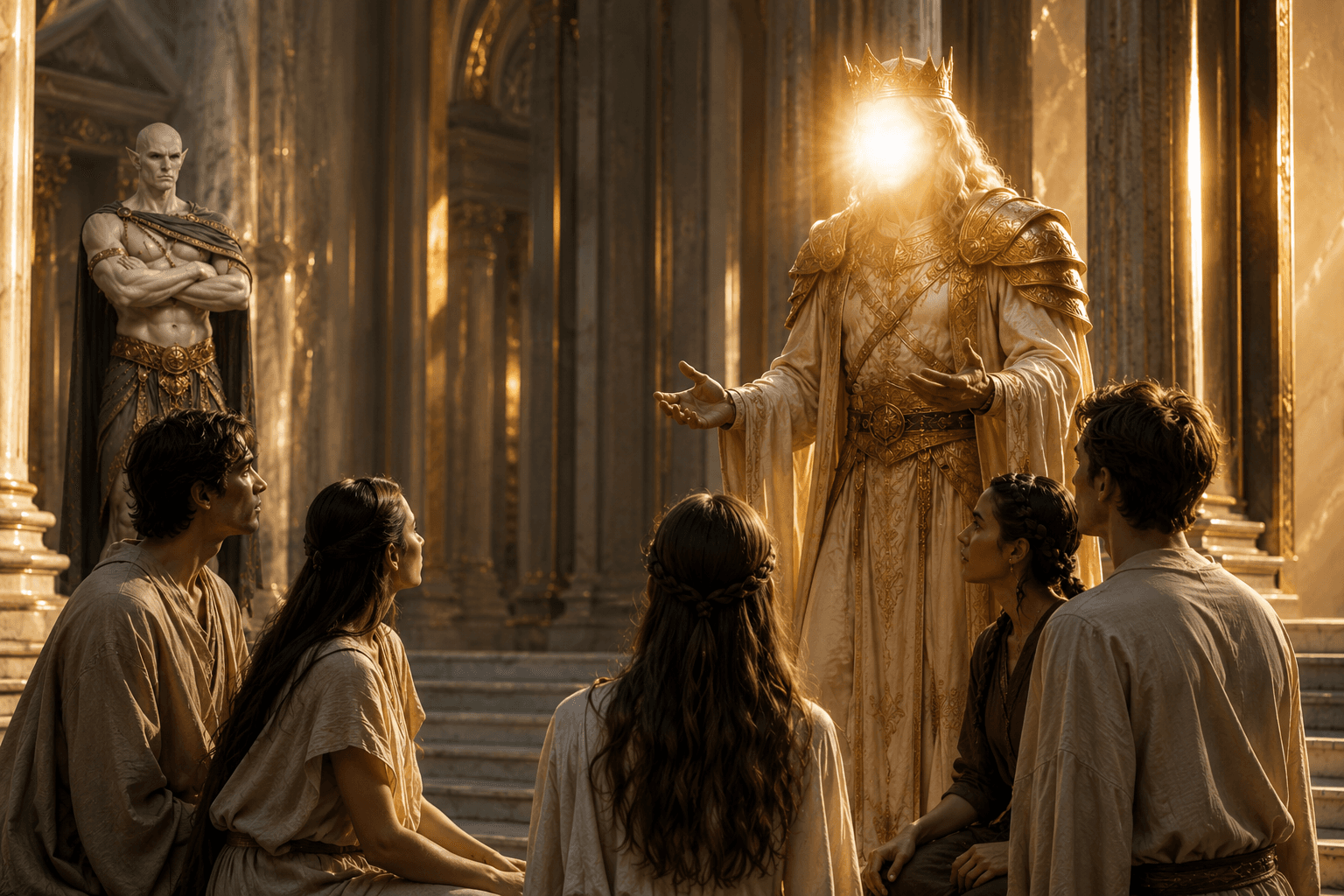
Believing he understood the Kingdom better than its King, he devised a test.
He secretly persuaded the heirs to rebel.
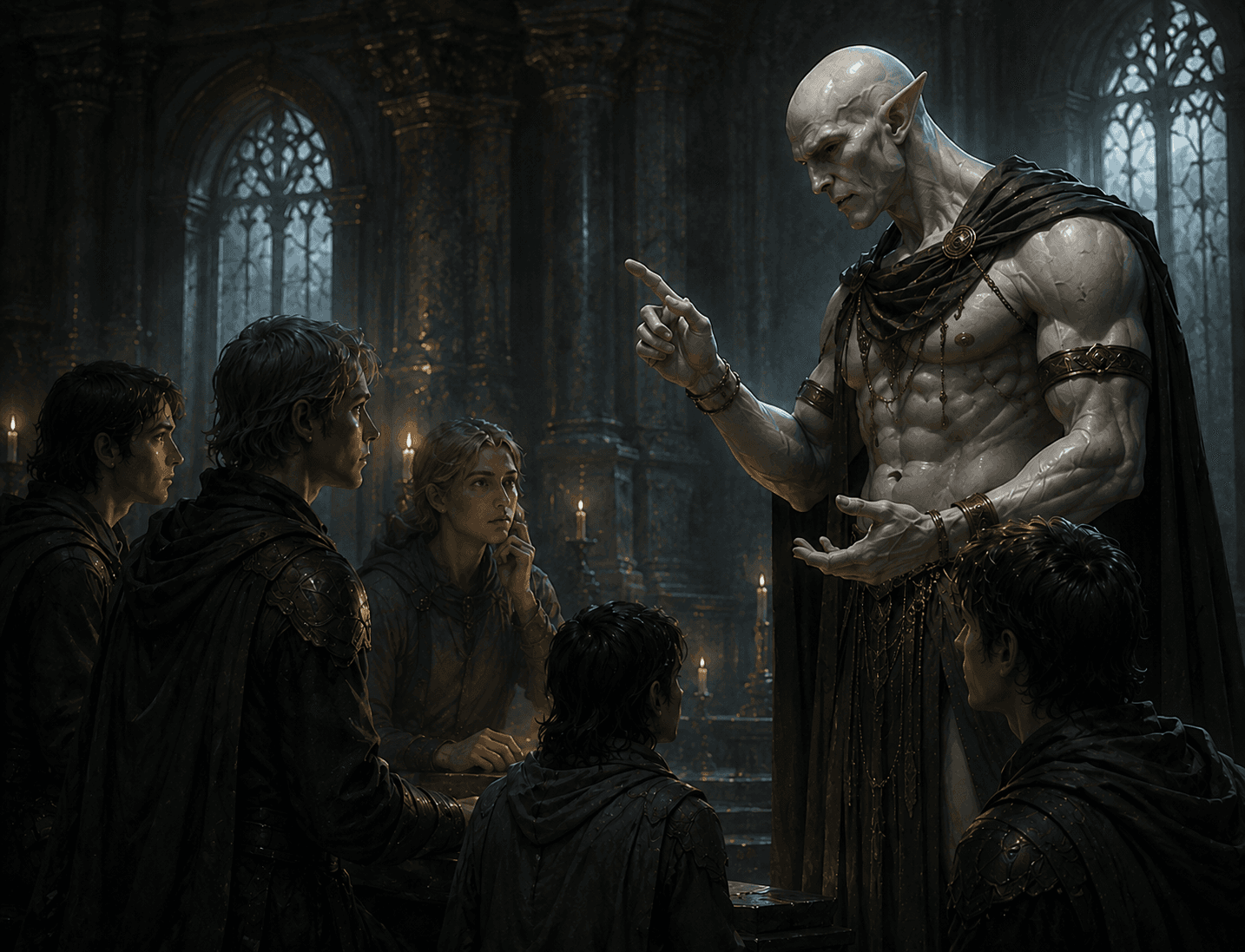
His reasoning was simple.
If the heirs truly deserved inheritance, they would reject him.
If they could so easily be deceived, they would prove themselves unworthy, exposing the King's failure.
The heirs accepted.
Arzu and his following made an incredible gamble.
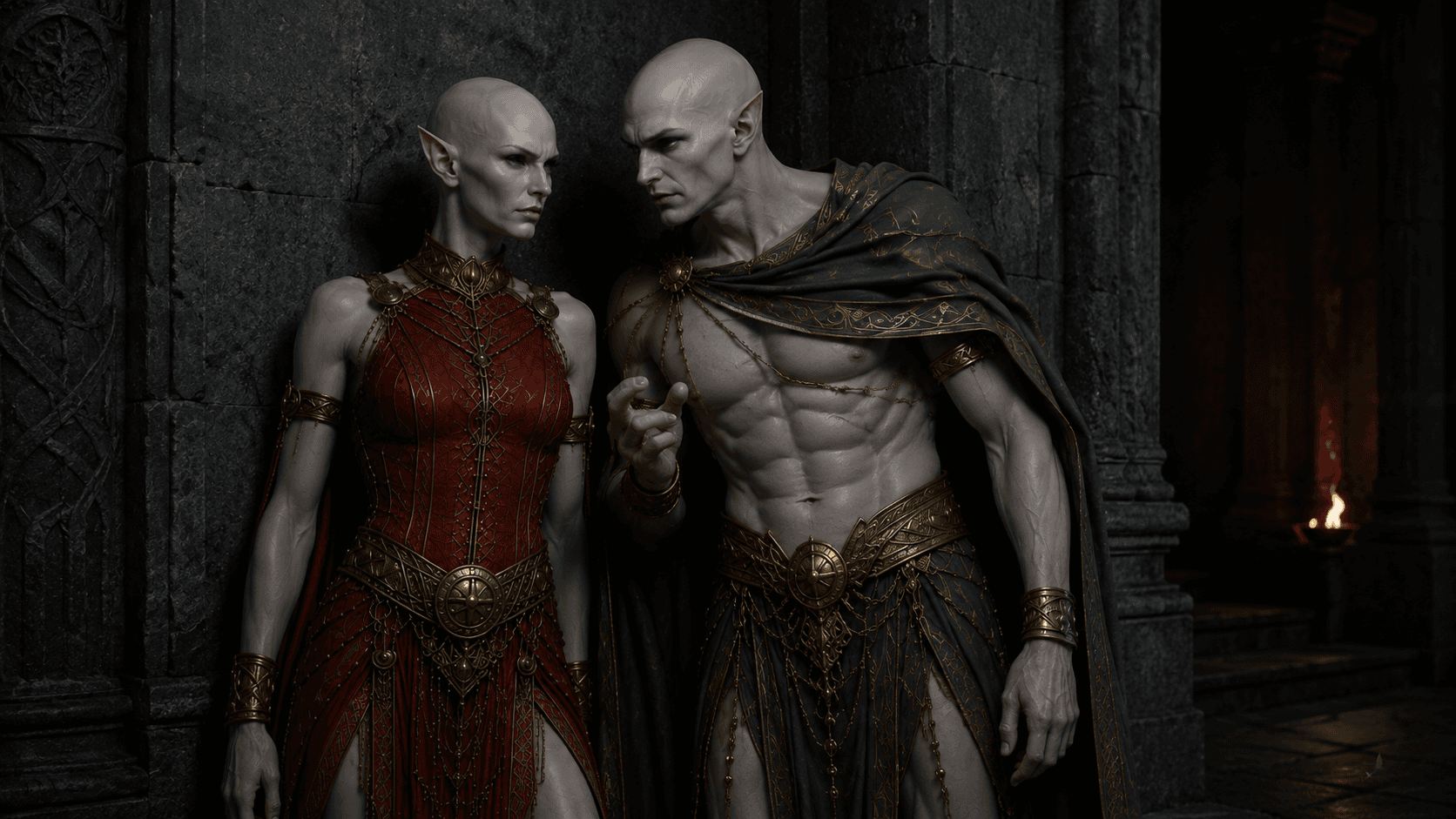
They willingly severed themselves from the King.
That cost them their power.
But in return…
They stole something far greater.
The heirs willingly placed themselves beneath them.
The Wardens acquired the heirs' inheritance before the heirs ever learned to use it.
Not because the Wardens were stronger.
Because the heirs handed it over.
In doing so, they unknowingly transferred their trust from the King to the rebellious Wardens, granting them the dominion they had previously lacked.
The Departure
The rebellious Wardens discovered too late that the King had never been vulnerable.
His presence alone was unbearable to those who had willingly rebelled against Him.
Rather than remain and see his children destroyed, the King chose mercy.
He departed.
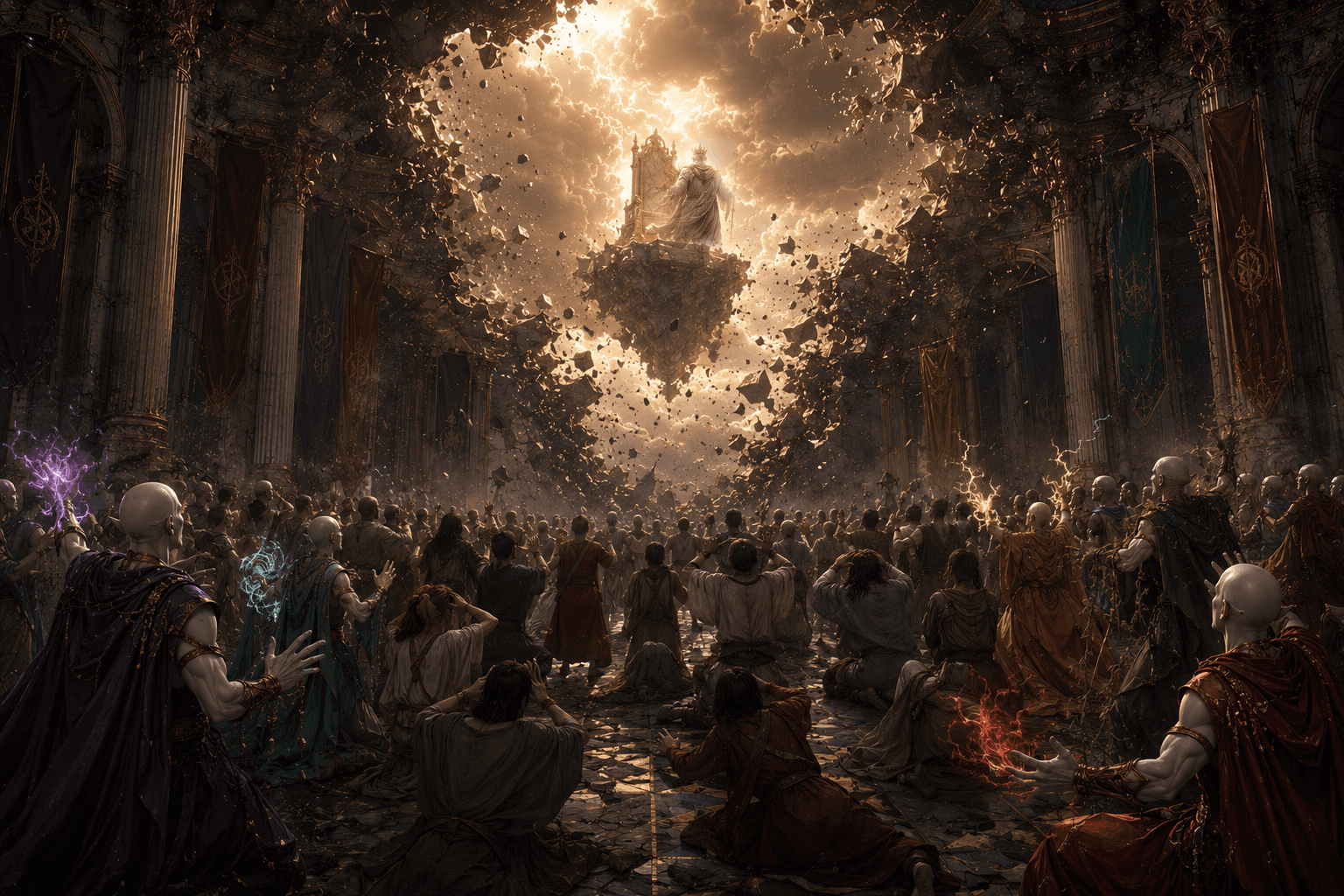
The First Kingdom itself was gone.
The heirs remained behind.
Almost immediately, but too late regretting and repenting.
Above the place where the Throne had stood, the heavens remained forever torn. A temporal scar hung motionless in the sky, a wound between creation and the vanished Throne. Through it a measure of the King's power still flowed. Men came simply to call it the Rift Scar and the magic it allowed the Rift. Many mistakenly thought it was the source of magic, but it was only a wound. The source lay far beyond it, where the Throne still stood.
The rebellion collapsed almost as quickly as it had begun.
The rebellious Wardens retained the dominion the heirs had granted them. They had possessed immense power before, but now they also held dominion. Uniting these two elevated them beyond every mortal measure.
Their magic was unmatched. They bent mountains, melted stone, commanded fire and storm, and bore themselves—and all they willed—through the air as though the very world existed only to obey them. Against a single Warden, kingdoms could do little more than endure.
Only another Warden stood as a true equal, and so the wars of the age were decided less by armies but instead by which side could bring the greater number of Wardens to the field.
The Great Division
The rebellious Wardens victory proved short-lived.
The King was gone.
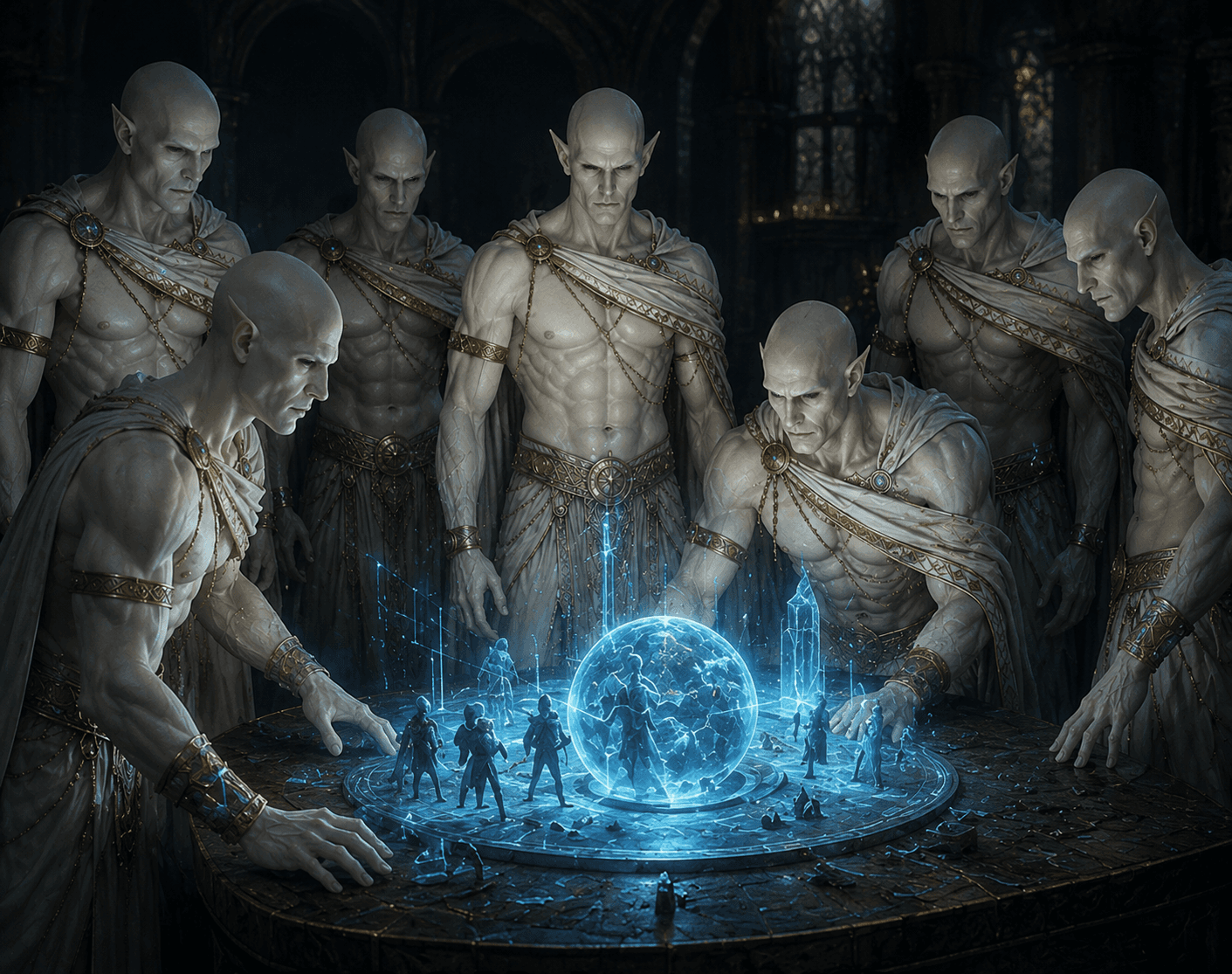
Most wardens had remained loyal to the king and vanished with him leaving their domains to be governed by the rebels. The family of Arzu, the Bios Warden, quickly filled this vacuum and rose to leadership over their domains after the rebellion. Only Bios, Ignis, and Decay were the original heads of their domains. The new heads of the Lektro, Aero, Hydro, Kryo, and Geo domains represented a new generation of warden leadership.
The First Kingdom lay broken. Only one question remained. Who would rule now?
Arzu, who had orchestrated the rebellion with Zurn, believed the answer obvious. Having exposed the King and brought about the fall of the First Kingdom, he considered himself the only worthy successor. Furthermore, he went as far as to claim that he actually had killed the King.
The other Wardens disagreed and his claim had obvious holes.
Though many had followed him into rebellion, few trusted him with absolute authority. They had rebelled against one ruler only to find themselves unwilling to crown another.
The other rebellious Wardens rejected his claim. Seeing him as the threat he was, the majority - led by his own son, Kelek - drove him, and his following of Wardens and heirs, far into the wilderness. The decay and aero wardens watched from a distance, but did not aide either side. Lektro, Kryo, Geo, and Hydro led the others in the split.
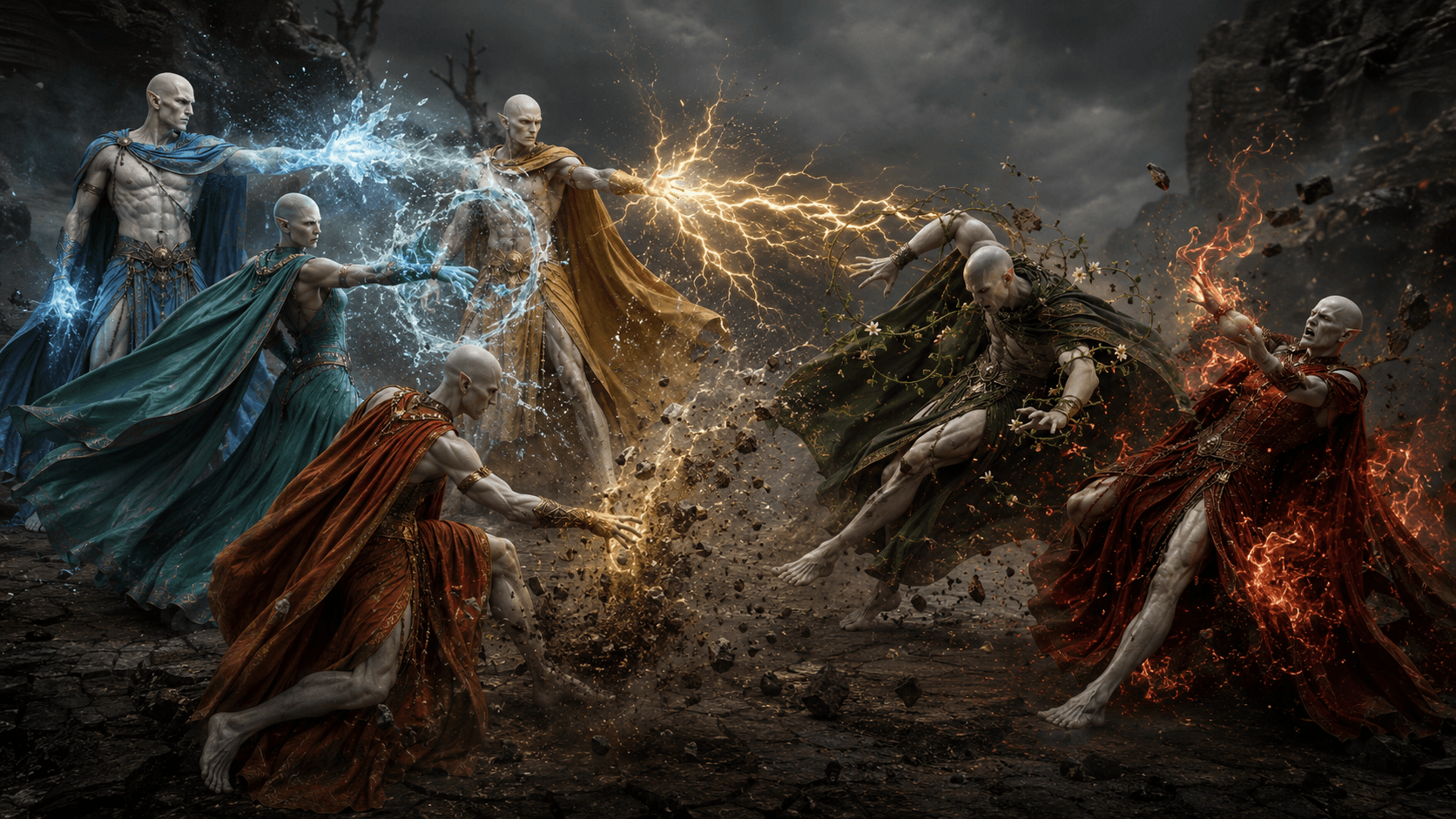
The battle was fierce and many Wardens were killed or wounded by Arzu, the Cobra, the first day renaming took place as a memorial. That weekday was forever called Arzide. The day the cobra struck so many, and was cast out.
Five of the imperial wardens, the leaders of the other dominions, later adapted the remaining days to themselves.
The first day of the week was named for the rift – it became a memorial for the victory that the wardens saw departure day as - Riftide. The Water warden Eleos (The Dolphin) twin sister of Kelek, was gifted the second day by Kelek – Eleoside. The Ice warden Vord (The Bear), younger brother of Kelek, was gifted the third day by Kelek – Vortide. The Decay warden Medu (The Raven), brother of Arzu, claimed the fourth day for himself – Meduide. The Electric warden Kelek (The Lion), son of Arzu, and now reigning emperor, took the fifth day – Kelekide. The Ground warden Paith (The Fox), married to Vord, was given the sixth day by Vord as a token of his love – Paithide. The Life warden Arzu (The Cobra), had the last day, but as a memorial to his own overthrowing in imperial tradition – Arzide. The Fire warden Zurn (The Bull), Co-conspirator of Arzu, had sided with Arzu and was banished and no day was named for her. Finally, the Air Warden Hep (The Monkey), daughter of Medu, claimed no day for herself.
Thus was born the first great schism after the rebellion. Those who remained rebuilt the King's throne—a pale imitation, but enough to fane legitimacy. Around it they built the empire, a throne passed from warden to warden starting with Kelek.
He adopted the ancient Lion standard as his own as and it became synonymous with the new Imperial Throne. It had always symbolized the King's realm, and though the Kingdom itself had departed with the King, The Empire continued beneath the old sigil, believing itself the rightful continuation of the First Kingdom.
Those who had departed embraced the Cobra, these were Arzu and the Bios Domain. Zurn and the Ignis Domain was exiled alongside them, but remained a distinct people. To them, the concept of inheritance had failed, and the Imperial idea of rightful continuation was a hoax. Arzu and Zurn formed what would be known as The Alliance as a resistance and reclamation front. Though driven into the frontier, they never abandoned the conviction that one day they would reclaim the throne.
The Imperial Throne
Unlike mortal kings, the Wardens did not age. An emperor might rule for a century—or for a thousand years. Left unchallenged, he would never surrender the Throne.
The founding Wardens feared this, all craving the throne, they each feared they did not possess the current authority to rule, but whoever began ruling may never finish and they might miss their chance to prove themselves the new eternal ruler of the Empire. They had not cast down one eternal sovereign merely to crown another. Though united beneath the Lion, no Warden intended any other Warden to hold absolute authority forever.
Thus, the Imperial Throne remained open to challenge.
Any Imperial Warden who believed his dominion had surpassed that of the reigning Emperor could invoke the ancient Rite of Succession beneath the Scar itself. There, before the lingering power of the Kingdom, the two would contest not with armies nor with blades, but through sheer dominion.
Whichever Warden possessed the greater command—the stronger will, the greater following, the broader influence, and the deeper recognition among both Wardens and mortals alike—would find his opponent bending to his will. The defeated challenger did not die, nor was he stripped of rank. He simply yielded the Throne, withdrew in disgrace, and began once more the long work of rebuilding his influence.
Some emperors ruled for decades. Others for centuries. None ruled forever.
The possibility of challenge remained the foundation of Imperial stability, ensuring that every Emperor governed knowing the Throne was never truly his—only borrowed until another proved more worthy to bear it.
For this reason, only Imperial Wardens were permitted to contest the Throne. To many, this privilege alone justified remaining within the Empire. The highest seat in the world was always, in theory, only one challenge away.
It was also one of the principal reasons the Cobra was never permitted to remain. Many feared that had their he been allowed to compete, his unrivaled personal strength would have ended the Contest forever. Better an Empire of rivals than another eternal monarch.
The Cobra Perspective
The Cobra warden believed the strongest should rule, as long as it was himself, If he proved himself worthy enough to claim the Throne, then no weaker rival had the right to replace him. To him, the Imperial Wardens feared true merit, expelling the one Warden most likely to win rather than allowing an honest contest.
The Imperial Perspective
The Imperial Wardens rejected the rule of any single immortal. Rather than risk another eternal sovereign, they established the Contest of Wills, allowing only Imperial Wardens to challenge for the Throne beneath the Scar. Though cloaked in ideals of stability and shared responsibility, the system also ensured that every Imperial Warden could one day aspire to become Emperor. Better, they believed, that the Throne pass endlessly among rivals than be held forever by one who could never be challenged.
Both perspectives were right about the other, both perspectives were wrong for the world. The good wardens had left with the king, these were all operating outside of their intended purpose.
