4th Age
1st Age | 2nd Age | 3rd Age | 4th Age | 5th Age
The Reunion
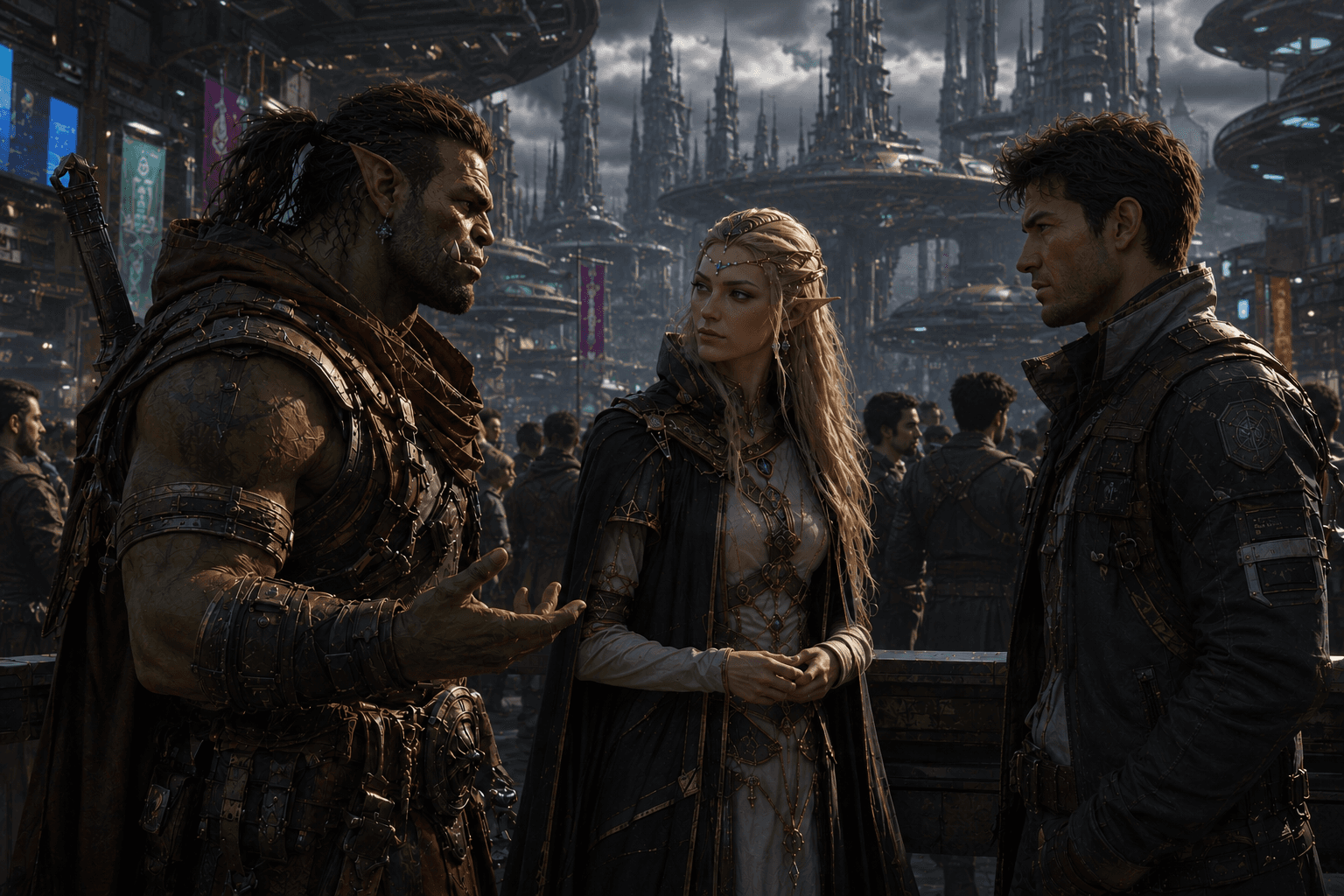
Across the centuries that followed, civilizations learned to survive without their immortal masters, combining magic and technology to reclaim the stars by their own ingenuity.
Only later did the Keepers begin to understand what had happened.
The Heir had been the King Himself.
He had entered His own inheritance, lived as one of His heirs, and willingly received the fate His people deserved from the beginning without ever yielding the dominion that was theirs by right. In doing so, He fulfilled the ancient covenant without breaking it, ending the Wardens' borrowed rule exactly as it had begun—with the choice of the heirs.
The Wardens had no more tie to the world with the King and their ill-gotten dominion gone, they had vanished too.
To most, the Keepers sounded as mad as they always had. Most questioned how the Keepers could possibly know these things. At the risk of sounding crazier, they claimed the Heir did not stay dead, and told them.
They remained convinced the King's work was not finished.
And just as they had always attested that the King was not gone, they doubted the Wardens were truly gone either.
One day, they believed, He would return. And when that day came, the heirs themselves would finally inherit the Kingdom that had been promised to them from the beginning.
Riftech Jump Drives
Following the Vanishing, the art of Warden warp travel was lost. For over a thousand years, the stars remained isolated until mortal engineers were able to harness the same principles to achieve the same result, but this time through a union of rift-magic and technology known simply as Riftech.
Modern jump drives perform the same fundamental task once accomplished by Wardens. Rather than relying upon living Wardens to sustain the displacement, they consume refined Rift energy stored within Rift Cells, while conventional engines provide the vessel's actual motion.
Like their predecessors, Riftech drives cannot blindly bend space. Before every jump, the intended corridor must first be mapped and verified. Advanced scanners construct a complete picture of the space ahead, allowing the jump drive to safely grasp and compress the empty space.
The farther the intended jump, the greater the volume that must be surveyed and the more Rift energy the process consumes. Because every jump requires tedious mapping and considerable energy, interstellar travel remains expensive.
By the end of the 4th age, the history of Riftmoor was regarded as a legend.
By the end of the 4th age, the history of Riftmoor was regarded as a legend. The following would be a commonplace conversation at some space station near The Reach.
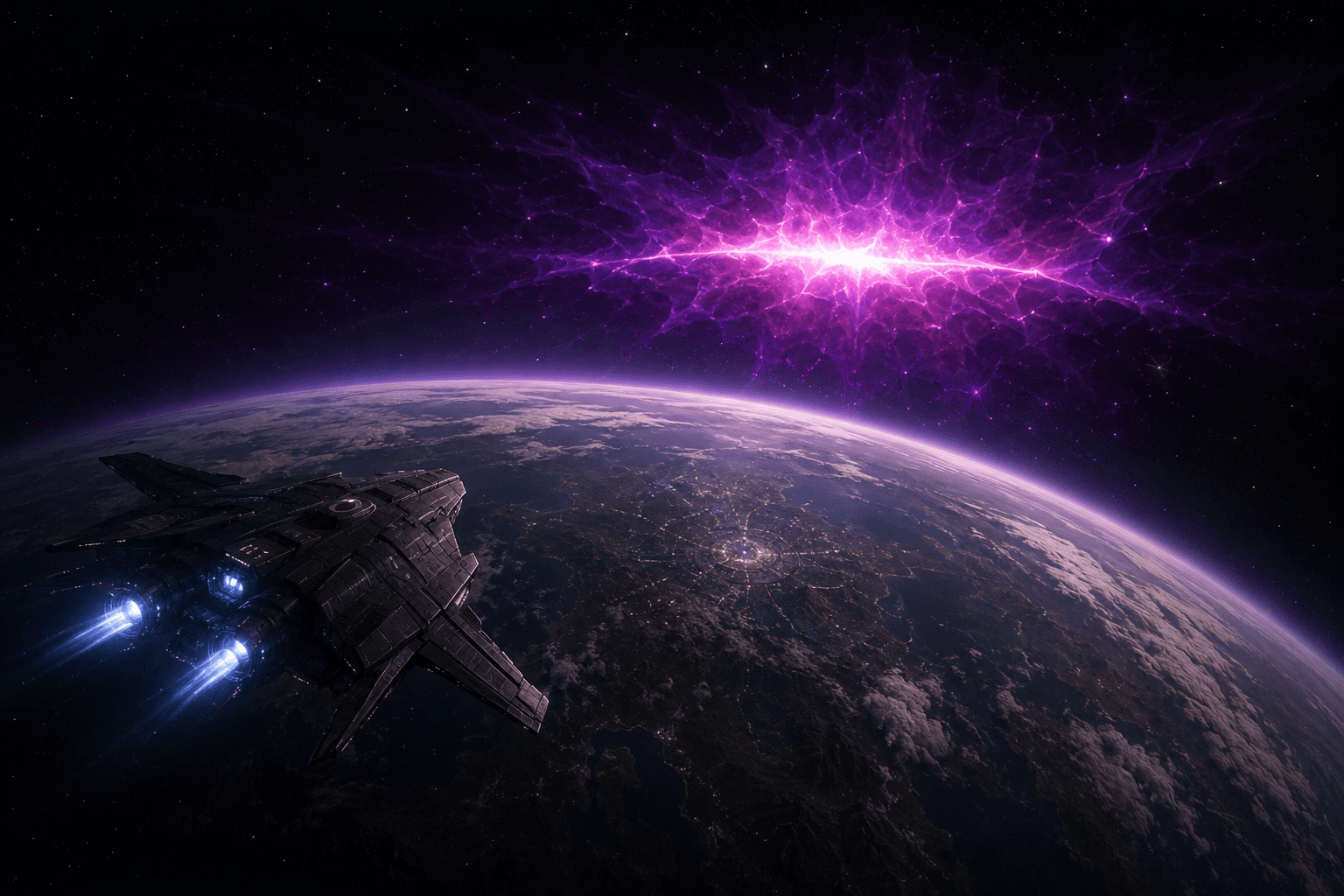
"Docking at Riftmoor?"
"Beautiful planet. Never gets old seeing the Scar from orbit. Biggest concentration of rift you'll find anywhere. Pilots say you can feel it before your instruments do."
"Providence is where you'll probably end up. Capital's been there forever."
"the scar? Been there as long as anyone remembers. They call it the Rift Scar. Doesn't move. Doesn't grow. Doesn't close. Magic's stronger there than anywhere else. Always has been."
"The Lekaris have held Providence for… what, a few thousand years now? They'll tell you they're the rightful heirs of the old empire. Mention they're just caretakers of somebody else's throne and you'll make exactly zero friends."
"There's an old story that a good King ruled from there before any of it. Supposedly the throne vanished, left that scar in the sky, and that's where all rift comes from. Then the Wardens took over until they disappeared. Sounds ridiculous, doesn't it?"
"Funny thing is… it'd explain an awful lot."
