Vah-Yu
Vah-Yu, one of the 8 Nations
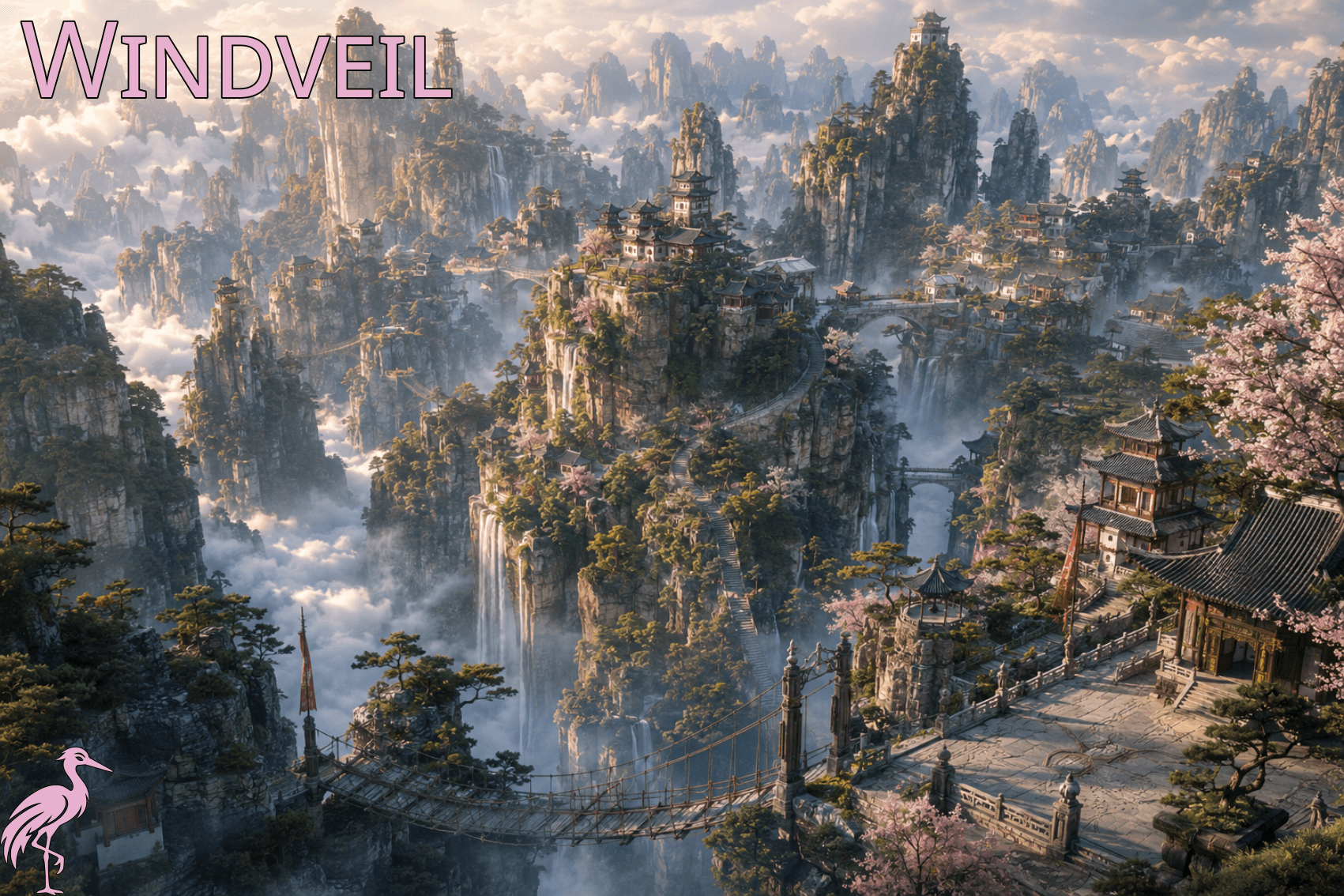
High among the eastern mountains lay a chain of Hep’s secluded monasteries, where contemplation, discipline, and measured living had long been practiced far from the rest of the world. Though loyal to the Empire, the wardens of the Vah-Yu believed their best route to the throne came from inner master and the inability to be mastered through an emptiness akin to air.
When the Great Siege engulfed the world, the mountain cities did not march. They opened their gates instead to refugees from every banner, offering shelter to any who sought peace. Most were non-imperial. By the war's end, the Empire had neither the strength nor the will to maintain claim to so distant a province. The Aero Wardens quietly declared themselves self-governing, and few possessed the means to challenge them.
Nestled between the Naja and the Bloodhorn, the Vah-Yu became an unlikely refuge. The Virborne seldom troubled them, as their fight was with the empire, while the Vah-Yu offered no threat in return. Though raids and imperial campaigns have tested their resolve through the centuries, they answer violence with calm discipline rather than panic or vengeance. Their quiet resilience has become their greatest defense, allowing them to endure while greater powers exhaust themselves in endless conflict.
The Crane
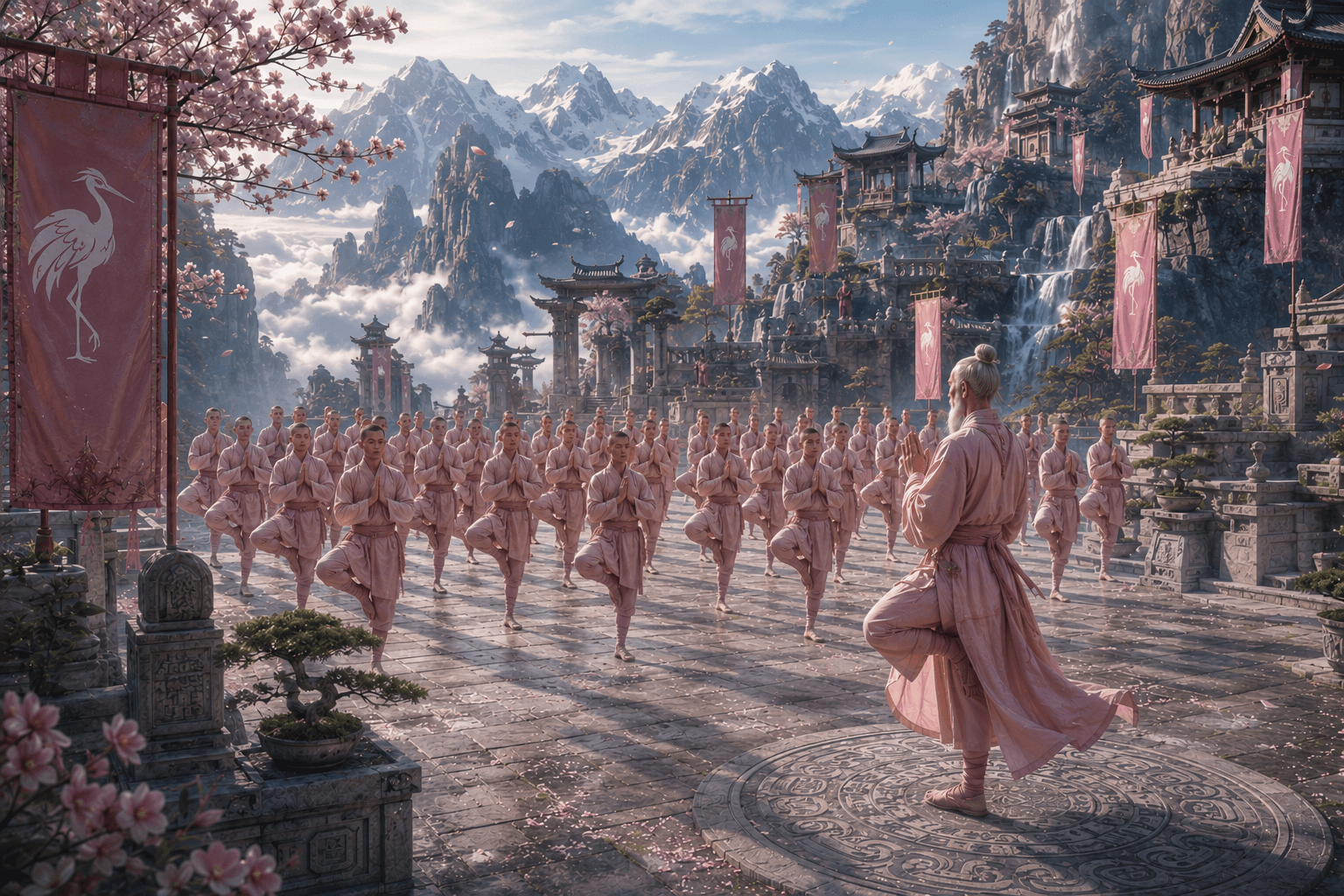
The Crane pursue mastery through perfect balance. They withdraw from the noise of the world to secluded monasteries perched upon mist-covered cliffs, mountain temples hidden among flowering forests, and tranquil valleys where generations devote themselves to meditation, contemplation, and discipline. They believe every opponent eventually defeats themselves, and so they cultivate extraordinary patience, allowing anger, fear, and exhaustion to consume those who challenge them. Their martial traditions emphasize empty hands, flowing movement, and simple staffs over elaborate weapons, redirecting force rather than meeting it directly. Every strike is deliberate, every step measured, every breath controlled. Though they possess remarkable skill, they rarely display it unless no peaceful path remains. To outsiders they appear gentle and withdrawn, yet those few who mistake serenity for weakness often discover that the Crane have spent a lifetime mastering both body and spirit.
The Monkey
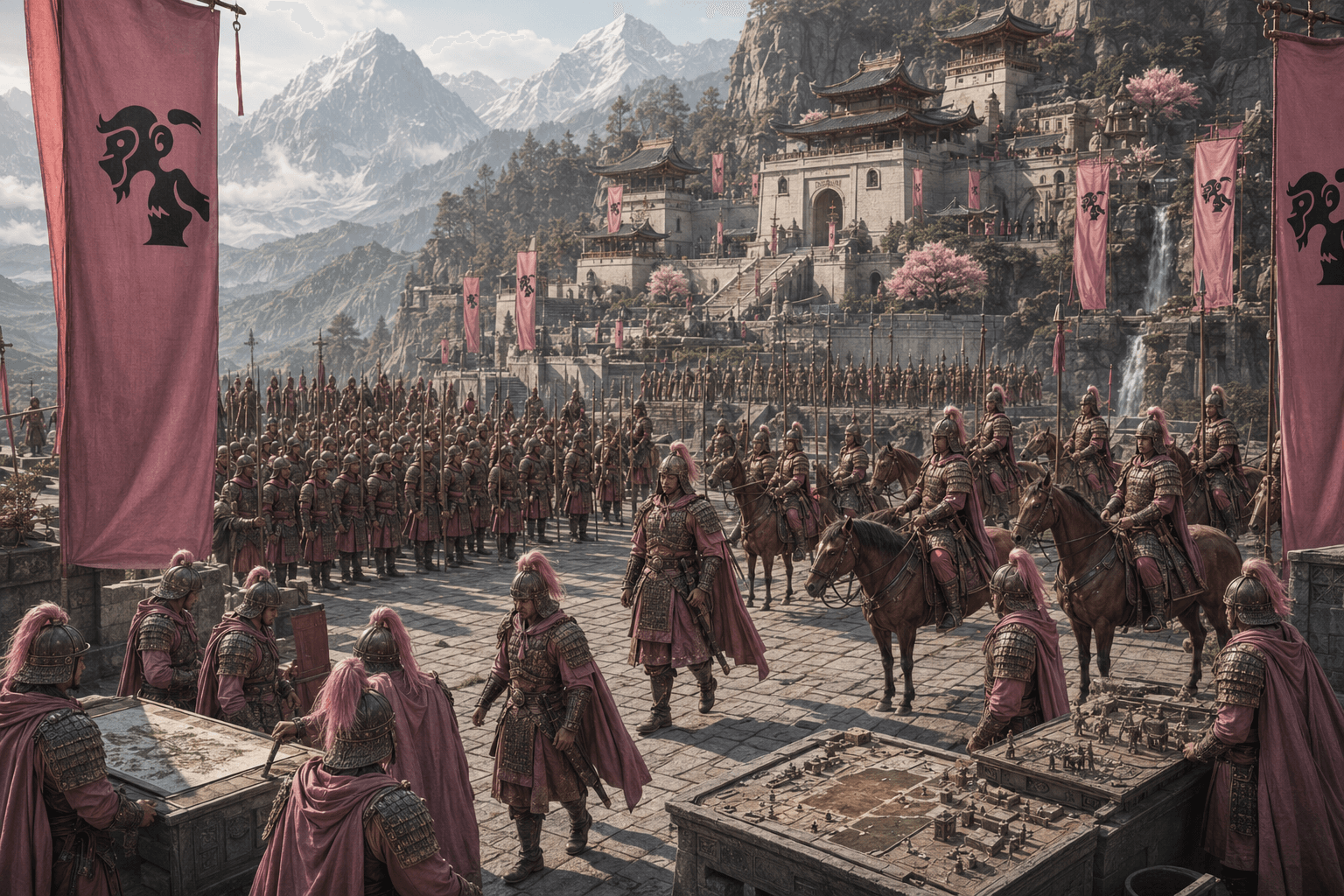
The Monkey embody mastery through adaptability. They believe wisdom belongs not to the strongest warrior, but to the one who understands when to fight, when to maneuver, and when conflict can be avoided altogether. Within the great military academies of Vah-Yu, every soldier studies history, philosophy, logistics, and strategy alongside martial training, learning that disciplined thought is the foundation of disciplined action. Their elegant lamellar armies combine steadfast infantry, swift horse archers, heavy cavalry, and seasoned officers into remarkably balanced forces that outmaneuver rather than overwhelm their enemies. Flexibility defines both their doctrine and their lives; every obstacle becomes another opportunity to reposition, adapt, and preserve lives through superior judgment. They seek decisive victories achieved with minimal bloodshed, believing the greatest commander is remembered not for battles won, but for lives spared. To the Monkey, true mastery lies not in defeating an opponent, but in leaving both victor and vanquished with as little needless suffering as possible.
The Camel
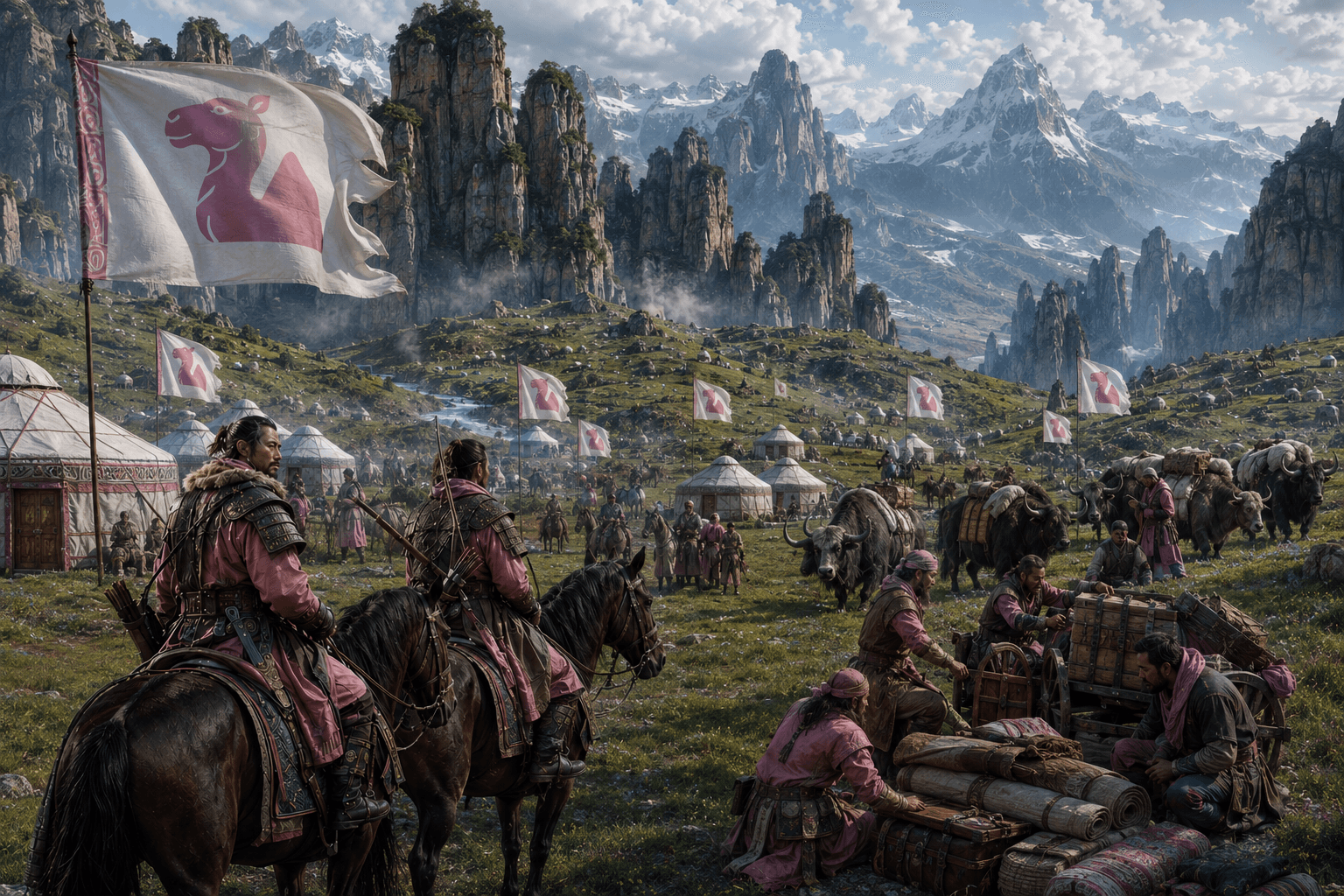
The Camel seek mastery through endurance. While others build permanent cities, they deliberately embrace a life of constant movement, believing no home strengthens the spirit more than the road itself. Their nomadic clans follow the changing seasons through the mountain foothills of Vah-Yu, carrying their civilization with them in great caravans of yurts, horse herds, and hardy pack animals. Every journey becomes another lesson in discipline, every mountain pass another opportunity to sharpen character, and every hardship another reminder that comfort is fleeting while resilience endures. Their mounted warriors are renowned for riding farther, carrying fewer provisions, and thriving where other armies would simply perish. Calm, disciplined, and utterly dependable, they meet adversity with quiet confidence earned through a lifetime of deliberate challenge. Yet despite their formidable reputation, they neither glorify war nor seek conquest. To the Camel, true endurance is measured not by surviving the road, but by choosing to walk it again.
Vah-Yu and the Spread of the Peoples
Vah-Yu served as the great conduit between Riftmoor's peoples. Its Wardens were permissive toward migration, allowing peoples created elsewhere to enter their domains and, in turn, allowing those populations to leave for other factions. Although political tensions occasionally restricted this movement, Vah-Yu remained comparatively open through much of its history. As a result, specialized peoples that eventually spread beyond the faction that created them often did so through Vah-Yu, earning it a reputation as the great "leaky sieve" of the races.
This movement also contributed to the Bioweaving arms race between the Wardens. Sapient peoples proved notoriously reluctant to fight members of their own race, even when separated by factional allegiance. Creating an entirely new people therefore offered a military advantage: initially, that race existed only within its creator's territory, leaving enemies without an equivalent population to recruit, subvert, or field against them. Rival factions consequently developed new Bioweavings partly to obtain capabilities uniquely their own, only for migration—frequently through Vah-Yu—to gradually erode that advantage.
