Space Travel
Interplanetary Shipping and Logistics
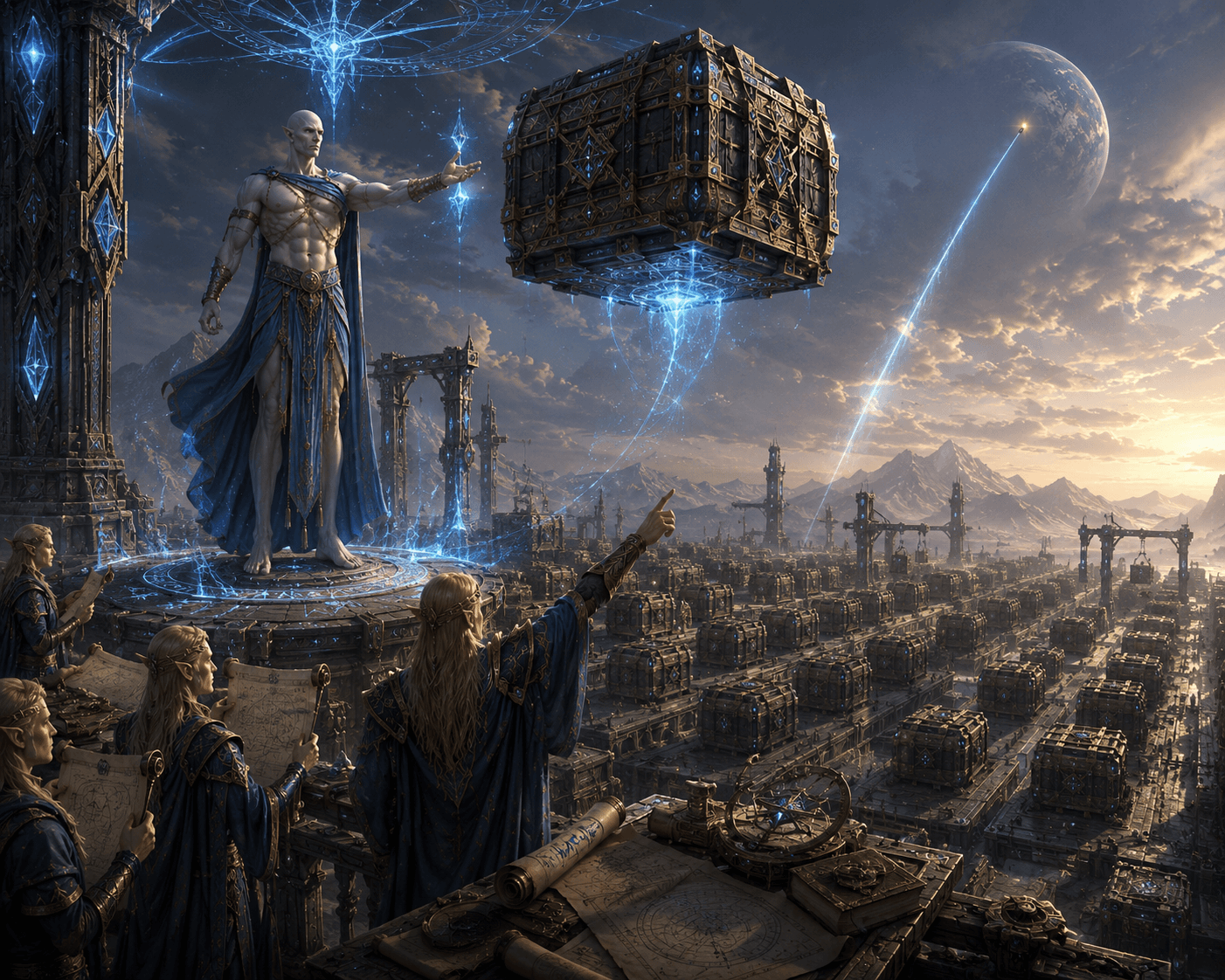
While Wardens possessed the extraordinary ability to impart immense momentum to massive objects, they did not oversee the countless calculations required to keep an interplanetary civilization supplied. That responsibility fell to the Elves.
Created to serve as the great administrators of civilization, Elves became managers, planners, and coordinators. Teams of elven logisticians calculated precise launch vectors, orbital alignments, cargo manifests, arrival windows, and recovery schedules months in advance. By the time a shipment reached the launch platform, every variable had already been accounted for.
A Warden's role was brief but indispensable. Following the prepared flight solution, the Warden would launch dozens of cargo barges in a matter of minutes, placing each on an exact ballistic trajectory toward its destination. The barges carried no warp drives and often no crew, coasting through normal space for days or weeks before arrival. Immediately after the launches, the sending Warden would relay the expected arrival times and any last-minute adjustments directly to the receiving Warden through long-distance psionic communication.
Upon reaching the destination world, another Warden intercepted the incoming vessels, safely capturing and guiding them into orbit, where local workers, dockmasters, and freight crews completed the distribution process. This system allowed a single pair of Wardens to oversee the movement of enormous quantities of cargo while leaving the planning and day-to-day administration to generations of highly trained elven officials. Humans and other races of heirs filled the countless supporting roles that kept the ports, shipyards, warehouses, and planetary industries operating.
Interstellar Transport
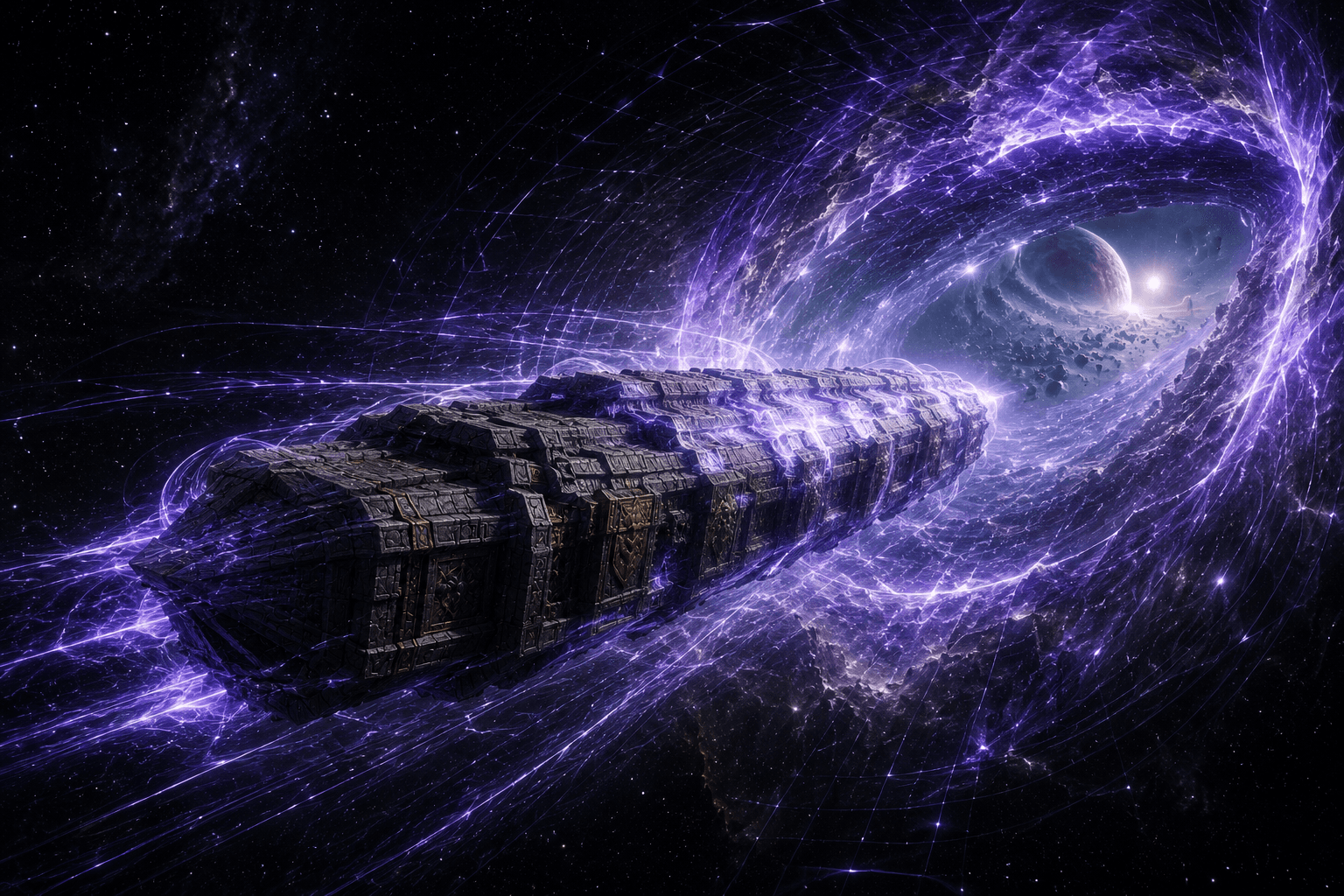
Warp magic, pioneered by Hep in the 2nd Age, did not increase a star ark's speed. Instead, it temporarily shortened the distance before it. Through immense telekinetic effort, a Wardens would seize an uninterrupted corridor of empty space, compressing and displacing it behind the vessel. The transport was then carried through the shortened path before the displaced space was released, leaving it impossibly farther along its journey.
The process demanded extraordinary concentration. Before any displacement could begin, the Wardens first had to perceive the entire corridor they intended to grasp, ensuring it was both continuous and free of obstacles. A single unnoticed asteroid, moon, or drifting vessel could prove catastrophic. Warp did not move objects aside—it merely shortened the distance between them.
For this reason, warp routes were carefully charted through time and maintained through the emptiest regions of space.
These ships were among the largest vessels ever constructed and commonly required multiple Wardens working in unison to perform a successful warp. Rather than transporting individual shipments directly to their destinations, they served as the backbone of interstellar trade, carrying thousands of cargo containers, industrial modules, vehicles, and even smaller interplanetary barges between major systems.
Upon arriving in a new star system, their cargo was transferred into that system's established interplanetary shipping network. This layered system—massive warp freighters between the stars and ballistic freight within each system—allowed the dispersed civilizations to sustain a thriving interstellar economy while making the most efficient use of their rare Warden leaders.
