Rift Crystals, Enchanting, and the Elements
Enchanting and Rift Crystals
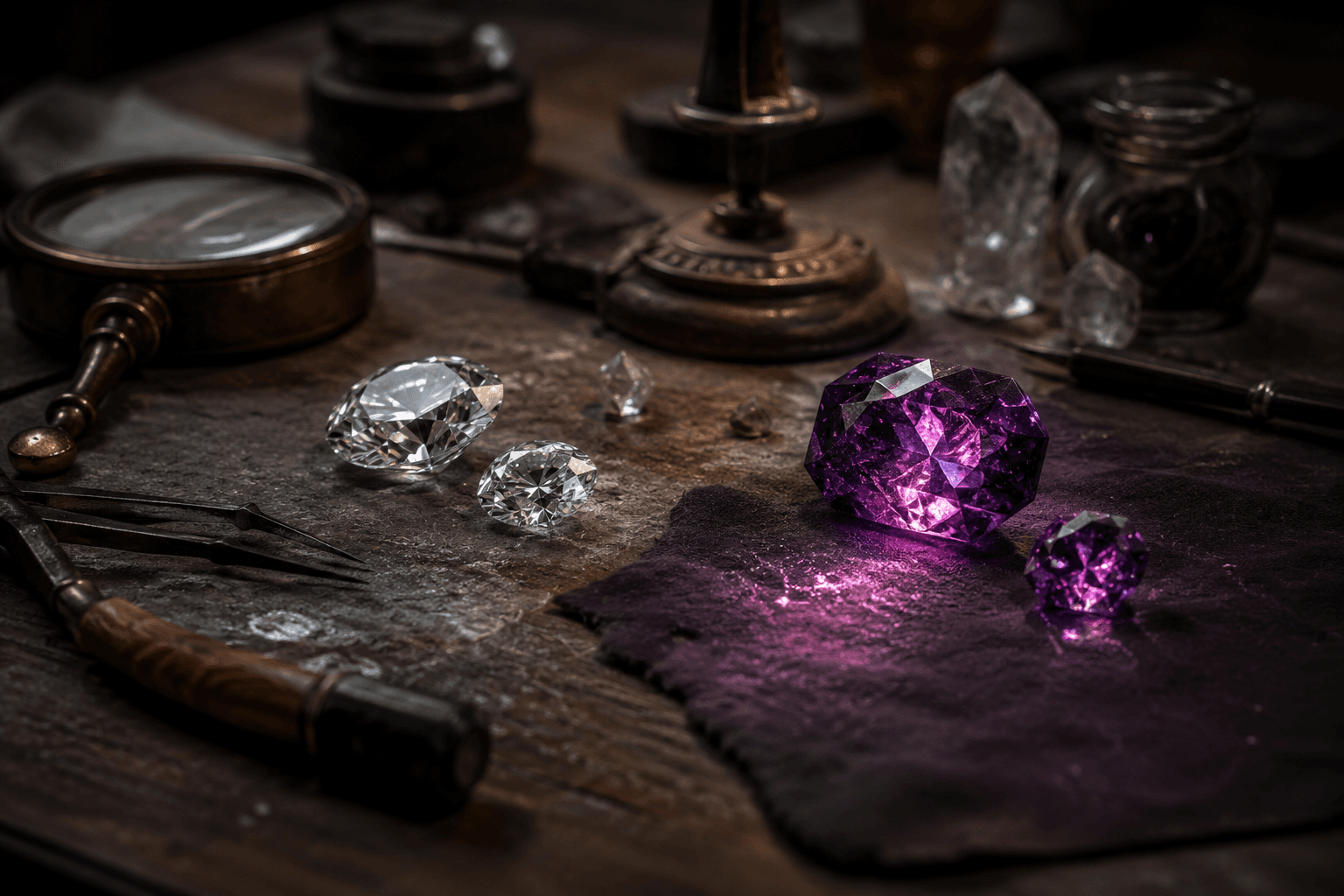
Among the many discoveries made beneath the Scar, none proved more influential than the Rift Crystal.
Those that followed first observed that certain exceptionally pure gemstones—most commonly diamonds—slowly changed after prolonged exposure to concentrated light from the Rift. The transformation occurred most readily on moonless nights, when the Rift's radiance shone brightest, though it remained possible under any clear night sky. Using enormous crystal lenses to focus that light for months or years, they produced the first Rift Crystals.
A Rift Crystal does not create magic. It stores rift.
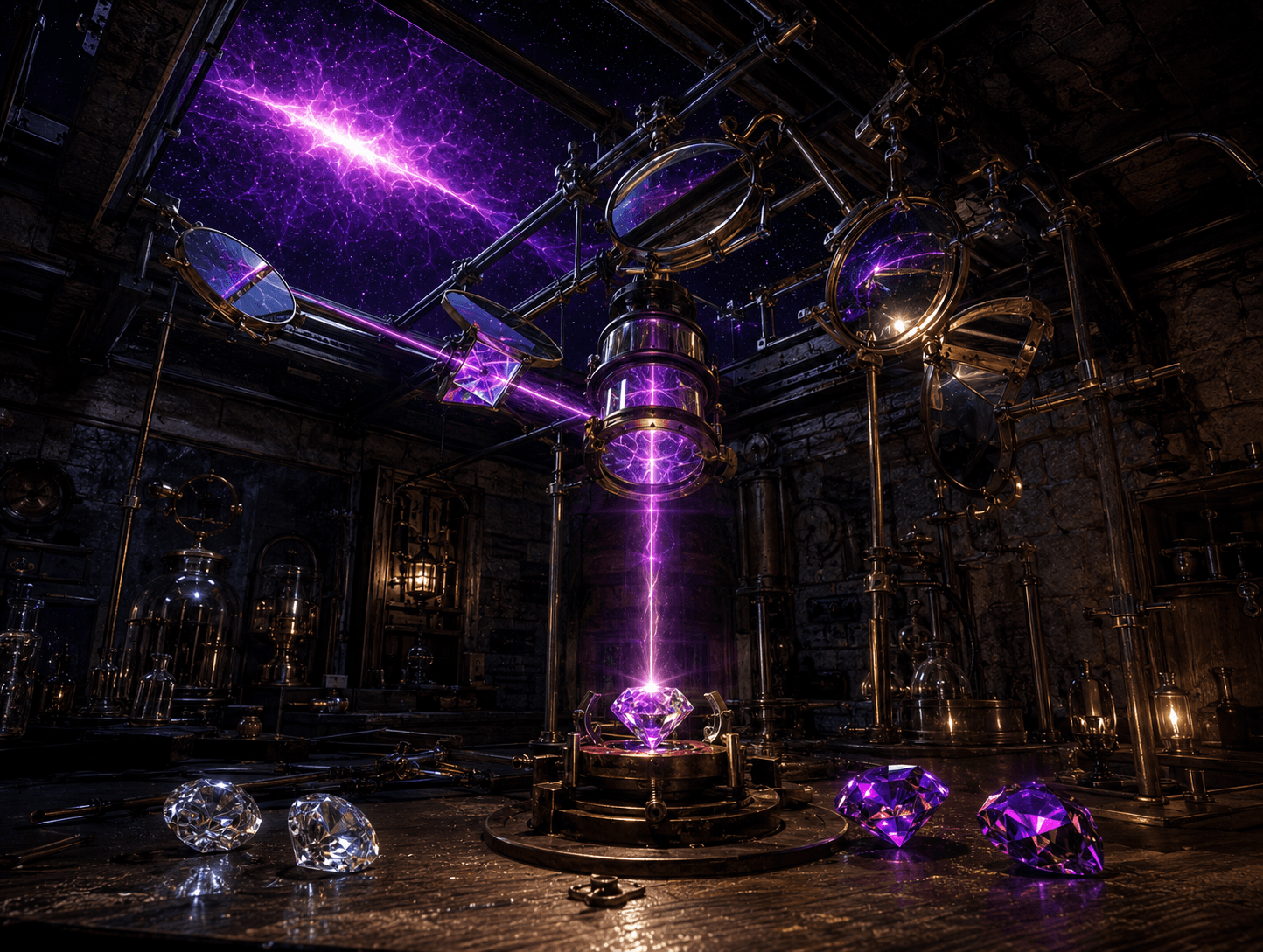
Empty crystals must be charged before use. The accepted method, known as Harmonization, slowly transfers rift from a willing heir or mage into the crystal through magical resonance. The process is slow, expensive, and inefficient, but safe.
The Morvaren later uncovered a forbidden alternative known as Binding. Rather than storing rift, Binding anchored a portion of a living being's soul within the crystal itself. The donor may survive if only a fragment is taken, though repeated Bindings left them diminished. Complete Binding was inherently fatal, but produced vastly more powerful and stable Rift Crystals.
The Azure Guard’s expert smiths pioneered the embedding of charged Rift Crystals within weapons, armor, and artifacts. Stored rift could be forced to flow in predetermined patterns, giving rise to the art of Enchanting. When the crystal was exhausted, the enchantment went dormant; the crystal would then require recharging.
The most common enchantments drew upon the lesser elemental domains—fire, ice, electric, air, water, ground, life, and decay. They countered each other in a wheel; each another’s foil.
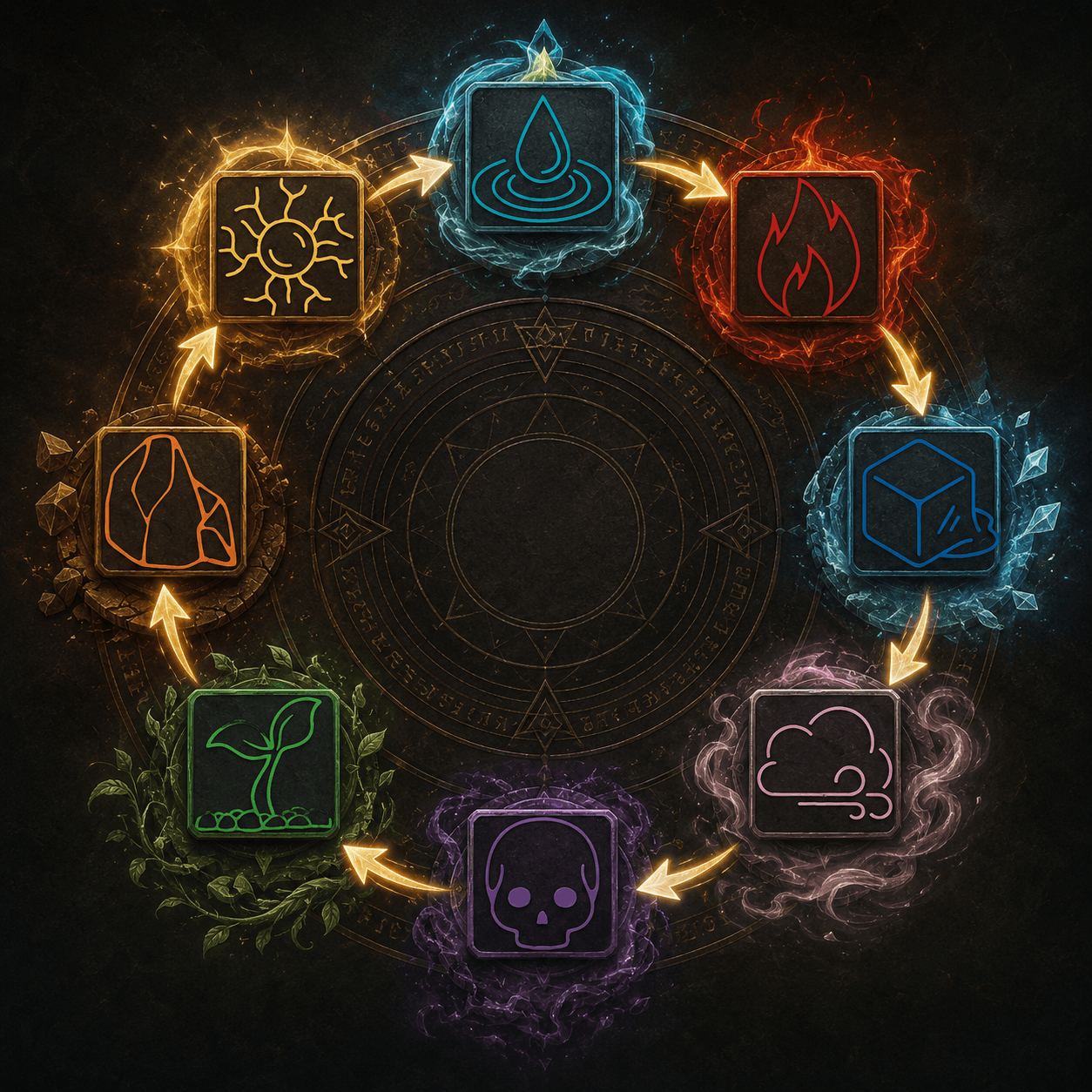
The Element Wheel
· Water quenches raging Fire.
· Fire melts hardened Ice.
· Ice stills flowing Air.
· Air breathes into Death.
· Death ends mortal Life.
· Life breaks apart Ground.
· Ground absorbs Electric.
· Electric surges through Water.
The 8 lesser elements form the foundation of modern enchanting. Light, Dark, Order and Chaos. Though each is derived from one or two of the 4 higher domains, they follow their own Elemental Wheel, independent of the higher domains. The wheel is arranged as:
Water → Fire → Ice → Air → Death → Life → Ground → Electric → Water.
Each lesser element possesses a single natural counter and a single natural foil. Each element overcomes the next element in the wheel and is overcome itself by the previous one.
Lesser enchantments are the most stable, easiest to master, and the most common throughout the world. The Elementals were stabilized autonomous magical constructs formed from these 8 elements.
The higher domains—Light, Dark, Order, and Chaos—operate according to more fundamental laws. They follow the cycle:
Dark → Order → Chaos → Light → Dark
Dark corrupts Order, Order arranges Chaos, Chaos scatter Light, Light illuminated Dark. Each higher domain overcomes only the next higher domain in the cycle. Against lesser enchantments, however, a higher domain suppresses any lesser element under its opposite higher domain:
- Light suppresses the lesser dark: Air, Death, and Ice.
- Dark suppresses the lesser light: Fire, Life, and Electric
- Order suppresses the lesser chaos: Water, Ice, and Electric.
- Chaos suppresses the lesser order: Ground, Life, and Death.
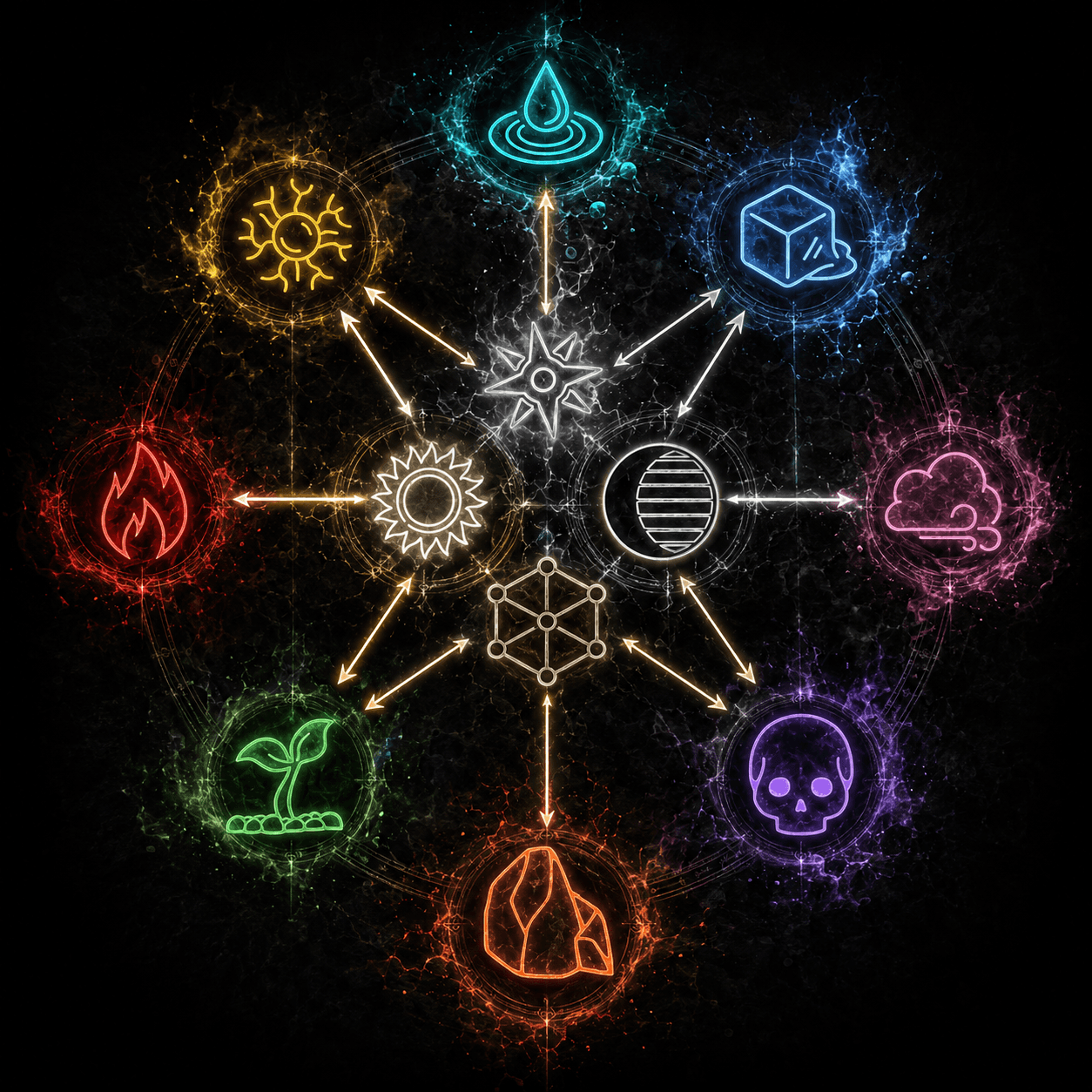
Higher-domain enchantments are substantially more powerful than lesser enchantments, but are also significantly harder to stabilize, requiring exceptional Rift Crystals, masterful craftsmanship, and immense control.
The Mantle quietly perfected the Morvaren's Binding techniques, having no qualms with the morally grey, creating exceptionally potent crystals capable of sustaining the highest forms of enchantment. Their assassins became the first to wield unstable Void enchantments, pure Rift, bypassing the elemental domains entirely.
Unlike the elemental domains, Rift is not an element but the raw essence from which all magic originates. A Pure Rift enchantment was called Void, it was, in essence, a carefully restrained tear into a realm where the laws of reality were inverted. It constantly pulls, tears, and unravels the world around it, making it as dangerous to its wielder as to its target unless forged and used with extraordinary precision. No elemental or higher-domain enchantment could truly oppose Void — only another Void enchantment could meaningfully contest it.
Void—a raw and extraordinarily destructive force. Those who first encountered it quickly learned that it could not be safely wielded in its natural state.
Because Void is so unstable, enchanters eventually isolated the Lesser Rifts. Through the four Higher Elements, Void could be partitioned into four more stable expressions, Dimensi, Psionic, Kinesi, and Muta. Each expression carries a fragment of Void's power while being constrained by one of the fundamental principles of reality while manipulating it.
- Order arranges the world. Dimensi distorts (or scales) it.
- Light reveals the world. Psionic reveals the mind.
- Chaos rejects stability. Muta rejects finality.
- Dark remains unseen. Kinesi moves unseen.
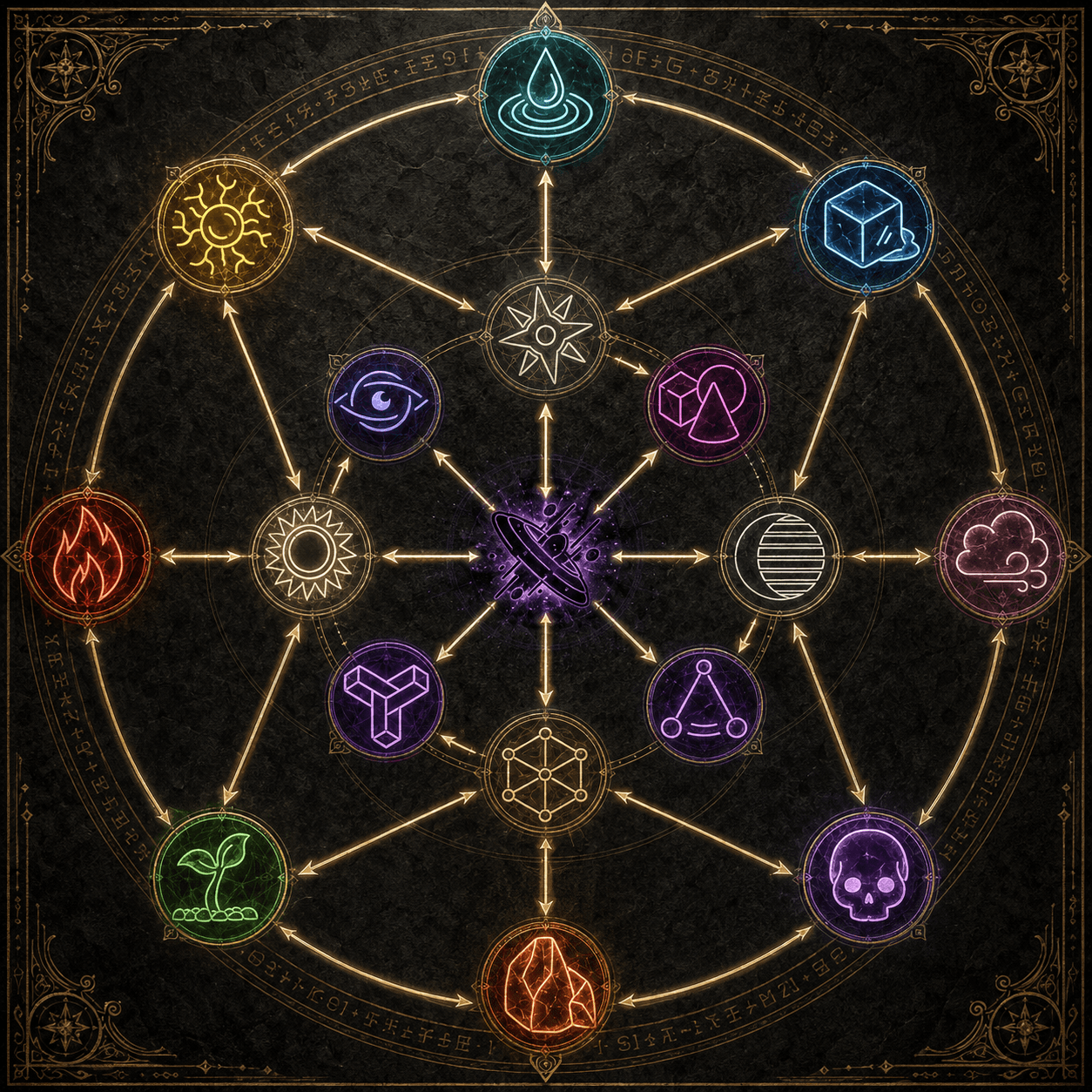
- Dimensi — Alters the shape, size, or geometry of objects and spaces.
- Psionics — Telepathic communication and the manipulation of thoughts.
- Muta — Transforms one material or substance into another.
- Kinesi — The movement and manipulation of objects through force of will alone.
Void remains pure and undivided Rift: raw, unstable, and devastating.
These disciplines possess little direct destructive power, but their stability and versatility have made them indispensable in construction, transportation, communication, medicine, and countless other applications. They are far easier to master than Void, yet remain among the rarest and most demanding forms of enchantment. Void remains pure and undivided Rift: raw, unstable, and devastating.
