Bioweaving
A Magical Art performed in the 2nd Age by Wardens to weave together the biology of two or more species.
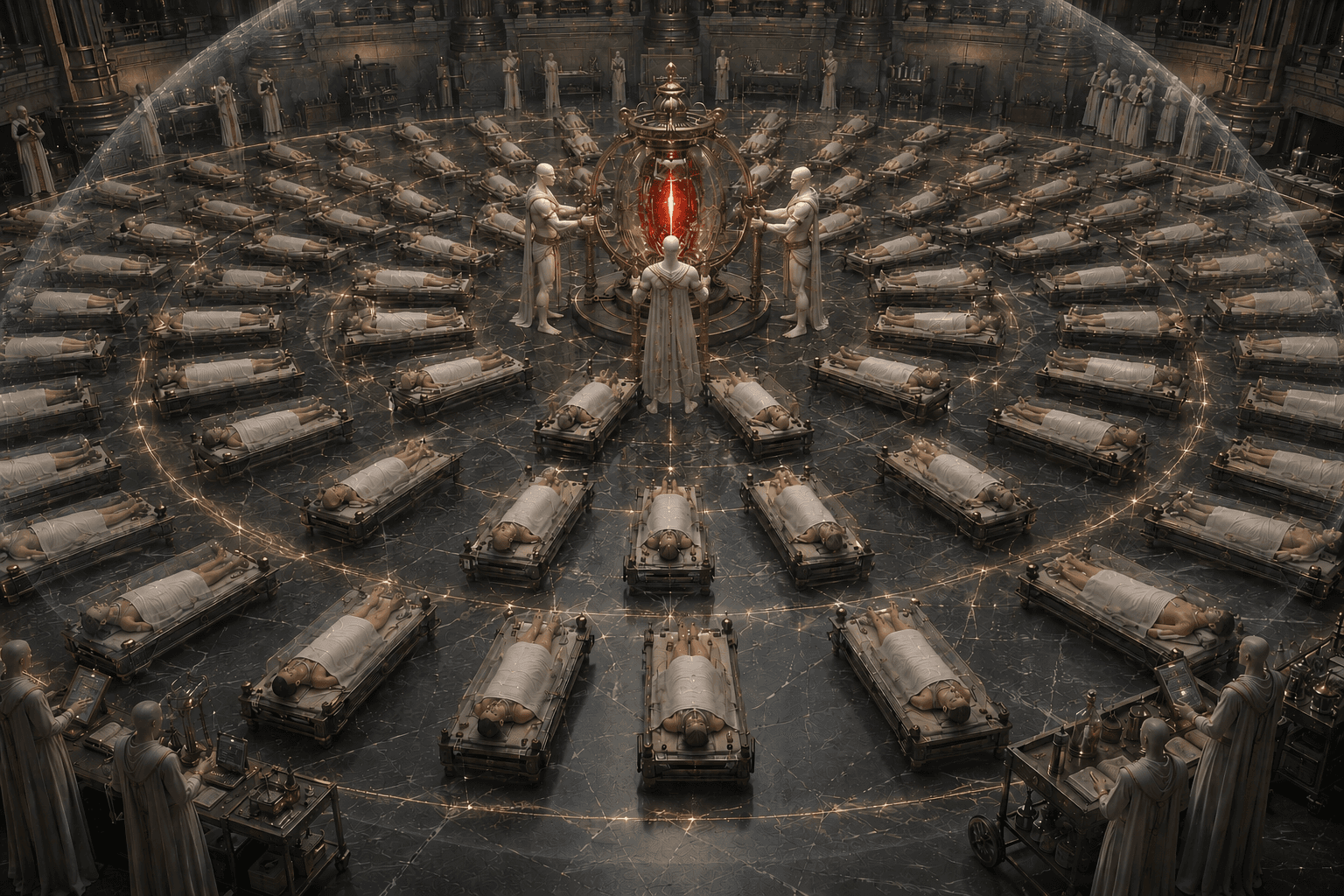
Bioweaving was the magical art of grafting traits from one species into another. Samples—almost always blood—were taken from donors, whose traits were to be introduced into the subjects. Donors provided the desired traits; subjects received them. The donors lost only blood. The subjects often lost their lives. It was never an exact art; the process demanded absolute concentration and often the participation of numerous Wardens acting in perfect unison. The results were shaky as well, the weaving often failed to take hold and many of the subjects died, even in what would be considered a successful weaving. Because of this, large groups of subjects underwent each Bioweaving in the hope that at least three or more would survive and establish a stable population. This demanded more wardens to participate in turn. Those that survived emerged as entirely new species. Countless Bioweavings were attempted over the centuries and many species were simply found to be incompatible on any level ending without a single surviving subject.
The Warden practice of taking the biological essence of one living species and forcing it to become compatible with the body and developmental pattern of another, producing a new creature whose inherited traits are permanently integrated into its biology.
Bioweaving
Bioweaving is the Warden practice of altering living organisms by imposing the biological pattern of one species upon another. It is not a ritual and does not require a permanent laboratory. With sufficient knowledge, a suitable biological sample, a large Rift Crystal, and a trained team of Wardens, the process can be performed almost anywhere with enough space for the subjects.
At the center of every Bioweaving operation is the Weave Engine, an ornate device resembling an elaborate antique globe stand. A large Rift Crystal, rarely more than a foot in height, is held upright within a transparent central chamber. The chamber is filled completely with the biological sample being used as the template—such as feline blood when creating catfolk. The immersed crystal remains dormant until activated, then begins to glow from within the liquid, illuminating the sample with an intense, otherworldly light.
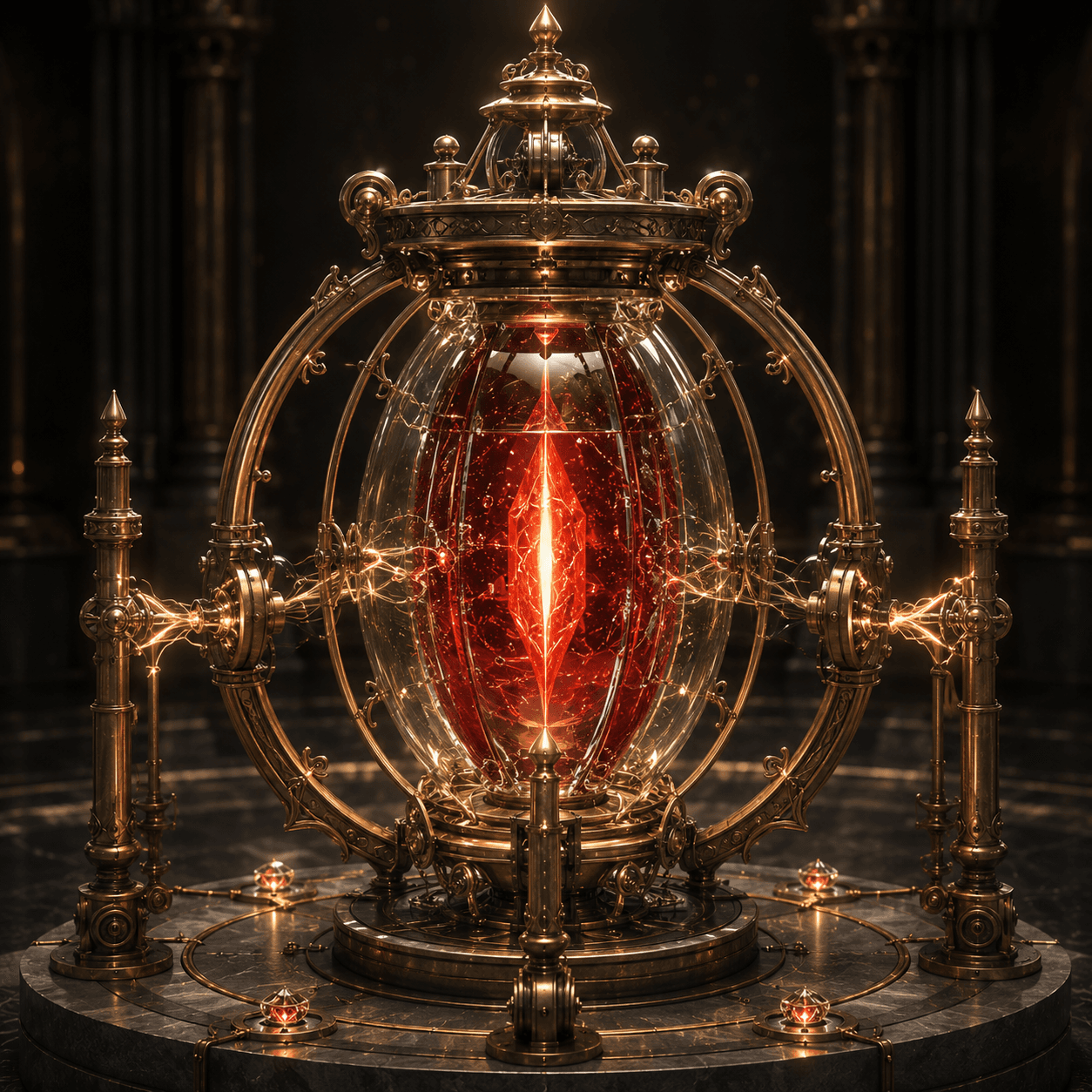
Three Wardens operate the Weave Engine. Around the central chamber are three pairs of curved metal bars or handles, arranged evenly around its circumference. Each Warden takes hold of one pair, placing both hands upon the handles. Through these points of contact, the three Wardens synchronize their magic and channel it through the Rift Crystal and the biological sample. The Engine does not perform the Bioweaving by itself; rather, it allows the Wardens to combine and precisely focus their power into a single Weaving Field.
The Field extends outward from the Engine to a defined radius. Any living subject within it is exposed to the biological template. The size of the field and the number of subjects it can affect depend upon the size of the Rift Crystal, the complexity of the transformation, and the total biological mass involved. Large creatures require considerably more space and place greater demands upon the Field. Subjects must be carefully separated so that none touch one another during the process.
Sedated subjects are arranged throughout the Field on simple platforms or prepared surfaces. They are not connected physically to the Weave Engine. The Field itself carries the template to them. One hundred humans might be transformed within a relatively compact area, while a group of massive cliff drakes could require an entire valley or open plain.
The transformation is absolute. There are no partial successes or intermediate states. A subject either successfully accepts the new biological pattern and emerges as a stable member of the intended species, or the body rejects the weaving and the subject dies. The outcome can vary between individuals even when every subject receives the same template.
Outside the Field, additional Wardens maintain the subjects' sedation through magic. They cannot safely enter the Weaving Field unless absolutely necessary, as they risk becoming affected themselves. Clerks and attendants remain entirely outside the Field, documenting the process and monitoring events from a distance. They cannot touch or physically examine the subjects while the Field is active. If a subject begins to fail, outside Wardens may intervene, but such intervention is rarely successful; by that point, the weaving has usually already become irreversible.
Cleanup crews wait beyond the perimeter, prepared for the inevitable deaths that accompany large-scale Bioweaving.
When activated, the Weave Engine begins rotating around its central core, its concentric mechanisms accelerating as the attending Wardens bring the machine into alignment. A smooth, translucent field then expands outward from the Engine, passing harmlessly through the unconscious subjects arranged throughout the circular chamber before stabilizing against its outer walls. The field is sustained for hours or even days as the Wardens maintain the Weave, subtly distorting light while the Engine slowly turns at the chamber's center. When the Shaping is complete, the field contracts back into the Engine and the mechanisms finally fall still.
