Warden sanctuaries were the ancestral homes of the Warden Houses and their families. Rather than fortresses chosen solely for defense, they were environments in which each elemental domain naturally flourished. Wardens governed, traveled, fought, and worked throughout their territories, while their homes, children, and domain-tuned dragons remained concentrated within these favored environments. Each domain also maintained Heir peoples suited or specifically altered to share these habitats. Consequently, a sanctuary's greatest defense was usually its environment rather than its walls: an invading army could enter, but was forced to operate under conditions its inhabitants considered ordinary. As Warden civilization expanded beyond Riftmoor, individual Houses recreated this pattern throughout the cosmos, establishing new sanctuaries wherever suitable environments could be found or created.
Domain
Typical Sanctuary
Sanctuary Heirs
Fire
Active volcanic wastes and lava-cut mountains
Infernals
Ice
Polar wastes, glaciers, frozen mountains and cold mountain interiors
Ruminant-folk, Frost Giants, Deep Dwarves
Electric
Warm storm basins engineered for extreme, persistent thunderstorms
First Elves, Gnomes
Life
Colossal forests
Wood Elves, Arbs
Decay
Radioactive mountains, crystal-bearing peaks and fissures
Dark Elves
Ground
Great Wells carved into cliffs, mesas and deep rock formations
Halflings, Gnomes, Glires-folk
Water
Submerged cities and deep aquatic environments
Merfolk, Fish-folk, Whale-folk
Air
Extreme cloud-piercing mountains and high-altitude settlements
Birdfolk
Fire — Bloodhorn
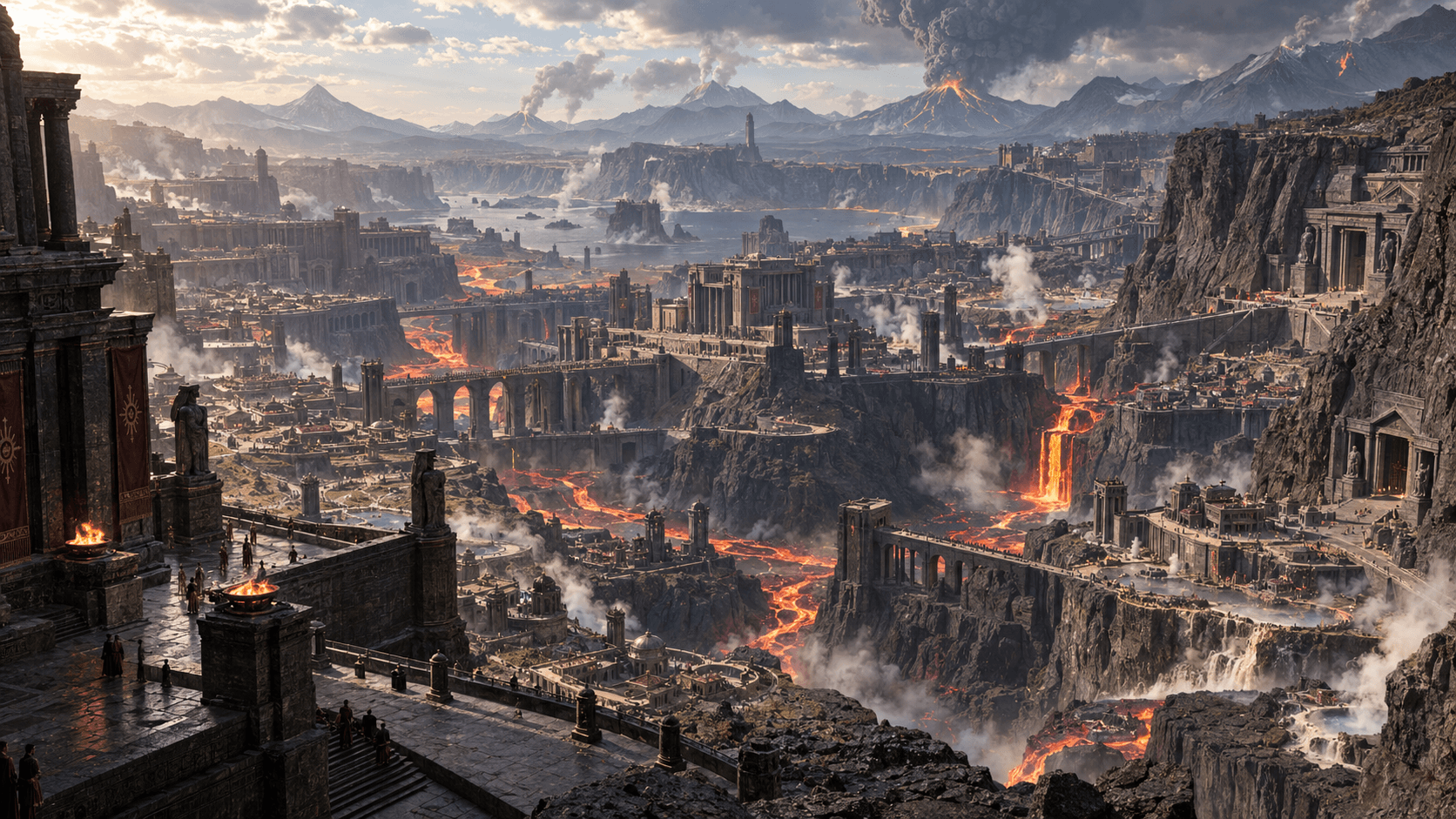
The Fire Wardens established their sanctuaries among the most volcanically active regions of the Bloodhorn wastes, where calderas, lava fields, volcanic mountains, ash-choked valleys, and geothermal fissures created conditions naturally suited to their domain. These were not hidden refuges but ancestral homes, places where Fire Wardens raised their children and kept their fire dragons while leaving freely to rule and wage war elsewhere. Infernals were particularly suited to these regions, sharing much of the Wardens’ tolerance for extreme heat and allowing permanent settlements to exist far closer to volcanic activity than most Heirs could endure. Fire Dragons nested among heated cliffs, volcanic caves, and inaccessible calderas. The sanctuaries were not impregnable: foreign armies could enter with sufficient preparation, magic, and supplies. They were simply fighting in an environment where heat, ash, fumes, unstable terrain, and volcanic activity imposed constant burdens upon outsiders while remaining ordinary features of life for the inhabitants. This pattern continued beyond Riftmoor, with Fire Wardens favoring volcanically active regions when establishing new sanctuaries throughout the Reach.
Ice — Azure Guard
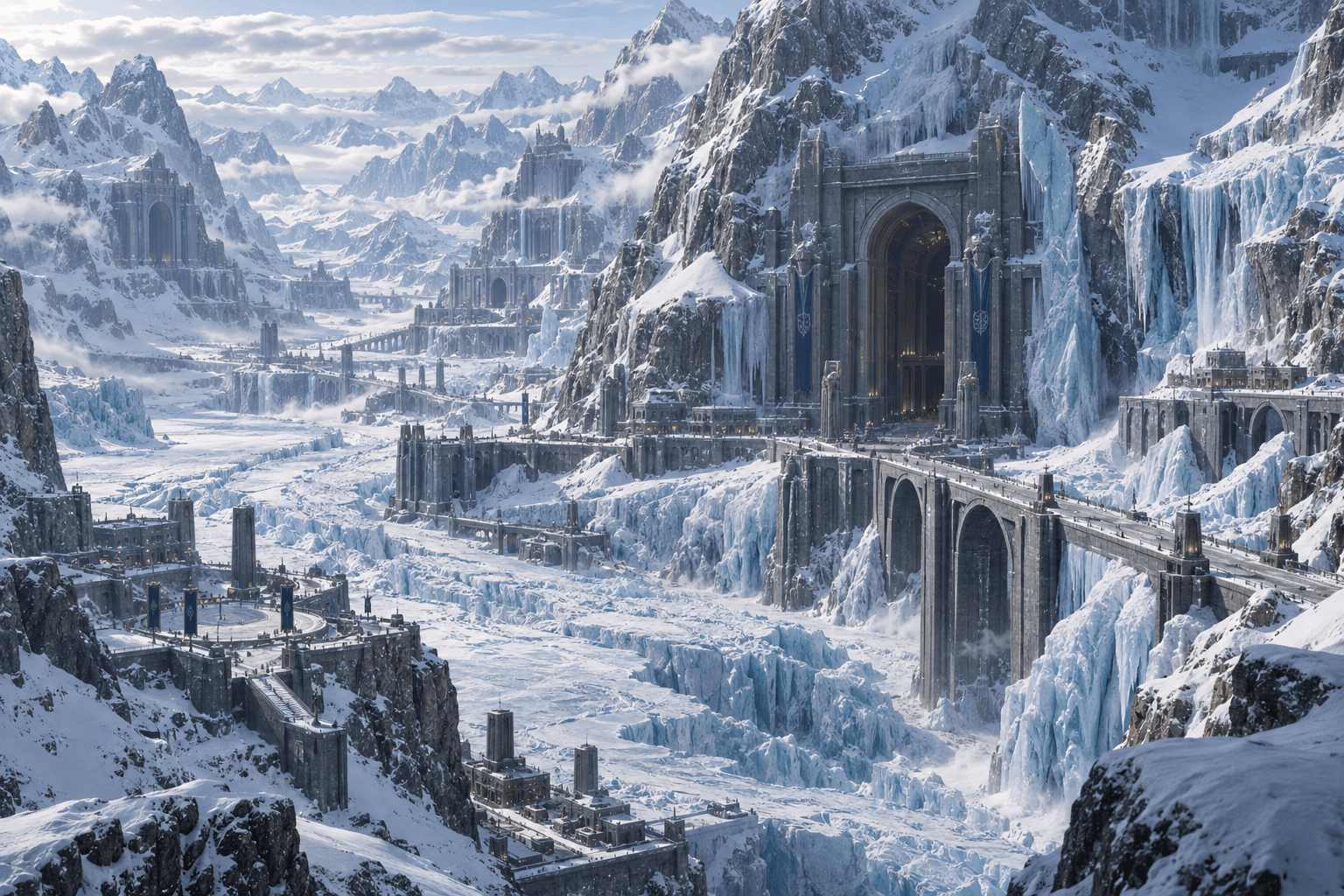
The Ice Wardens made their deepest homes in the polar wastes and frozen mountains of the Azure Guard, including regions so cold and remote that few ordinary Heirs could inhabit them permanently. Their sanctuaries ranged from settlements among glaciers and exposed frozen peaks to enormous chambers and cities excavated within the mountains themselves, where ancient ice, frozen stone, and deep cold surrounded Warden households and their dragons. Mammothfolk were among the peoples best suited to the exposed polar environment, and Frost Giants could accompany the Wardens into conditions intolerable to most races. Deep Dwarf communities also occupied deep portions of the frozen mountain interiors, using enclosed settlements and their own engineering traditions to survive where the surface was particularly severe. Ice Dragons nested among glaciers, ice caves, and inaccessible mountain chambers. Like other Warden sanctuaries, these places were not magically inaccessible; invading armies could reach them with sufficient preparation. Their strength came from forcing every attacker to continuously overcome cold, ice, difficult terrain, and enormous logistical demands while the resident Wardens and adapted Heirs simply lived their ordinary lives. Ice Wardens later sought similarly extreme polar and glacial environments on other worlds.
Electric — Lekaris
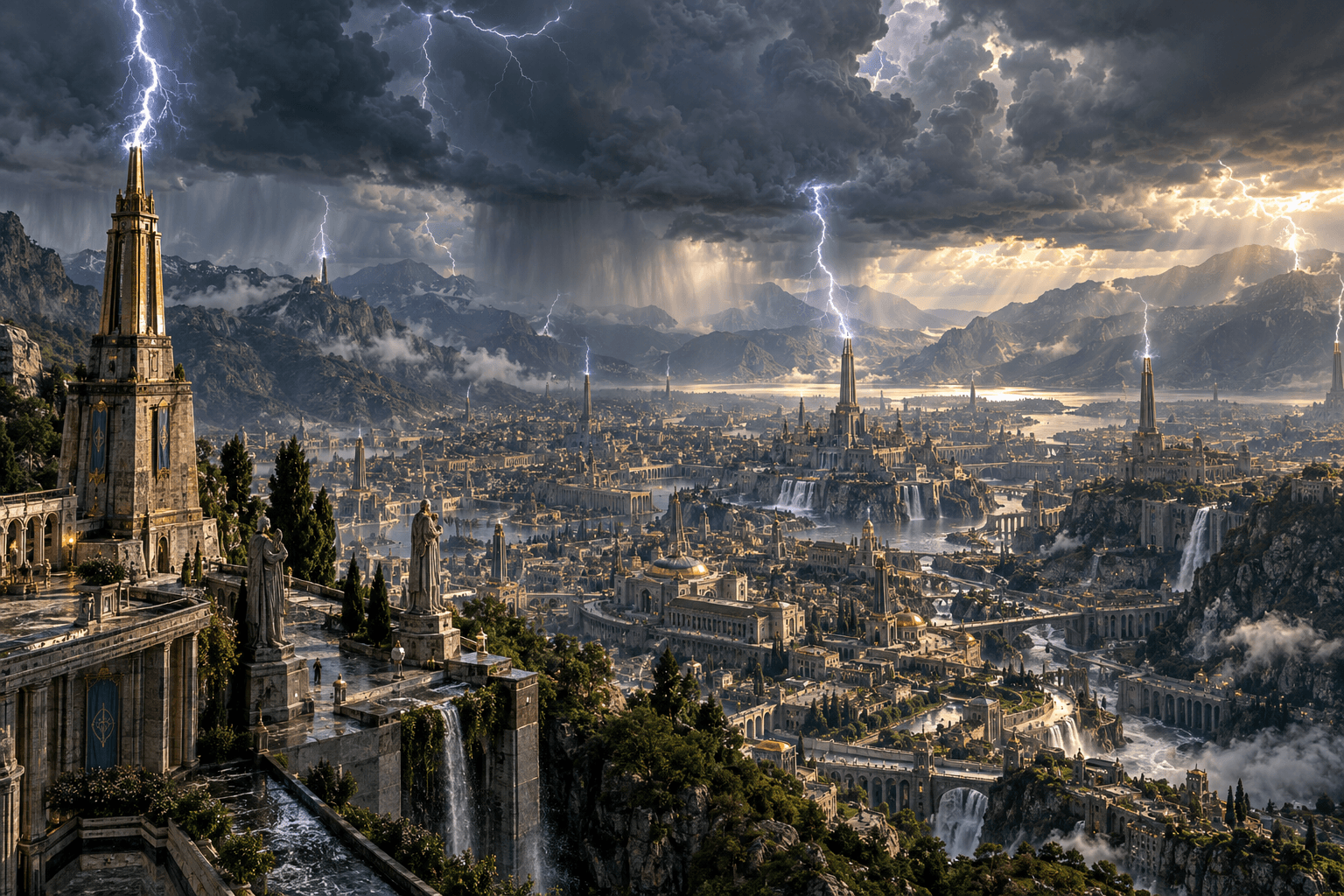
The Electric Wardens favored warm, storm-prone basins and other regions where atmospheric conditions produced exceptional and persistent lightning. Their ancestral sanctuary nestled between Haventide and Fairbarrow was gradually engineered to strengthen these natural conditions, while immense conductive towers provided predictable pathways for discharges around inhabited areas. Elves and Gnomes could inhabit the protected settlements, but no race could share in the daily storms themselves. When violent weather arrived, most mortals went indoors while Electric Wardens and their dragons went outside. Lightning remained dangerous even to them; their advantage was perception rather than immunity. Electric Wardens could sense the accumulation and movement of electrical charge so naturally that the location and timing of an impending discharge were obvious to them. Being accidentally struck was therefore extraordinarily difficult despite the violence of the surrounding storm. Throughout the cosmos, Electric Wardens sought similarly storm-active environments and sometimes deliberately preserved atmospheric instability during terraforming. Kelek's famously storm-ridden moon was one such example: what later mortals considered imperfect terraforming had intentionally preserved an environment where Electric Wardens and their dragons retained distinct strategic advantage and felt completely at home.
Life — Naja
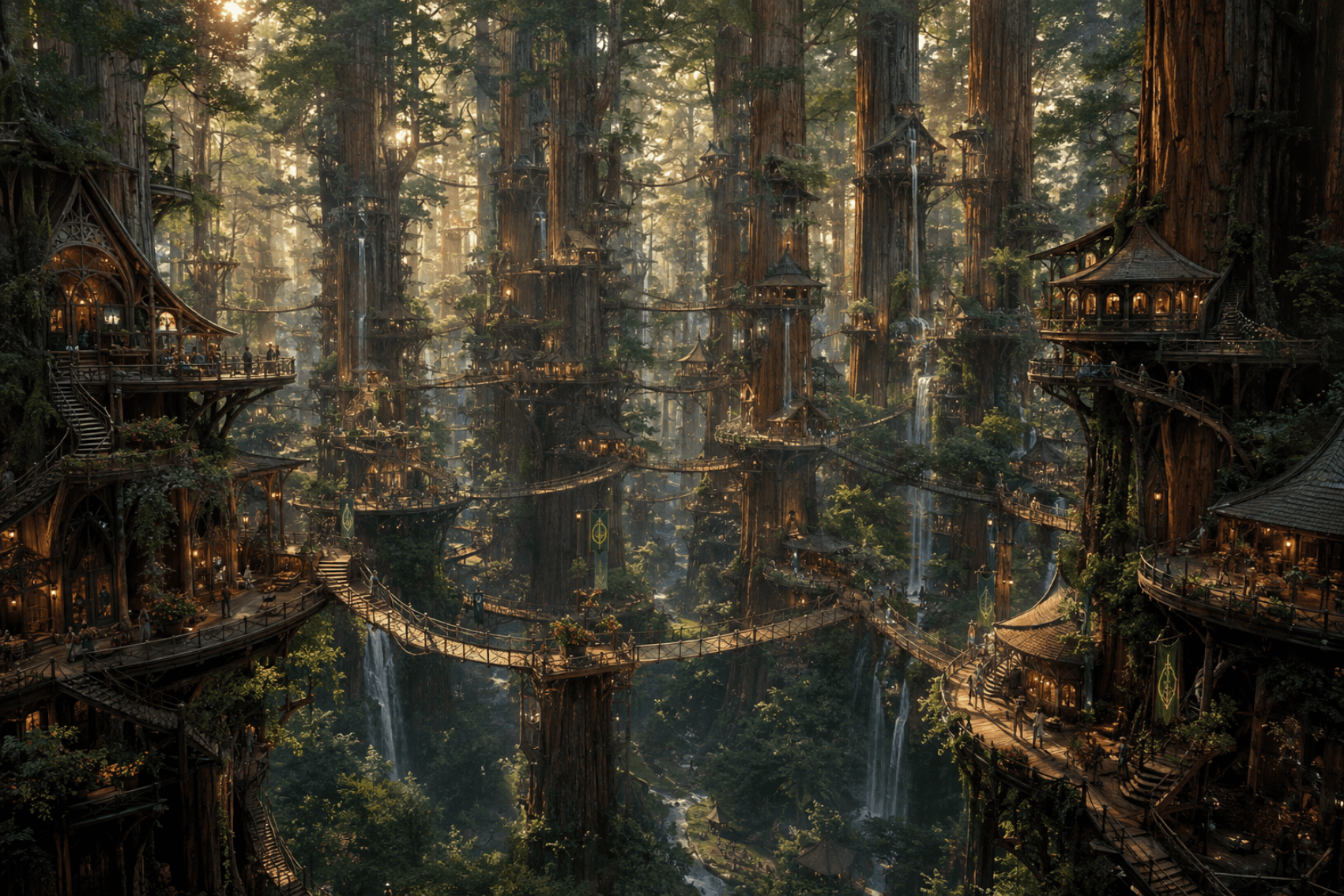
The Life Wardens established their sanctuaries within Naja’s immense forests, particularly among the colossal trees whose scale allowed entire communities to exist within their trunks, branches, roots, and canopies. These settlements represented extreme biological abundance: rather than clearing the forest for civilization, the Wardens shaped civilization into the living environment around them. Wood Elves became closely associated with these sanctuaries, inhabiting interconnected canopy communities and settlements grown or constructed among the great trees. The living trees were even more completely adapted to the environment, sharing the scale and living nature of the forest itself. Their suspended routes and structures made the canopy an interconnected three-dimensional landscape. Life Dragons likewise nested within colossal trees and dense canopy environments. Outsiders could certainly enter Naja, but armies accustomed to roads and open terrain faced an environment overwhelmingly dominated by living structures, vertical movement, and dense growth. Beyond Riftmoor, Life Wardens sought the richest ecosystems they could find or created comparable megaforests through terraforming .
Decay — Morvaren
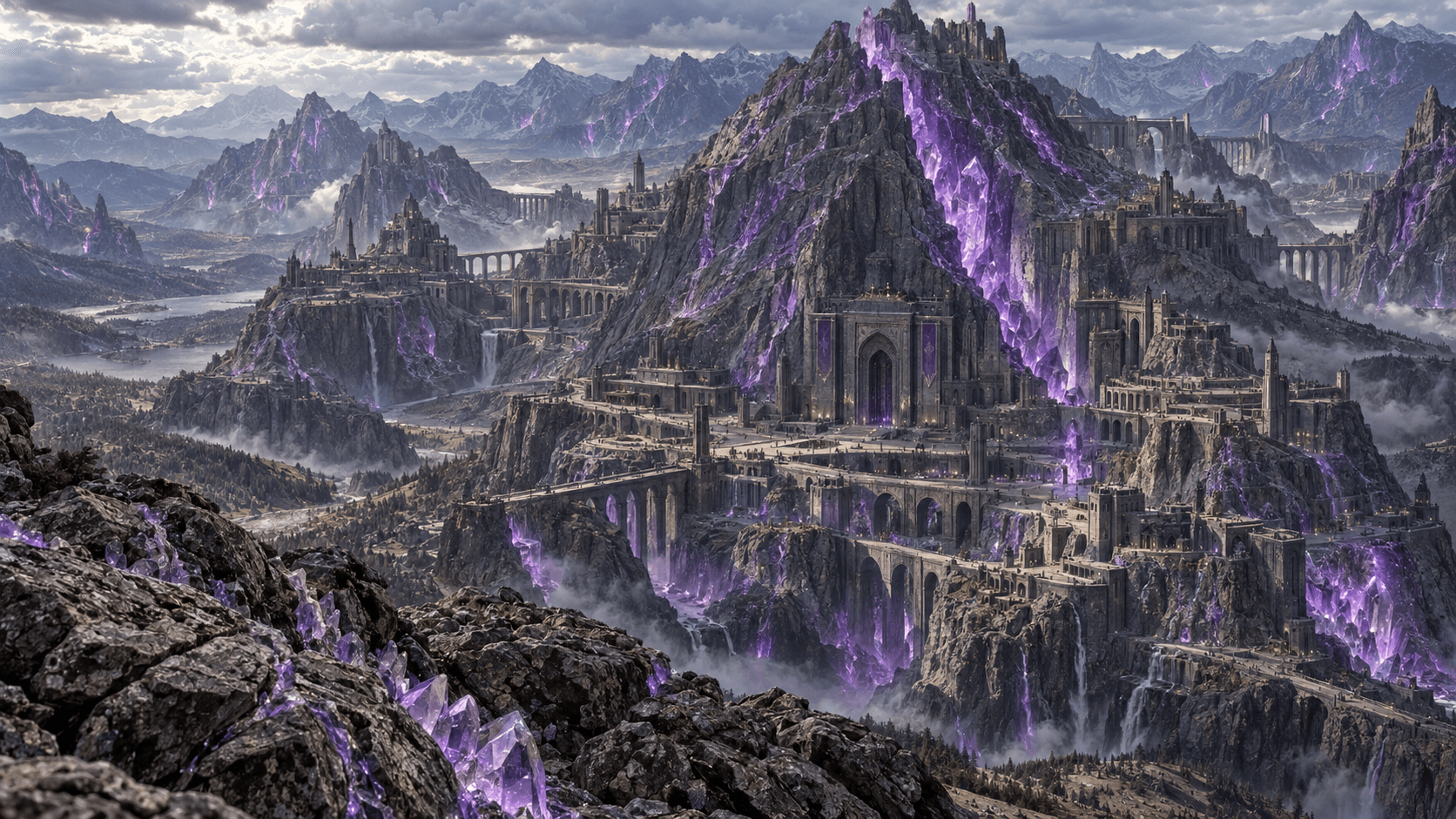
The Decay Wardens made their ancestral sanctuaries among Morvaren’s strange southern peaks, where enormous natural concentrations of Rift crystal and Rift-altered radioactive stone made the upper mountains increasingly hostile to ordinary life. Diamond-rich formations exposed to concentrated influence from the Rift Scar had produced extensive deposits of radioactive Rift crystal, with surrounding geology altered by prolonged exposure. Vegetation consequently diminished toward the most heavily irradiated elevations, while cracks, fissures, cliffs, and caverns within the peaks became the homes of Warden families and Decay Dragons. Dark Elves, already culturally associated with Morvaren’s nocturnal way of life, shared approximately the Wardens’ exceptional resistance to this radiation and could inhabit regions dangerous to most other Heirs. Their settlements naturally reflected Morvaren’s obsession with the Scar: exposed Rift-crystal formations illuminated halls in purple light, while much of society remained active at night and slept through the day. These sanctuaries were not impenetrable; outsiders could invade, but prolonged exposure created serious logistical and biological problems that the inhabitants barely noticed. Beyond Riftmoor, Decay Wardens favored naturally radioactive worlds and regions, particularly mountains and mineral provinces where radiological conditions could reproduce their ancestral environment.
Ground — Fairbarrow
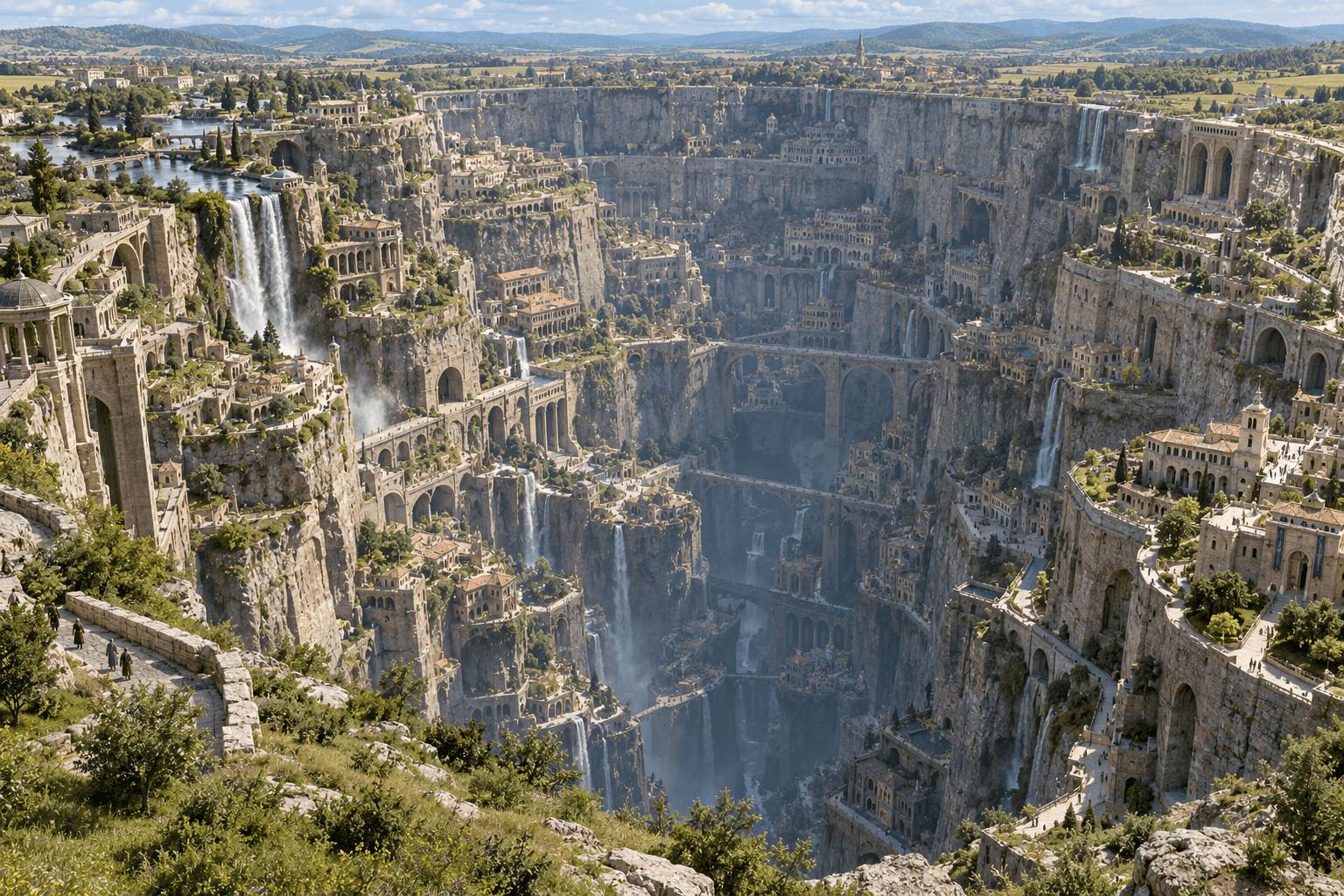
Ground Warden sanctuaries took the form of enormous engineered Wells excavated deep into the land surrounding Fairbarrow. A Great Well was effectively a massive tower built downward: a carefully planned open shaft whose walls contained thousands of homes, halls, markets, terraces, stairways, bridges, and tunnels. Its geometry was engineered for structural stability, drainage, ventilation, and maximum sunlight rather than simply being a gigantic quarry. Rivers and waterfalls were often deliberately routed through the Wells, descending between inhabited levels before continuing into reservoirs or waterways below. The surrounding sunny hills and river valleys remained Fairbarrow’s agricultural heartland; Wells primarily allowed enormous urban populations to occupy comparatively little horizontal land. Halflings were particularly comfortable within them, their traditional hillside dwellings translating naturally into countless warm homes excavated into the Well walls. Ground Dragons also found the immense Well's cliffs ideal for nesting, while Wardens flew freely between levels. Invaders faced a vertical maze of controlled stairs, bridges, tunnels, and stone passages. Throughout the Reach, Ground Wardens recreated Great Wells wherever suitable geology permitted, making them one of the most recognizable forms of Warden architecture.
Water — Haventide
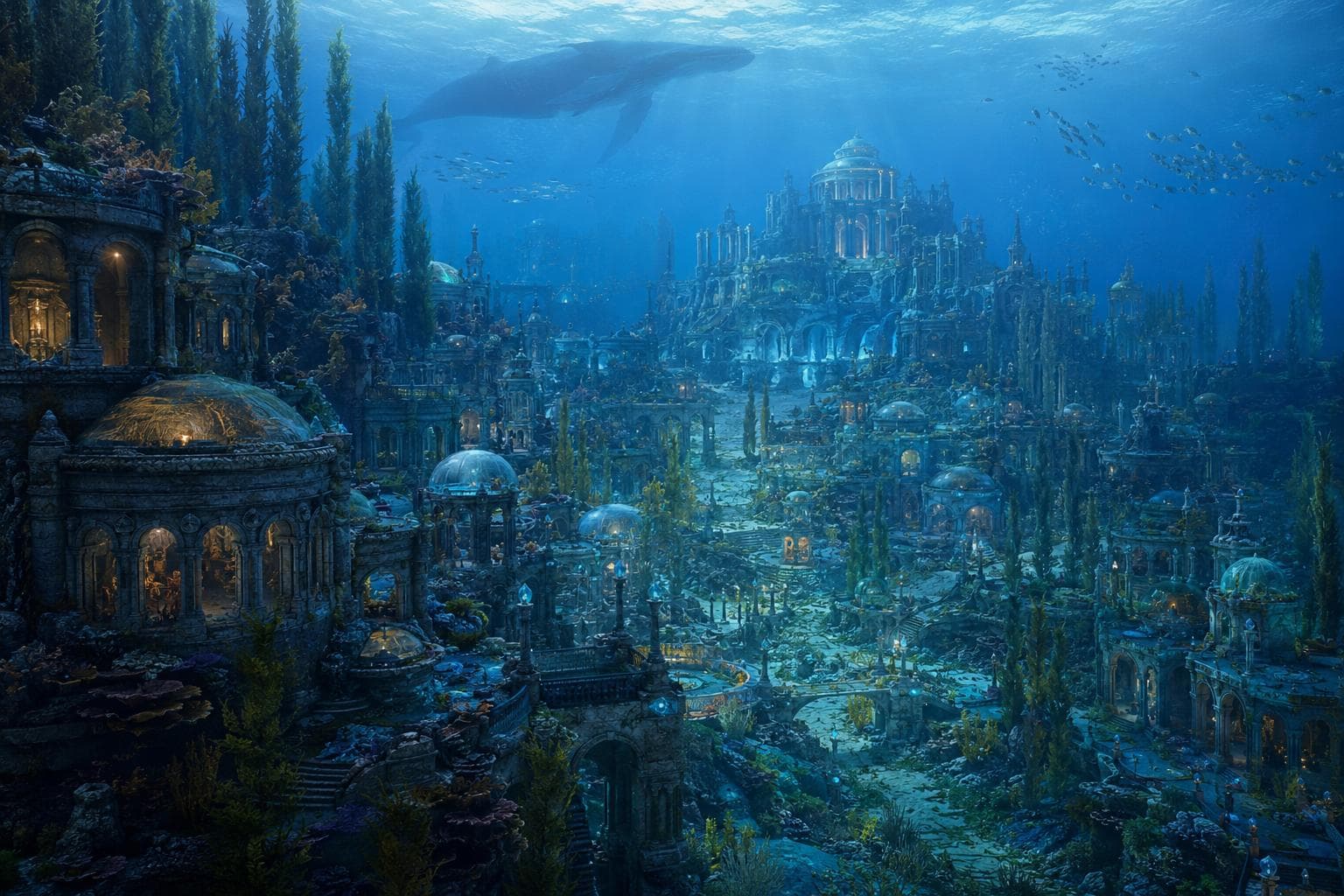
The Water Wardens established their sanctuaries beneath the seas, building permanent cities in environments where aquatic life rather than surface habitation determined the architecture. Their households, children could reside in specialized homes underwater while the Wardens traveled elsewhere to govern Haventide and participate in the wider affairs of Riftmoor. Several Heir peoples were specifically suited to sharing this environment. Merfolk possessed the adaptations necessary for permanent aquatic civilization, while Fishfolk and Whalefolk occupied their own niches within Haventide’s underwater communities. Settlements could spread across the seafloor, cliffs, reefs, trenches, and submerged caverns without needing to accommodate the assumptions of terrestrial cities, while Water Dragons moved freely through the surrounding ocean. These sanctuaries were not intended to be impossible for outsiders to reach. Air-breathing armies could use magic, equipment, specialized vessels, or aquatic allies to attack them, but every stage of such a campaign required extraordinary preparation simply to operate in an environment the inhabitants considered home. As Haventide expanded beyond Riftmoor, its Water Wardens naturally favored oceanic worlds, deep seas, and large moons with substantial bodies of water, establishing new underwater sanctuaries wherever suitable aquatic environments existed.
Air — Vah-Yu
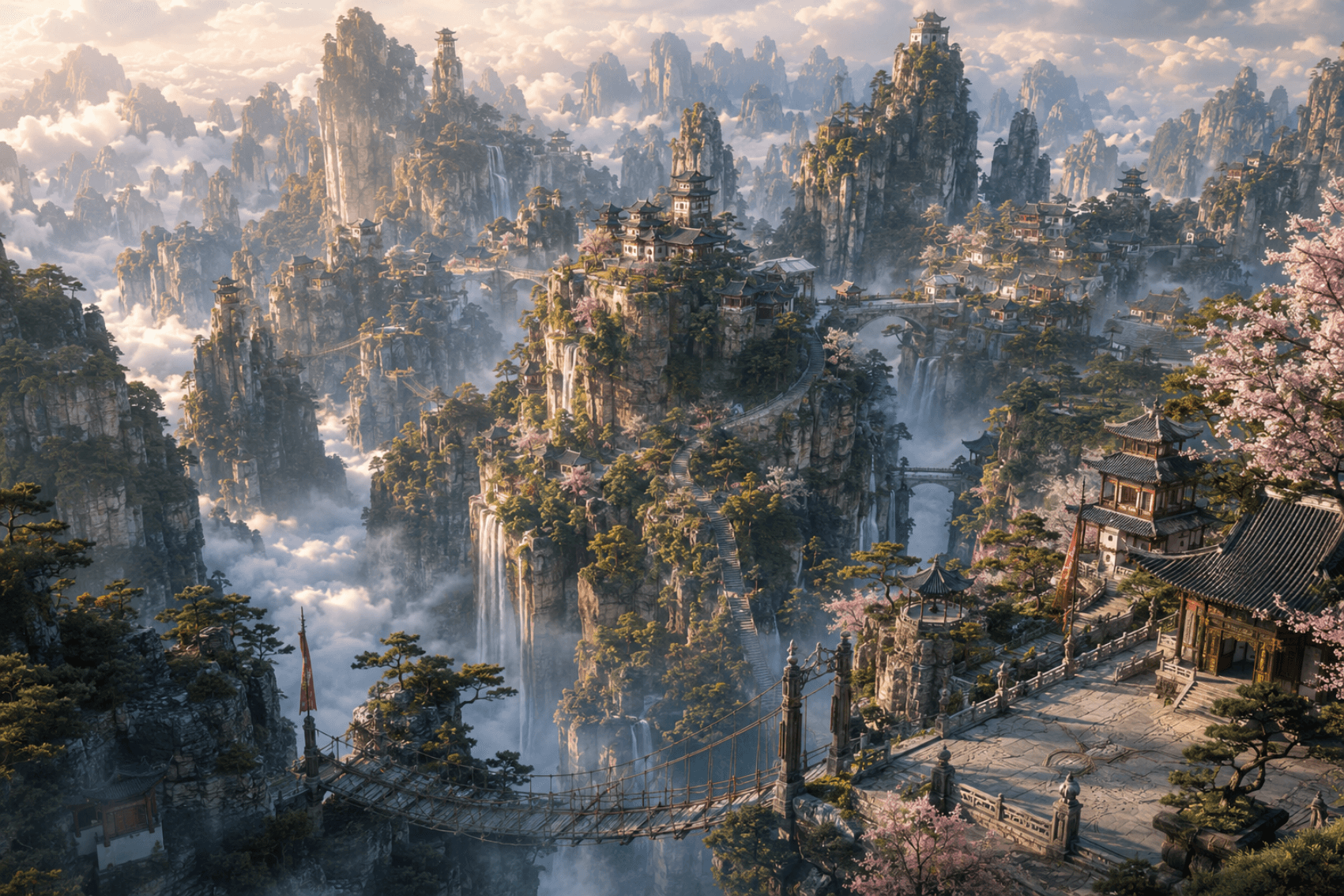
The Air Wardens made their sanctuaries among Vah-Yu’s extraordinary cloud-piercing mountains, where immense vertical cliffs, isolated pillars, narrow high valleys, and peaks rising above the clouds transformed flight from an advantage into the natural means of travel. Warden homes and family settlements occupied elevations difficult for conventional armies even to approach, while roads and stairways were secondary to routes directly across open air. Birdfolk became the principal Heirs suited to sharing these environments, able to move between settlements without descending through the dangerous terrain below. Air Dragons likewise nested on remote peaks, cliff faces, and inaccessible ledges, sharing the open vertical environment with their Wardens. The sanctuaries were communities rather than isolated mountaintop fortresses, containing households, halls, temples, workshops, and other institutions spread across networks of peaks and high valleys. An invading force could climb or fly into them, but maintaining armies at extreme altitude while crossing sheer terrain imposed difficulties that scarcely affected their inhabitants. Air Wardens could leave these heights whenever required and return directly to otherwise inaccessible homes. Throughout the cosmos, Vah-Yu Wardens favored worlds with extreme mountain systems and high plateaus where possible, or other environments in which altitude and unrestricted aerial movement dominated the landscape.